Nearly 100,000 consumers use Klarna every year, but that’s probably the main info you’ve been getting: it’s popular.
But let’s be real: popularity can be a result of quality, sure—or a hefty marketing budget.
In this Klarna review, I’m going to show you the real numbers, highlights, benefits, and risks, all based on a blend of research and my own experience using this buy now, pay later provider.
By the end, you’ll know whether Klarna is a great match worth using, or whether you should look for a different BNPL app.
Key Takeaways
- If you want short-term flexibility, Klarna makes sense: Pay in 4 and Pay in 30 can help spread out a purchase without interest when used correctly.
- If you struggle to track due dates, be careful with Klarna: Multiple small payments can pile up faster than they feel at checkout.
- If you want a shopping-heavy app, Klarna is useful: The app has order tracking, virtual cards, loyalty cards, cashback, and retailer browsing.
- If you want to build credit, Klarna is limited: Its payment plans are not usually meaningful credit-building tools.
- If you are tempted by deals and trials, use Klarna cautiously: Some perks and partner offers can turn into extra subscriptions or recurring charges.
Klarna Overview
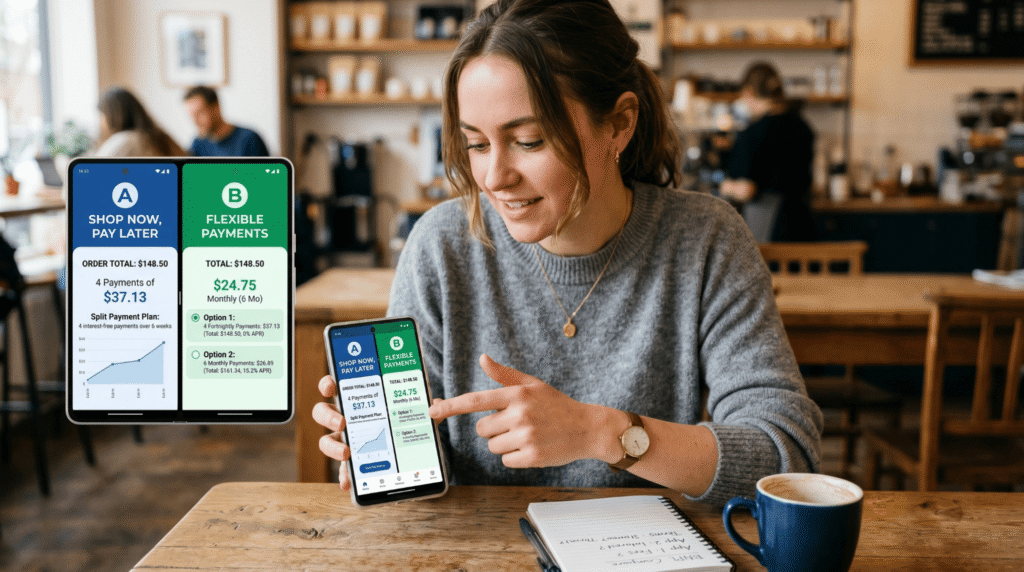
Klarna is a buy-now, pay-later app that lets shoppers split purchases into different payment plans.
The main options are Pay in 4, Pay in 30, and Pay over time. Pay in 4 splits payments into four over about six weeks, while Pay in 30 gives shoppers up to 30 days to pay without interest or fees. Klarna’s longer Pay over time option can stretch payments up to 24 months and often includes interest.
From my experience, Klarna was simple to set up. I linked my bank account and debit card, got approved with a soft credit check, and managed payments from the main dashboard. Generally, Klarna uses soft credit checks, so it shouldn’t damage your credit.
Overall, the app felt well-designed. I could shop online, use Klarna in stores, pay with Apple Pay or Google Pay, create one-time virtual cards, track orders, store loyalty cards, and manage all my payments in one place.
Klarna Pros
✅ Flexible payment options: The basics + longer monthly plans give shoppers different ways to handle purchases.
✅ Strong app experience: The dashboard makes it easy to see upcoming payments, track orders, and shop through the app.
✅ Useful shopping tools: One-time cards, loyalty card storage, order tracking, cashback, and resale tools make the app more practical than basic checkout financing.
✅ Good for occasional short-term purchases: Concert tickets, travel costs, gifts, and planned purchases can feel easier to manage when payments are split carefully.
Klarna Cons
❌ Not every option is interest-free: Though some payment plans are interest-free, monthly financing can include interest.
❌ The app encourages more shopping: Personalized deals, product recommendations, cashback, and AI shopping suggestions make Klarna feel more like a shopping hub than a budgeting tool.
❌ Perks can create extra costs: Paid memberships, partner offers, and trial-style deals only make sense if I actually use them and remember to cancel what I do not want.
Klarna at a Glance
| Category | Klarna Details |
|---|---|
| Best use case | Occasional short-term flexibility for purchases you already planned to make |
| Main payment options | Pay in 4, Pay in 30, and up to 24 months |
| Interest risk | Pay over time may include interest |
| App strength | Shopping, order tracking, reminders, virtual cards, cashback, and loyalty cards |
| My best use | A $309 Ticketmaster purchase split into a larger upfront payment and three smaller follow-up payments |
| My cautionary use | A $707 Airbnb booking that gave me breathing room but added about $39 in interest |
| Biggest hidden risk | Treating deals, trials, and small payments like they don’t count |
| Credit impact | Limited for basic BNPL; Pay over time is reported to TransUnion and Experian, but current reporting does not affect your credit score |
Before getting deeper into Klarna, I’ll say this upfront: if you mainly want a BNPL option for everyday purchases, I still prefer Sezzle. Klarna has more shopping features, but Sezzle feels more focused on short-term budgeting instead of pulling you deeper into browsing, deals, and extra offers.
Payment Options: Klarna Is Flexible, but Not Always Free
Klarna’s biggest appeal is flexibility.
I used Pay in 4 for a $309 Ticketmaster purchase. The first payment was $154 upfront, followed by three payments of about $51. That made the purchase easier to handle without adding interest.
The longer-term option is where I get more cautious. I used Klarna for a $707 Airbnb booking, and the plan added about $39 in interest. I chose it because it gave me breathing room before a trip, but it was also a reminder that Klarna is not automatically free.
My take: Klarna’s short-term options are useful, but monthly financing needs a closer look before confirming.
App Experience: Easy to Use, Almost Too Easy to Shop
Klarna’s app was simple to set up and easy to manage.
Footwear is one of the categories Klarna gets used for most — here is where you can pay for shoes over time.
I liked having the main dashboard for payments, and the push notification reminders were helpful. BNPL only works well for me when I know exactly what is coming next, so those reminders are not a small thing.
The app is also convenient in ways that go beyond payments. Klarna works online, in-store, in the Klarna app, with Apple Pay and Google Pay, and through one-time cards. Klarna also says its card can be used anywhere Visa is accepted, either online or in-store.
But the convenience has a downside. The app does not feel like a plain budgeting tool. It feels like a shopping environment with built-in payment features.
My take: Klarna’s app is polished and useful, but it is clearly designed to keep purchases moving.
Shopping Features: Helpful Tools Wrapped in Temptation
Klarna does a good job of making shopping easier.
I liked being able to track orders, store loyalty cards, use pickup location photos, and shop through the app when a retailer did not offer Klarna directly. The one-time virtual card feature is especially useful because it gives more flexibility at checkout.
The resale option surprised me in a good way. When I ordered bridesmaid dresses from Azazie, Klarna let me connect directly to resale platforms like eBay and Poshmark. The “resell” feature lets users list eligible past purchases on platforms such as eBay and Poshmark, with pre-filled listing assistance.
I used it for a $99 and a $69 dress. That felt genuinely practical because event shopping often leaves you with items you may only wear once, but they’re still expensive
Still, Klarna’s shopping tools can push the app into personal-shopper territory. When I tested the AI assistant for dry-skin product recommendations, it quickly pulled up options from brands like Fenty, Estée Lauder, and L’Oréal, with photos, reviews, and buy buttons. Helpful, yes. Neutral, not really.
My take: Klarna’s shopping tools are better than I expected, but they can easily turn browsing into buying.
Fees, Perks, and Credit Impact: Read the Fine Print
Klarna’s support tools are mixed.
The AI assistant is available around the clock, which is useful for basic questions. Klarna’s help center also says customers can access AI chat or call support 24/7.
But when I asked if I could extend the due date on a Ticketmaster payment, the answer was simply no. I understood the policy, but the response felt stiff and robotic. If I were really stressed about making a payment, that kind of answer would not feel very reassuring.
You also need to be careful with the perks. Klarna’s paid memberships come in tiers like Core, Plus, Premium, and Max. Plus is free for the first month, then $9.99 per month. Current Plus benefits include 1% cashback on debit purchases, an $8 quarterly membership credit, exclusive discounts, waived service fees on pay-later purchases, and included subscriptions.
These perks can be useful if you use Klarna often. But I learned to be careful after trying a personalized Scentbird offer and forgetting to cancel. What started as a fun perk became another monthly charge to keep track of.
Klarna is also limited if the goal is building credit. Klarna may report pay-over-time loan activity to TransUnion and Experian, but says that information currently doesn’t affect your credit score.
My take: Klarna’s perks can be useful, but they only work in your favor if you closely monitor the terms, subscriptions, fees, and payment schedule.
Final Verdict
I think Klarna is worth using once in a while. It’s genuinely helpful for short-term flexibility, especially for concert tickets, travel costs, gifts, or things I already planned to buy. The app is easy to use, the reminders help, and the shopping tools are better than I expected.
But I would not make Klarna a main part of my financial routine. The app is designed more for shopping than for budgeting. It can help you manage purchases, but it can also lead to extra spending, trial offers, recurring subscriptions, and late fees if you are not careful.
My bottom line is simple: Klarna works best as a convenience tool, not as a backup budget.
FAQs
Is Klarna worth using?
Yes, but mainly for occasional short-term purchases. I like using it for planned expenses, and the variety of payment lengths helped with timing. Still, I would not use it regularly for everyday spending.
Does Klarna charge interest?
Pay in 30 is described by Klarna as interest-free and fee-free, and Pay in 4 is generally the short-term interest-free option. Monthly pay-over-time plans can include interest.
Does Klarna affect your credit score?
No. Klarna’s soft credit checks do not affect your score. Pay over time loan activity is shared with TransUnion and Experian, but currently does not affect your score.
What is Klarna best for?
Klarna is best for purchases you can pay off quickly, like concert tickets, gifts, small travel costs, or planned online orders. It is not as good for impulse buys or anything you need months to pay off.
Is Klarna Plus worth it?
Only for frequent Klarna users who will actually use the perks. The cashback, discounts, service-fee waivers, and subscriptions sound useful, but they are not worth much if they lead to more spending or to another subscription to track.