
From Gatorade to grenache: How star athletes are shaking up the Sacramento-area wine scene
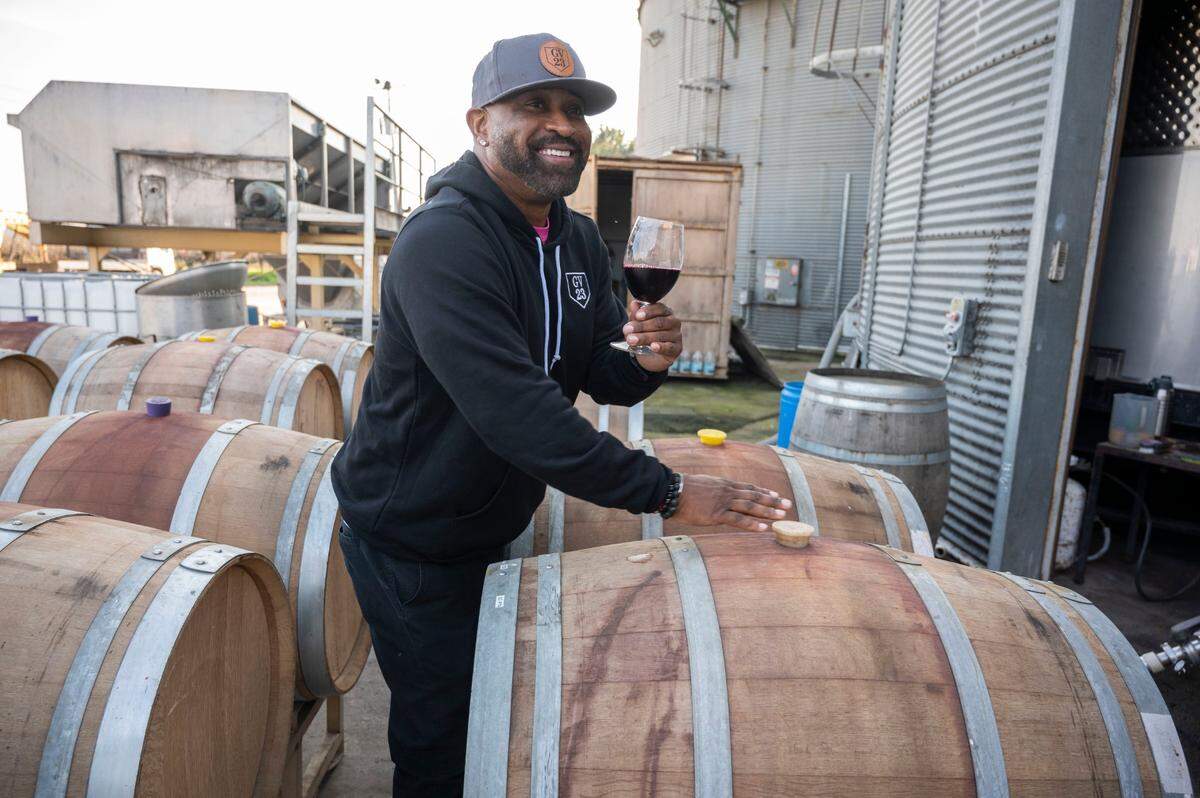
“Look at those legs on that,” Greg Vaughn marveled, swirling a glass of his 2020 rosé in the Lodi sun. “She’d be a supermodel if she was a person.”
A Meadowview native and current Elk Grove resident, Vaughn is best known for crushing 355 home runs and making four All-Star Games as one of Major League Baseball’s preeminent sluggers of the 1990s.
His second act since retiring in 2003 spans a range of investments, from owning a stake in Sacramento Republic FC to co-founding an equestrian center in Elk Grove and opening a wellness center in Sacramento.
Now, he can add winery owner to the list. Vaughn founded 23 Wines in 2021, the name reflecting his old jersey number as well as the 23 years passed since his 50-home run campaign in 1998.
He joins the local fraternity of pro-athletes-turned-wine-enthusiasts. Inspired by the nearby terroir, current and former athletes with Sacramento ties dove into the local wine scene over the past few years as owners, winemakers and advisers.
They come from different backgrounds: an NBA legend, a Hall of Fame race car driver, a Sacramento Kings player, the manager of one of baseball’s championship contenders. They credit the people they met and places they traveled through sports with sparking their interest in wine.
And they don’t want you to buy a bottle just for displaying.
When customers ask Houston Astros Manager Dusty Baker to sign a bottle at his Baker Family Wines tasting room in West Sacramento, he puts a question to them.
“Sometimes I refuse to sign unless they promise to drink it. You don’t know how many people tell me ‘oh man, I’m never going to drink this, I’m going to put in on my mantel,’” he said. “Hey dude, I didn’t do all this work for you to put it on your mantel. Put an empty one on your mantel, and then buy another bottle or two.”
Celebrities lending their names to a bottle in exchange for a royalty check is not uncommon, and that resulting beverage can be be mass-produced swill. That’s not the case with Sacramento’s athletic winery owners.
They’re hands-on and eager to learn, care deeply about their product and — in one case — make some of the nation’s best wine.
FROM RACER TO WINEMAKER
Among the several former and current athletes involved in area wine, Scott Pruett stands alone.
Born and raised in Roseville, Pruett became one of the most decorated race car drivers of all time over five decades. He won the Rolex 24 a record-tying five times and the Grand-Am Championship five times, and was inducted into the Motorsports Hall of Fame of America and West Coast Stock Car Hall of Fame in 2017, a year before he retired from pro racing.
Yet Pruett’s accomplishments on the track aren’t all that separates him from the rest of the pack. He’s not just the owner but the winemaker at Pruett Vineyard, founded with his wife Judy in their Auburn garage in 2006 and now one of the best wineries in the Sierra Nevada foothills.
Don’t expect notes of asphalt and burnt rubber in Pruett’s blends. Wine Spectator ranked Pruett Vineyard’s 2014 estate syrah the best in the world, and 44 of their wines have scored at least 90 points. All wines are named after the owners or their kids — Lucky Lauren Red, Taylor’s Reserve, etc. — and Pruett Vineyard only produces 500-600 cases per year, which can be found in Carpe Vino bottle shop or the winery’s online store.
“This has been my passion. It’s a business, but it’s my passion and I love doing it, and we’re not going to lose sight of what that is,” Pruett said. “Our sales could easily drive two or three times what we are, but we’d lose who we are, and that’s really important to me.”
Pruett comes from five generations of area farmers, and planted the first vines on his 50-acres riverside property in 2007 after a year of climate and soil research. He grew grapes and made wine in between races for about a decade.
The Pruetts have no employees other than seasonal help hired for a day or two of harvest. Pruett touches every wine from stemming to fermentation to labeling, and wouldn’t have it any other way.
“To be on your hands and knees, fingers are purple, intimately involved in the creation of something that is artisan and artistic and driven by science ... it’s the fusion of all these different elements that is so romantic and so incredible to be a part of,” Pruett said.
CELEBRITY CRUSH, AS IN GRAPES
Vaughan’s 23 Wines are made by E2 Family Winery, a fifth-generation Lodi winery that produces under its label as well as celebrities’.
Sales of the latter tend to raise money for athletes or screen stars’ charitable projects. Co-owner/winemaker Brent Ehlers currently makes wine for WWE wrestler The Undertaker, the band All Time Low and former Bachelorette Becca Kufrin.
The company also makes Biletnikoff Wines for Hall of Fame wide receiver and football coach Fred Biletnikoff, a Roseville resident who launched his foundation to support adolescent girls in crises after his daughter Tracey was murdered in 1999.
Arizona Diamondbacks outfielder Braden Bishop of Lincoln and his brother Hunter, a San Francisco Giants prospect, started their charity “4Mom” after their mother’s diagnosis with early-onset Alzheimer’s disease. E2 now produces 4Mom Wines sauvignon blanc, rosé and cabernet sauvignon.
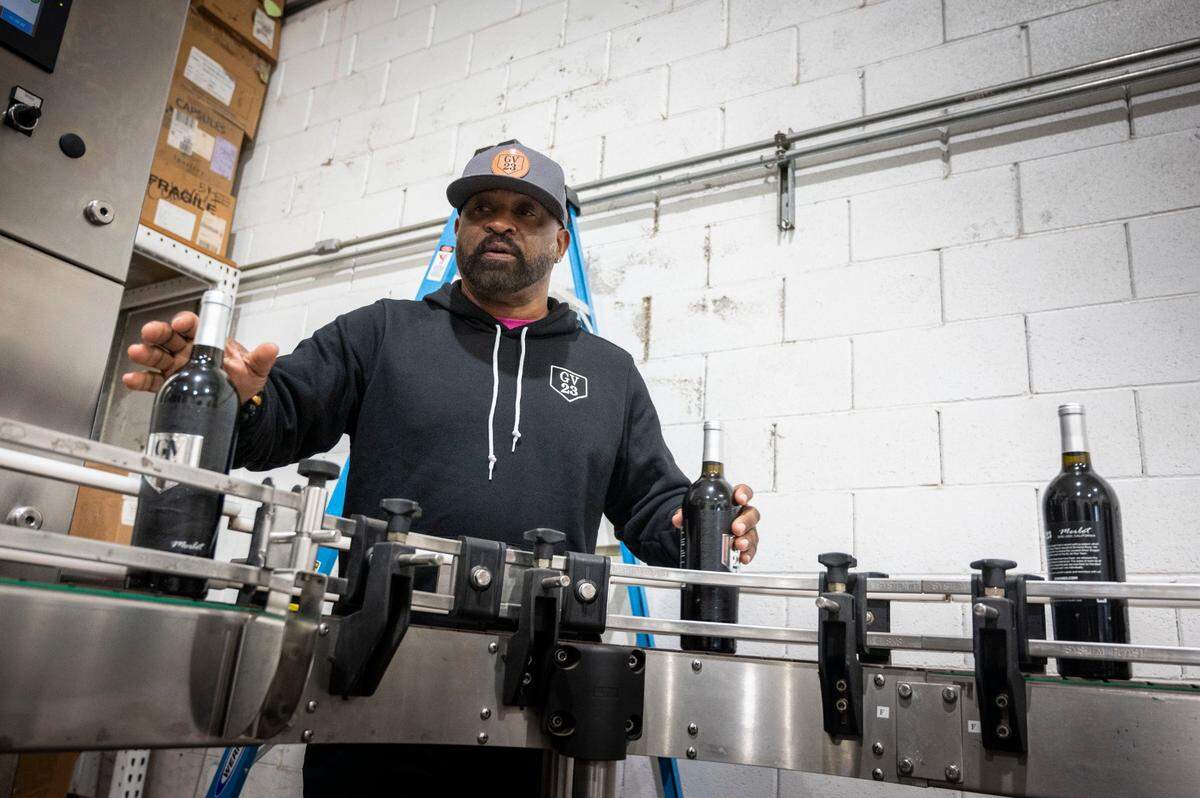
Some proceeds from 23 Wines sales go to Vaughn’s Valley Foundation, which raises funds for Type 1 diabetes research and Sacramento-area residents in need. Vaughn started the label in part to serve his own wine at his annual celebrity golf tournament, he said.
The wine will be sold at the Cincinnati Reds, Milwaukee Brewers and San Diego Padres’ stadiums in the next baseball season. Vaughn played for all of those teams in his 15-year career. Sheldon Wine Shop, Umai Bar & Grill and Sheldon Inn Restaurant & Bar in Elk Grove also plan to sell Vaughn’s wine.
Yet Vaughn didn’t want to just slap his name on a wine label, he said. He picks grapes during harvest, stomps, meets with label-makers and provides input on 23 Wines’ taste.
“Riding on the tractor, and it’s vibrating all over ... it’s dark, cold and I love it, dude,” Vaughn said.
BAKER, THE VINTNER
Dusty Baker gets his hands in the dirt as well. In fact, it’s his dirt.
The Del Campo High School alumnus moved back to the area to take care of his ailing father in the mid-2000s and wanted land to grow crops. He’s sprouted okra, squash, radishes, carrots, onions and more on his 4.75-acre Granite Bay property, and spends time in the garden virtually every day during the MLB offseason.
“It soothes me. It’s got a calming effect on me. And plus, I’m learning as I’m going,” Baker said.
Grapes came first, though: Baker planted his first vines on a gradual slope while his Granite Bay house was still being built. The Astros’ manager (he also helmed the Giants, Chicago Cubs, Cincinnati Reds and Washington Nationals following an All-Star playing career) later partnered with then-UC Davis winemaker Chik Brennemen to found Baker Family Wines.
Baker Family Wines initially just gave bottles away. It opened a short-lived tasting room on Treasure Island in San Francisco before re-debuting in a West Sacramento industrial park in 2019. This time, the bar was a success, and Baker Family Wines merged spaces with neighbor Bike Dog Brewing to create a larger multi-business tasting room. What started as a 180-case-per-year venture now produces about 1,200 cases annually.
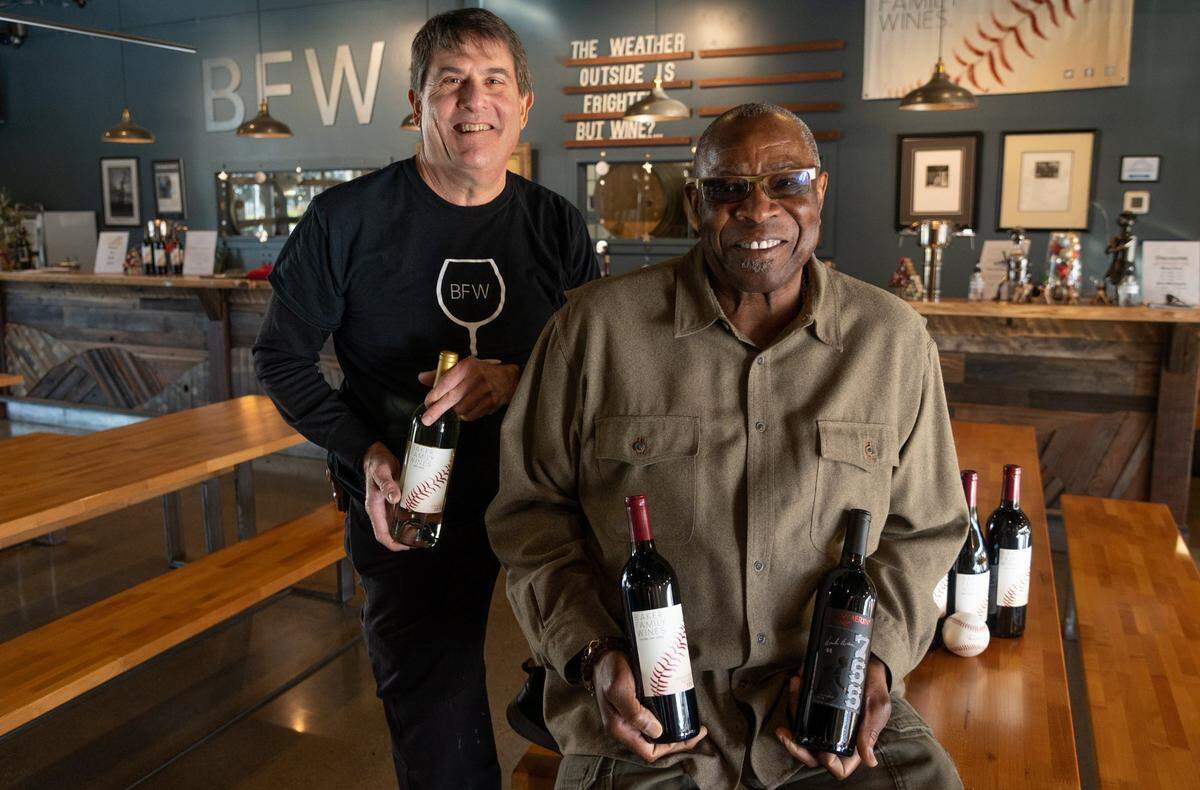
Brenneman, his wife Polly and Baker Family Wines’ employees handle most of the business during the nine or so months out of the year when Baker’s with the Astros. But the manager calls Brenneman multiple times a week to check in, and plays a central role during the off season, from weeding his vineyard to posing for pictures at the tasting room nearly every weekend.
Baker is one of his own best customers, too, frequently buying his own wine to enjoy on the road or reward his players with bottles of Walk Off Red after game-winning “walk-off” at-bats. Astros shortstop Carlos Correa knew the deal after his first walk-off hit in the 2020 playoffs.
“The first thing he said (to me) was ‘hey man, where’s my walk-off (wine)?’” Baker said. “Whether it’s a homer or a walk, I don’t care, as long as you walk ‘em off.”
Baker’s father figure in baseball was longtime home run king Hank Aaron, and Aaron invested in Baker Family Wines as well after a wine tasting trip out west. The Hammrin’ Hank cabernet sauvignon was released months before Aaron’s death at 86 last January. At $62 per bottle, it’s double the price of Baker Family Wines’ other varietals, the premium wine named for one of the sport’s greats.
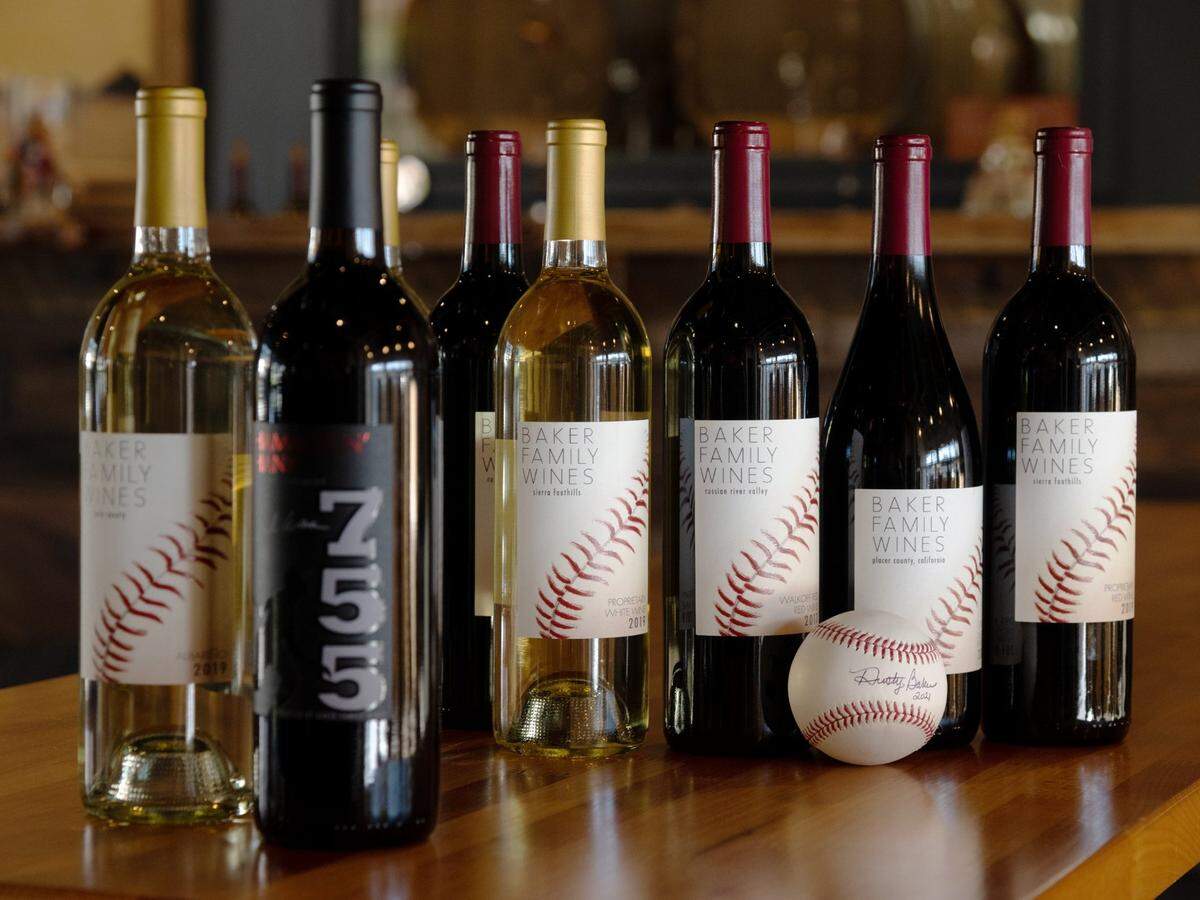
Even though Baker and Aaron’s names might sell a first bottle, the Brennemans’ work sell the rest. The corks and some labels might have baseball seams, but he wants people to enjoy the wine, not just keep it as a collector’s item.
It was satisfying, then, when gastronomy legend Darrell Corti began selling Baker Family Wines in his East Sacramento grocery store Corti Bros. Corti called the 2019 Moorehead Reserve pinot noir, named after a longtime friend of Aaron’s and sourced from the Russian River Valley, “a very good example of Russian River fruit” in his fall 2021 newsletter.
DIVERSIFYING WINE
Vaughn and Baker are dual anomalies in the world of winery owners. For one, they’re retired All-Star baseball players. For another, they’re Black.
Phil Long, the Association of African-American Vintners president and owner of Longevity Wines in Livermore, estimated in 2020 that 0.1% of all U.S. winemakers or winery owners are Black. Producers and consumers face longstanding cultural barriers, ones that Vaughn didn’t hurdle until he began traveling the country with a baseball player’s salary.
“Growing up in south Sac, wine was in a box, man,” said Vaughn, who graduated from Kennedy High School in 1983. “I didn’t drink wine. I didn’t like wine. But as I learned to appreciate food, I learned to appreciate the things that come with it — the pairings.”
Noteworthy, then, is that the NBA — where 74.2% of 2020 players were Black — is the most wine-obsessed of any major sports league. Stars such as LeBron James, C.J. McCollum and Carmelo Anthony are known for breaking out high-end bottles.
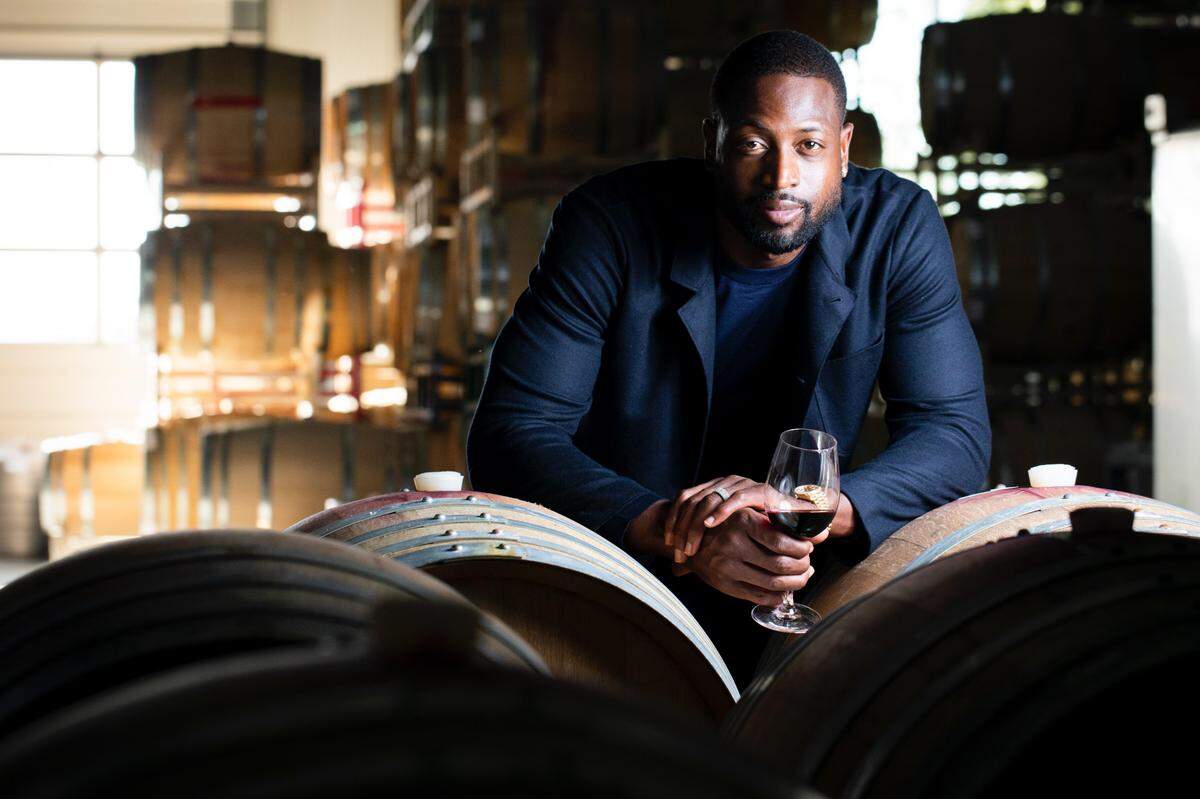
In an interview with The Sacramento Bee, former Miami Heat star and Napa-based Wade Cellars owner Dwyane Wade said wine knowledge around the league has become a sort of light-hearted competition similar to players’ before-game fashion.
“Guys wanted to one-up each other in what you wore walking into the arena. Now guys want to one-up each other with what bottle they have,” Wade said. “Now it’s just a part of the culture, it’s part of the wave, it’s something that’s been going on for a long time in the NBA.”
McCollum is particularly fond of Bailarín Cellars, whose tasting room is a stone’s throw from Golden 1 Center. The winery hosted the former Portland Trail Blazer (just traded to the New Orleans Pelicans) and his then-trainer Geoff Clark for a private tasting when their team was in town taking on the Kings in November, owner Chris Ryan said. When Anthony was on the cover of Wine Spectator last April, McCollum was on the inside calling Bailarín’s pinot noir his go-to wine; both players signed copies of the magazine that now hang in Bailarín.
Those players teach their teammates, who in turn spread their influence. Sacramento Kings forward Maurice Harkless fell in love with wine while playing with McCollum on the Trail Blazers from 2015-19. Harkless’ personal website now directs people toward Black-owned businesses, including a tab on wineries, in an initiative he calls Black Lives Now.
In Oct. 2020, Black Lives Now started a partnership with Napa-based The Prisoner Wine Company aimed at raising awareness for racial justice and equality. It’s not yet clear what specifically the partnership entails; the Kings did not make Harkless available for comment.
UC Davis’ vaunted viticulture and enology department brought Wade, who opened his Napa winery in 2014, aboard its executive leadership board in December for similar reasons. Recruiting students of color is one of the best parts of his packed schedule, he said.
“I just want to be part of the evolution of this industry, and the evolution comes with having more diverse voices and faces,” Wade said. “We’re just trying to ... introduce more people to so many different areas of life, to show than it’s more than just basketball and football and baseball and rapping that we can do.”
This story was originally published February 11, 2022 at 5:00 AM.