
Which California counties could achieve COVID herd immunity first? Survey offers clues
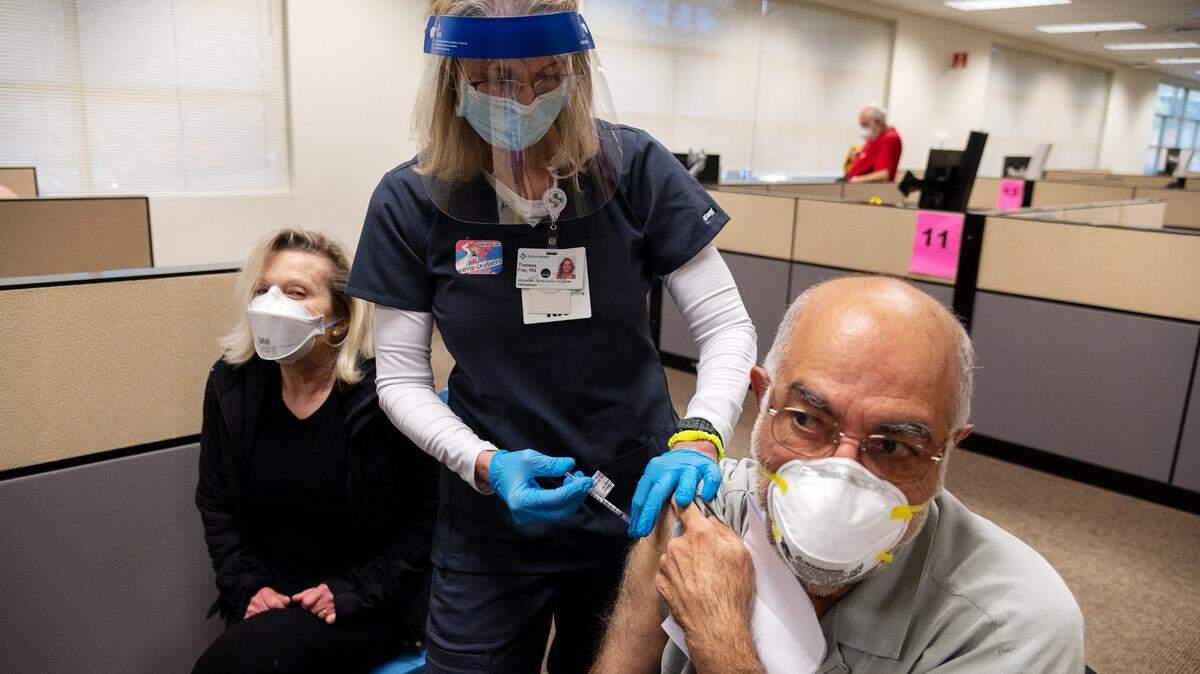
A strong majority of residents in California and in the Sacramento region now want to take the COVID-19 vaccine, probably just enough to achieve herd immunity if all of them follow through and get the shots, a survey shows.
An ongoing national barometer from Carnegie Mellon University, based on Facebook user surveys, found 77% of Sacramento County residents would definitely or probably choose to receive the vaccine when it is offered to them.
That is below California overall, where 79% of residents said they would get shots, but appears to represent a notable increase over polls in previous months that suggested many people were initially disinclined when the first vaccines were approved for distribution in December.
Since then, more than 7 milliion doses have made their way into California, according to a state online dashboard.
Yolo County was the highest locally at 84%, as measured at the end of January. Placer County was at 80% when measured in early February. And El Dorado County was at 77% the most recent time its residents were polled in late January.
Among Northern California counties, 91% of San Francisco residents polled on Facebook said they want the vaccine. That appears to be among the highest percentages in the country, just behind 92% in Fairfax, Virginia, a suburb of Washington, D.C.
Also in the Bay Area, 91% of Marin County residents and 90% San Mateo residents intend to be vaccinated.
Epidemiologists say they expect more people to be willing to get the vaccine over time as they see others inoculated without suffering severe side effects. The fear factor, though, remains among many in the public.
Recent vaccine recipient Lonnie Brown, a retired teacher from Sacramento, is Black and says some of his African-American friends are reluctant to get the shot.
“They don’t want to be an experiment. But I say, ‘Follow the science,’” said Brown, 70.
Dr. George Rutherford, a leading epidemiologist at University of California, San Francisco, said the numbers in the Carnegie Mellon/Facebook survey appear positive and suggest the state can achieve herd immunity by the end of summer, if current vaccination trends continue.
He said he believes herd immunity requires 70% to 80% of the population to have the antibodies to the virus. But the percentage may be lower in very rural areas, where people do not interact with as many others.
Herd immunity occurs when enough vaccinations have taken place to suppress the virus and end the pandemic. That includes people who are believed to have immunity based on being previously infected by the virus. It is unclear how long natural immunity lasts among those who have gotten the virus. Vaccine studies show that the first people tested, in May 2020, still have immunity eight months later.
The emergence of new and potentially more infectious strains of the virus increased the pressure to get people vaccinated quickly, Rutherford said. But he is optimistic that California is moving in the right direction.
“With new strains, we need to get people vaccinated,” he said. “But we will be in pretty damn good shape at the end the summer if we keep it up.”
John Swartzberg, an infectious diseases and vaccines professor at UC Berkeley, said he is pleased by the survey numbers. He estimates the herd immunity level though could be as high as 85% if the new, more infectious United Kingdom strain of the virus gains traction.
“If the polling is accurate, I’m delighted. it reflects an informed public,” making smart decisions, he said. “We need to get people vaccinated as soon as possible.
This story was originally published February 8, 2021 at 2:54 PM.