
He posted a California falconry test online and was charged with a crime. Was it retaliation?
READ MORE
Falconry Controversy in California
A Sacramento falconer posted a Department of Fish and Wildlife test online and was charged with a crime. Was it retaliation from state wildlife regulators?
Expand All
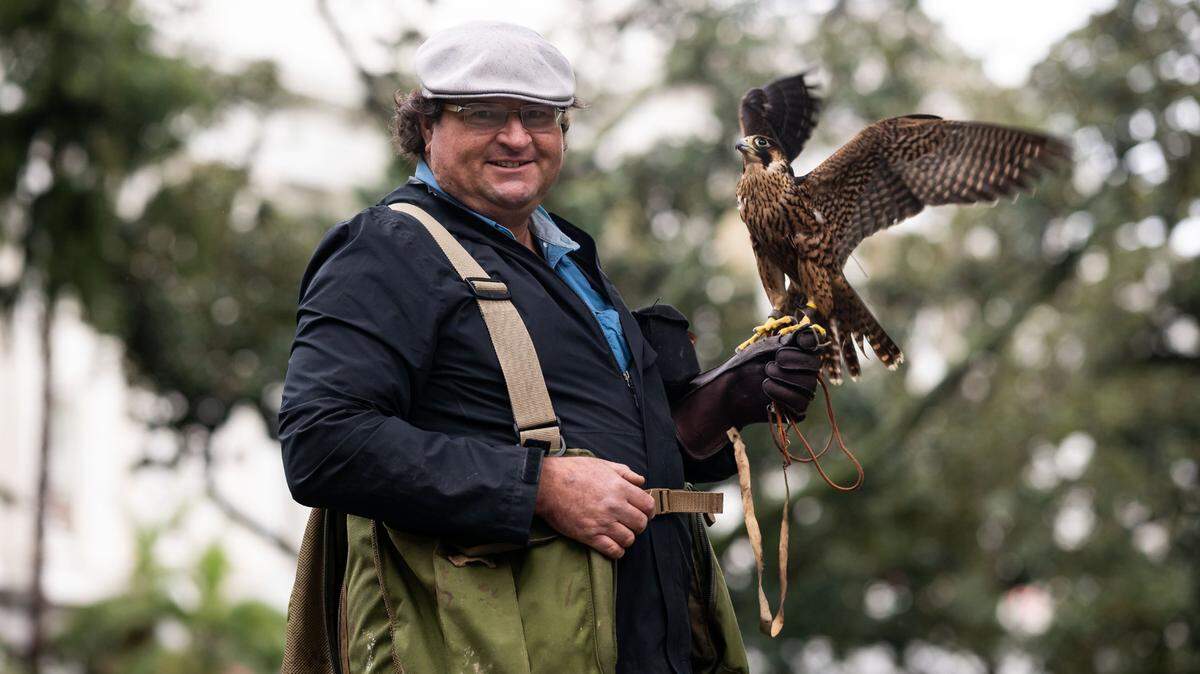
Karl Kerster is the first to acknowledge he’s not exactly universally liked in the small world of California falconry.
His actions have at times irritated his fellow falconers — actions that have also drawn the attention and wrath of state wildlife regulators.
Kerster recounts all the years he’s spent pestering the Department of Fish and Wildlife about the strict rules falconers must follow to keep the birds of prey they raise for the purposes of hunting game birds and rabbits and squirrels.
He painstakingly details how he’s stuffed written complaints into state government mail slots, and how he’s left messages on the state’s anti-poaching tip line to report the very game wardens who enforce anti-poaching regulations. The wardens’ supposed transgressions? Harassing Kerster’s fellow falconers.
One time, he even reached the wildlife officers’ chief, David Bess, on the phone.
“The chief warden said that if I want to complain about him, I have to complain to the FBI,” Kerster said. And so he did. He said he refused to leave the Sacramento FBI field office until an agent took his report.
All that’s to say Kerster knew the state game wardens and his fellow falconers weren’t exactly fond of him. Still, he wasn’t prepared for what happened last year after he posted on Facebook the questions and answers to a state-issued falconry test.
After two falconers tipped off the game wardens to the social media post, he found himself facing potential jail time in an extremely unusual criminal case with First Amendment implications.
The wardens said the state test was “stolen property” and that Kerster had committed a potential felony by knowingly possessing it.
The case was recently dismissed. For a time, prosecutors said they were considering filing a civil suit against him, though they recently decided not to pursue the matter.
Kerster, 56, of Sacramento, says his legal troubles are retaliation for being such a pest to state regulators over the years.
“They saw an opportunity to blackball me,” he said.
Department of Fish and Wildlife spokeswoman Jordan Traverso declined to comment, citing pending legal disputes with falconers.
Kerster’s bizarre case provides a fascinating lens into the surprisingly high-stakes world of falconry, and it also illustrates the ongoing tensions between this small and eccentric group of hobbyists and the armed wildlife officers who enforce the state’s hunting regulations and wildlife laws.
A group of falconers is in a drawn-out legal battle in federal court in Fresno over whether wildlife officers should be allowed to enter falconers’ homes without a warrant to inspect their birds and the facilities in which they’re kept. The falconers also argue it violates their right to free speech for the government to force them to sign legal documents prohibiting them from using their birds for commercial advertisements and films.
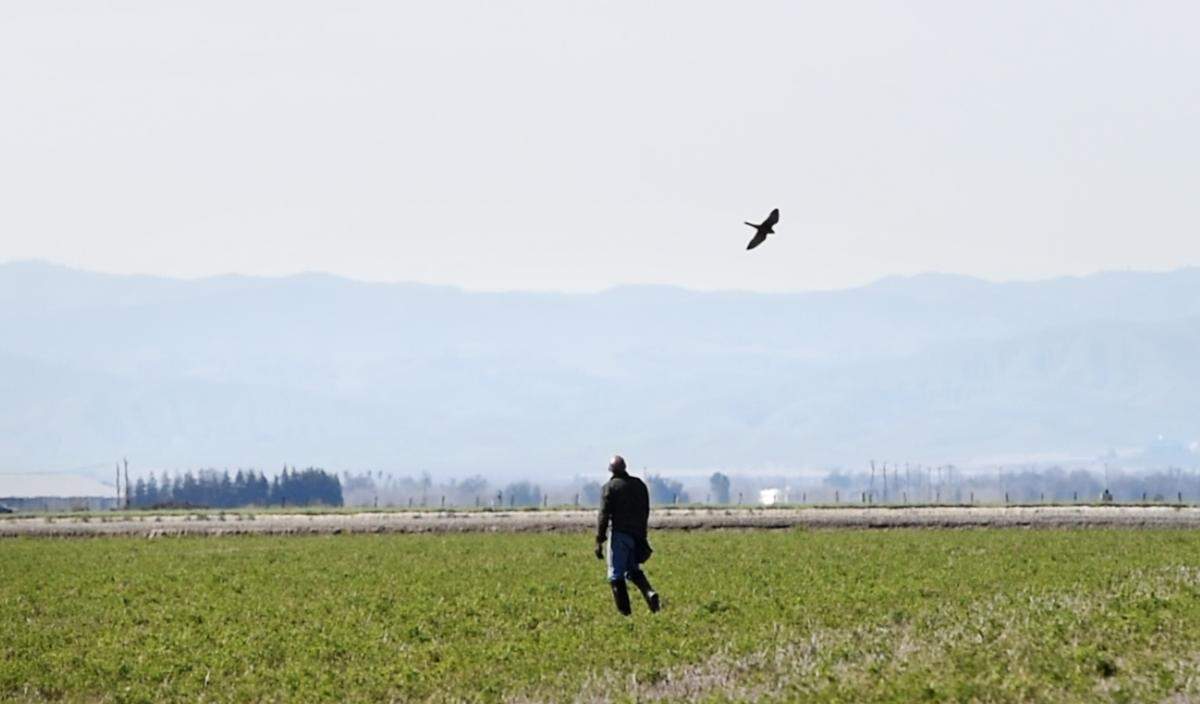
The falconers only sued after they unsuccessfully tried to resolve their dispute outside a courtroom, said Jim Manley, an attorney with the Pacific Legal Foundation, a conservative legal advocacy group representing the falconers in the federal case.
“The response was, ‘If you don’t like it, we’ll just take away falconry,’ ” Manley said. “And so I think that gives you a sense of the kind of working relationship that at least the current director of the Department of Fish and Wildlife has with the falconer community.”
Kerster is among the falconers opposed to the warrantless searches. The searches prompted him to file his complaint about the game wardens with the FBI. He said it went nowhere.
Falconry intensely regulated
Aside from using bows and arrows, hunters releasing captive raptors to chase down and kill small game animals such as waterfowl or rabbits is the oldest hunting method still practiced in modern times.
It may date back to antiquity, but falconry today is very much a niche hobby.
There are fewer than 5,000 licensed falconers nationwide. Of those, 604 live in California.
Falconers devote large amounts of time and money to their birds. It’s a labor intensive hobby that requires daily feedings of raw meat, specialized veterinary care and equipment and living quarters for the birds.
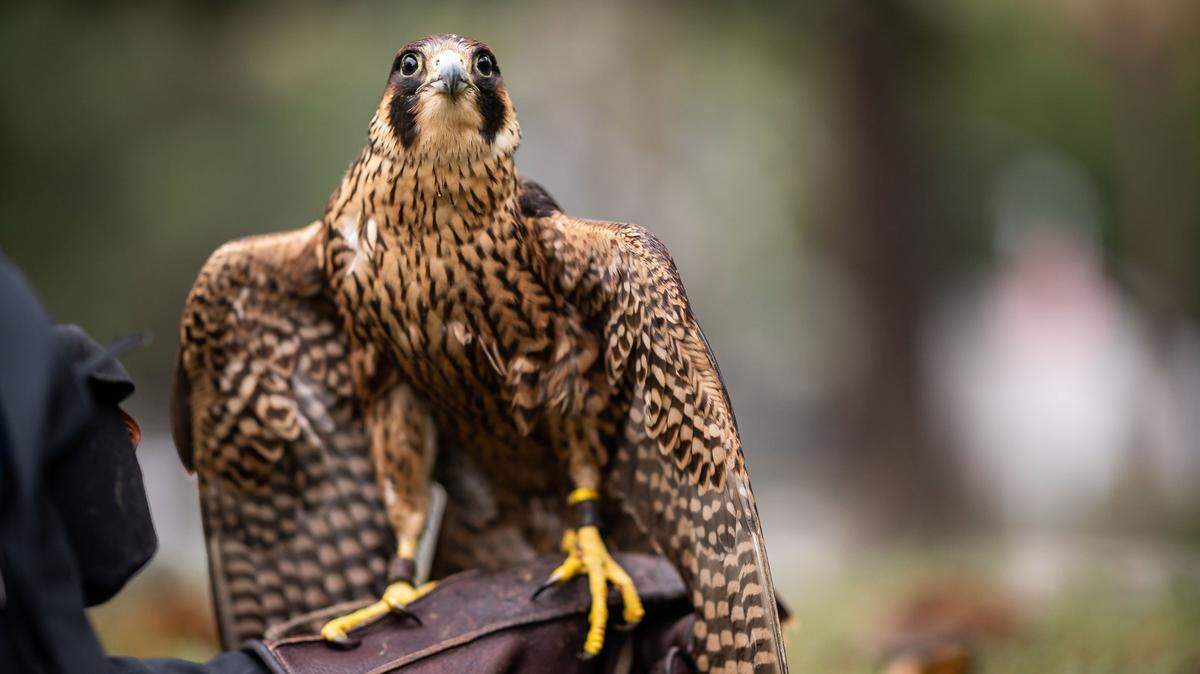
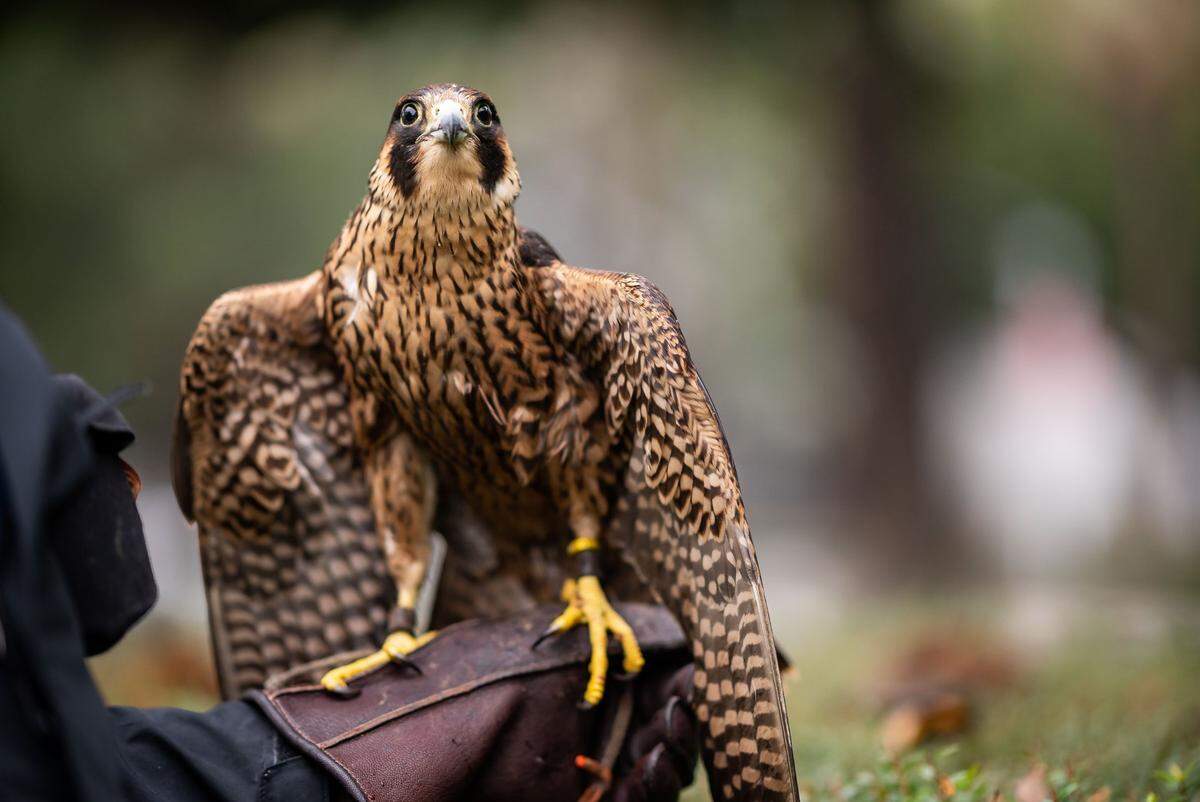
That’s on top of all the hours a falconer is expected to spend in the field with their raptors such as red-tailed hawks and peregrine falcons — birds that never really become tame. The raptors are prone to flying away on hunts and reverting to being wildlife if the birds are allowed to eat their fill while off their handler’s tether.
At the same time, just about every aspect of falconry — the types of raptor species falconers can possess, the dimensions of the birds’ living quarters and what wild animals the birds are legally allowed to kill and when and where they’re allowed to kill them — is intensely regulated by state and federal wildlife authorities.
Falconers are required to have a special license, and they must abide by state and federal hunting regulations. There are 10,000-plus words on the “Laws and Regulations” section of the California Department of Fish and Wildlife website dealing specifically with falconry. Violations of the rules can result in jail or prison time and hefty fines.
By law, new falconers must pass a state-issued exam and find a master falconer to sponsor their two-year apprenticeship before they can be licensed.
Kerster is one of those master falconers. He keeps in touch with potential falconers and his past and current apprentices via a small Facebook group of around 100 members. The group’s called “Karl’s Kids.”
Kerster long believed that some of the answers to the state’s mandatory falconry tests were wrong or misleading, something that troubled him since an apprentice needed to correctly answer a minimum of 80 out of 100 questions to pass. He claims the state had at least one answer wrong on the test key and several “trick questions” on the tests.
He also didn’t think it was fair that falconers didn’t have any state-issued practice exams like those provided to new drivers. So he did what he so often does: He complained to the Department of Fish and Wildlife.
“This all started for me trying to be helpful,” Kerster said. “I thought that they would fix this before anybody notices other than me, so that they wouldn’t be embarrassed by anybody else pointing it out.” He claims the state ignored him, so he decided to post photographed copies of a test that one of his apprentices had taken to the Karl’s Kids Facebook page.
The state’s game wardens were not amused.
Falconry test posted online
In an investigative report, California game warden Ryan McCoy said two confidential informants, both of whom are falconers, approached the department to let wardens know that Kerster had leaked the test online in January 2020.
McCoy wrote that Kevin Foster, one of Kerster’s former apprentices, had snapped pictures of nearly all of the test’s questions when he took it in 2017 in Monterey County. He had shared the images with Kerster three years later, according to McCoy’s report.
Foster’s sharing of the test was very much against the rules that explicitly state cell phones are prohibited during the test and that test takers are forbidden from leaving with the exam, McCoy wrote.
By then, Kerster was bugging the agency about what he perceived as another wrongdoing.
“On 1/27/20, Mr. Kerster curiously emailed … CDFW staffing asking for access to the falconry test, so that he may create a study guide,” McCoy wrote. “CDFW didn’t provide this to Mr. Kerster (nor would they have).”
Not long after the wardens were alerted to Kerster posting the test, the state suspended the falconry exam, and officials began rewriting the test so that the answers wouldn’t be known.
“On 2/7/20, Mr. Kerster emailed … CDFW staff stating he understood that CDFW was rewriting the falconry test and that he demanded to be involved in the process,” McCoy wrote. “Mr. Kerster stated he felt CDFW’s intent with the previous test was ‘to sabotage test takers’ or otherwise ‘artificially reduce the quantity of citizens who get to be falconers.’ ”
This is a long-standing beef for Kerster and one of the reasons he says not only DFW but also a significant portion of the falconry community doesn’t care for him very much.
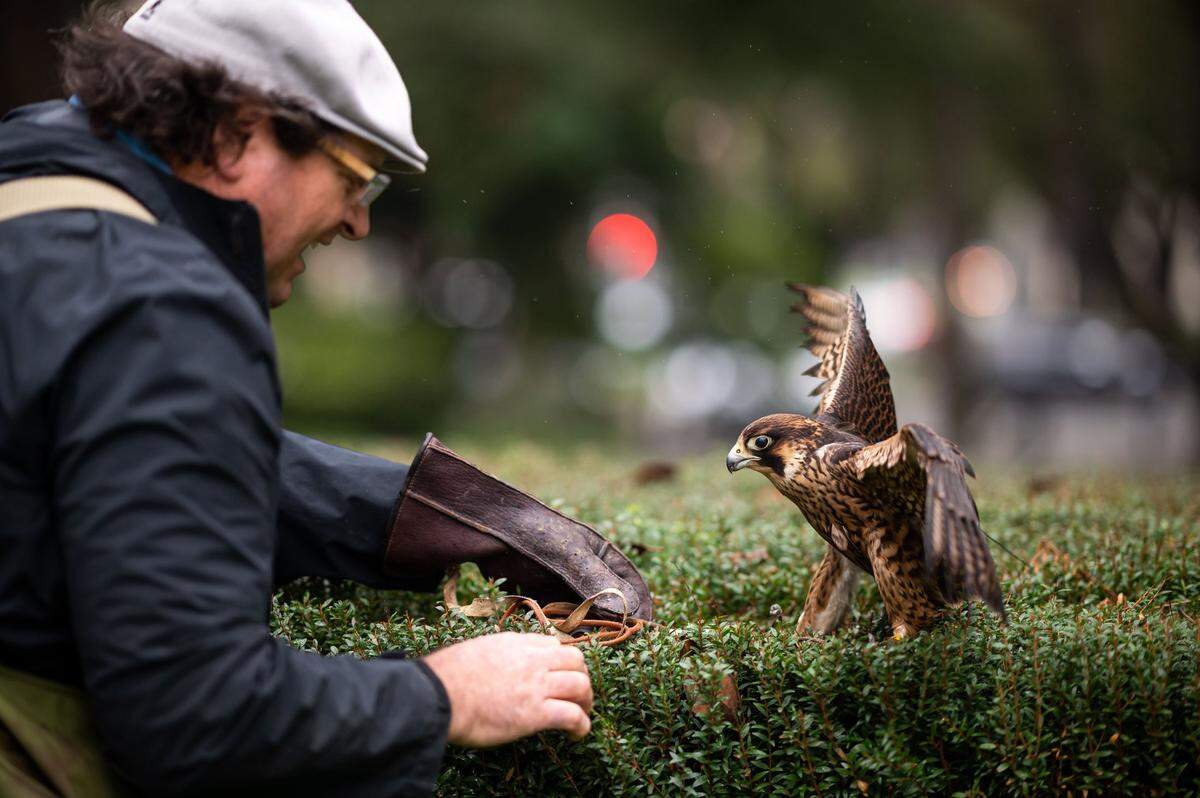
He said he’s been wanting to make it easier for falconers to enter the sport, while a significant portion of the falconry community, he claims, doesn’t want more falconers. Kerster said it’s due primarily to worries the old timers’ choice hunting spots will become too crowded.
“They want the department to continue to make it extremely difficult for people to get into falconry,” Kerster said, “in order to keep the numbers down.”
Some other members of the falconry community say that if Kerster was truly interested in increasing the number of falconers, his posting of the test led to the exact opposite result.
“I don’t disagree that the falconry test needs to be updated. However, there are proper channels to address this,” said Rebecca O’Conner, a California falconer who’s one of those who doesn’t get along with Kerster.
“When an image of the test was acquired covertly and shared online … this was unfair to the numerous apprentices who had to wait over a year to take the test to become licensed. To make matters worse, one falconer’s poor decision brought negative attention to the entire falconry community.”
Wardens took test leak seriously
The wardens at the Department of Fish and Wildlife treated Kerster’s leak as seriously as they would a major poaching investigation.
Prosecutors said it cost the department $5,027 in staff time to write two new falconry tests. A dollar amount that high meant the alleged theft could be charged as either a misdemeanor or a felony at the discretion of prosecutors.
A Monterey County judge granted McCoy, the game warden, a search warrant for Kerster’s and Foster’s Facebook accounts. The warden obtained more than 53,000 pages worth of Facebook posts and correspondence.
McCoy also spent hours on the phone with Kerster who agreed to speak to the warden without an attorney present and while being recorded, McCoy wrote in the investigative report.
In one call, Kerster “enthusiastically stated he wanted to talk to me,” McCoy wrote, “and that he was also investigating me.”
In another call, this one lasting nearly three hours and included “many sidetracked conversations initiated by Mr. Kerster, which were not necessarily germane to this investigation,” Kerster told McCoy that “the test was faulty, of no value, was garbage and therefore could not be stolen property.”
On the call, McCoy later presented a theory to Kerster. He said that since Kerster makes his living from falconry, perhaps Kerster released the exam to gain more apprentices to increase his business opportunities.
Kerster owns a business that uses his raptors to “abate” nuisance birds such as pigeons that eat farmers’ crops. He also sells raptor food such as chicks, mice and quail to fellow falconers, according to McCoy’s report.
“He repeatedly denied this, but did state he was trying to create a version of Dumbledore’s Army (a Harry Potter reference) in which he creates a group of ‘good guys’ to do things for the public good and the sport of falconry,” McCoy wrote. “He stated he was trying to spur change.”
Was falconer’s personality a factor?
Last January, the Monterey County District Attorney’s Office charged Kerster with a misdemeanor count of receiving stolen property.
Kerster hired Sacramento defense attorney John Holbus, who argued that Kerster had a First Amendment right to publish the test and that he was acting as a whistleblower. Holbus argued that a mere photograph of a publicly available exam “is not property” and therefore couldn’t be stolen.
“The prosecution in this case,” Holbus wrote, “will have a nearly impossible time determining if three-year-old photographs of a publicly distributed exam have any monetary value.”
Those sorts of legal questions wouldn’t be resolved because of one other point Holbus raised in his filings: The one-year statute of limitations to file the misdemeanor charge had expired. Last month, the DA dismissed the case.
In an interview with The Sacramento Bee, Monterey County Assistant District Attorney Douglas Matheson acknowledged tat the legal rationale behind charging Kerster with receiving stolen property was “stretchy,” but he said it was important to hold him accountable.
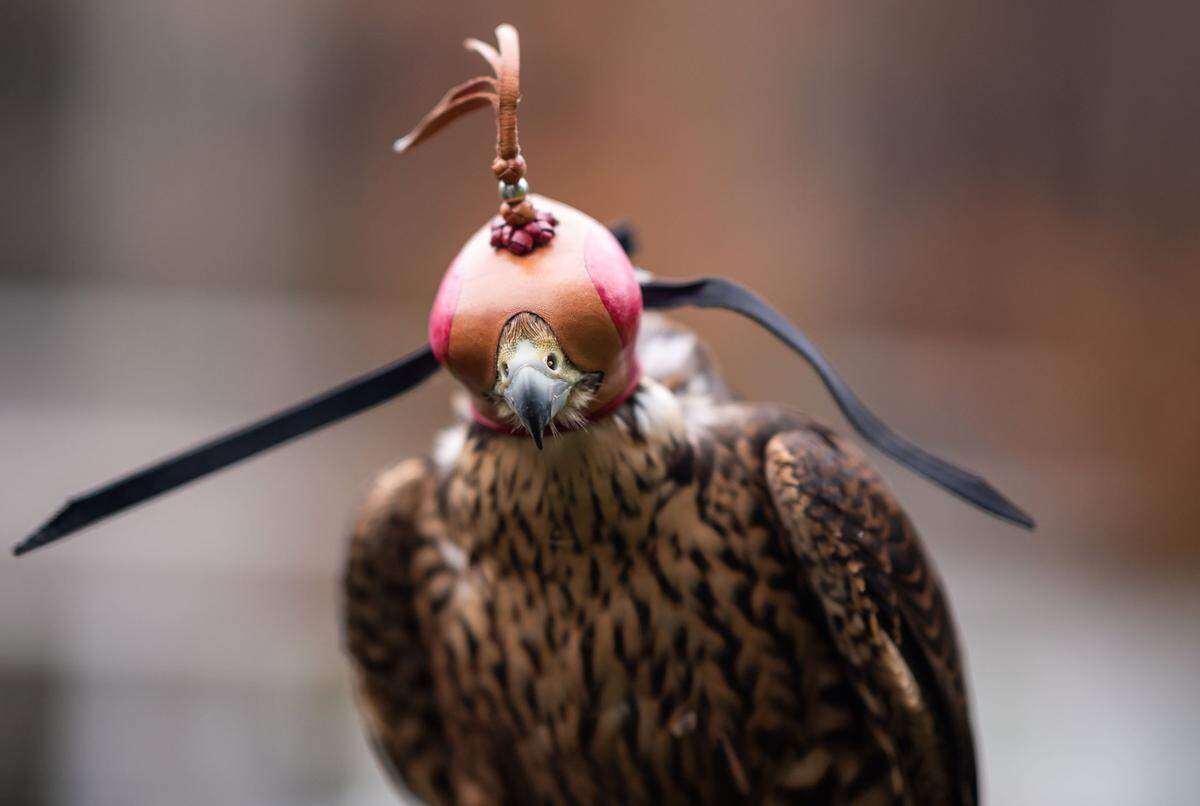
“It’s not like (the test was) a person’s car or a tangible item, but the test did belong to Fish and Wildlife,” Matheson said. “And, of course, they want to keep the integrity of that test solid. So we felt that … a person who photographs it for the purpose of dispersing it to other people was wrong.”
Foster faced the same charge and was listed as Kerster’s co-defendant, but he didn’t fight the case as aggressively as his fellow falconer.
Instead, last year, he agreed to enter a pre-trial diversion program that will see the case wiped from his record if by May, he obeys all laws, doesn’t possess or copy any falconry exams and pays the state the $5,020 cost of redoing the exam.
Kerster said he learned after his criminal case was dismissed that the DA was considering suing him in civil court for unfair business practices. Matheson said Monday the DA’s civil team decided against it.
For now, Kerster’s legal troubles are over, at least in Monterey County.
Kerster acknowledges the “division” and “the frustration that I cause in others,” including his fellow falconers, has made him more of a target for authorities.
But, he said, him being a “thorn in their side” doesn’t mean game wardens should be out to get him.
“The falconers have a right to hate me,” he said. “The California Department of Fish and Wildlife does not have any right to hate anybody, no matter what I or anybody else ever says.”
Matheson, however, said Kerster’s personality never came into play.
“We cannot,” he said, “take people’s attitudes into account when we make those decisions.”
Meanwhile, Kerster’s legal battle with the Department of Fish and Wildlife didn’t deter him from pestering the state’s game wardens.
Less than two weeks into 2022, he’s already sent at least four emails complaining to Chief Bess about falconry regulations.
This story was originally published January 16, 2022 at 5:00 AM with the headline "He posted a California falconry test online and was charged with a crime. Was it retaliation?."