
‘Extremely vulnerable’: California must consider birds of prey in future planning efforts
READ MORE
Falconry Controversy in California
A Sacramento falconer posted a Department of Fish and Wildlife test online and was charged with a crime. Was it retaliation from state wildlife regulators?
Expand All

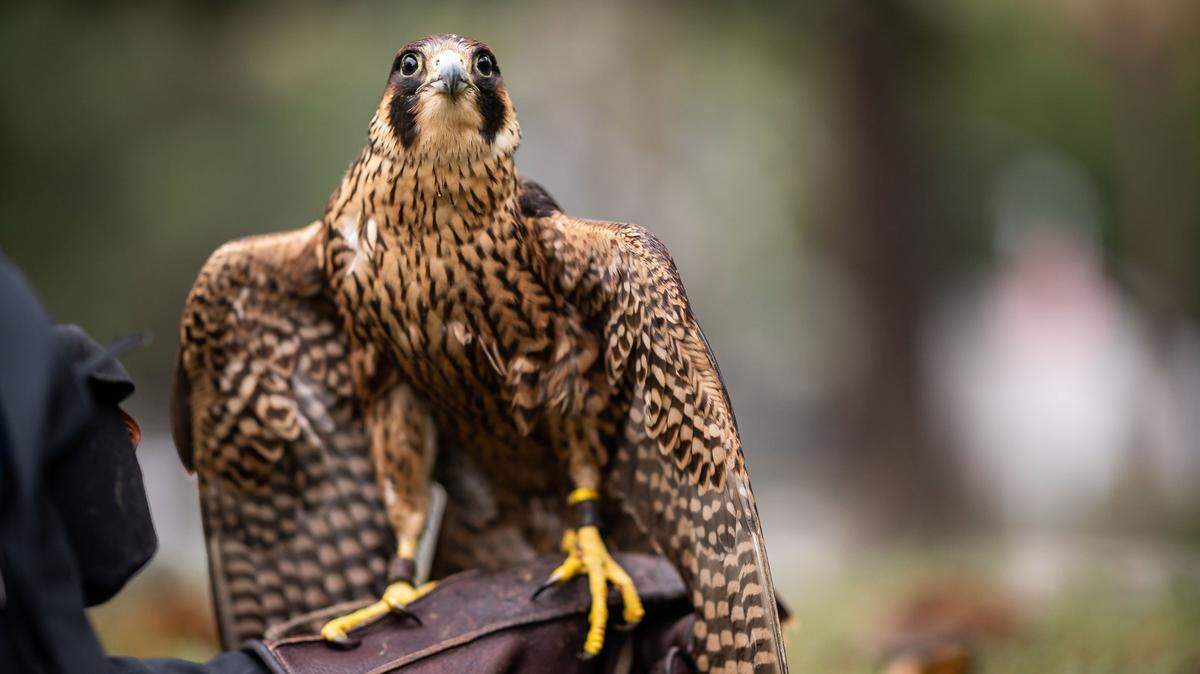
From the tiny elf owl to the glorious golden eagle, birds of prey throughout our state face numerous threats to survival. Although stereotypes about these birds — that they are fierce and invincible or, in the case of owls, studious and wise — persist, in reality, raptors are extremely vulnerable. They are also good indicators of ecosystem health, letting us know when things are out of balance.
Only up to 40% of young raptors make it through their first year: Some starve when prey are scarce, or fall ill from disease. But many more are affected by human activities: They are persecuted and shot; they are susceptible to collisions with wind turbines and can be harmed by solar farms; they are frequent victims of vehicle collisions and entanglement in wires and power lines; and they are greatly affected by insecticides and pesticides, including the rat poisons that are now pervasive in our human landscapes.
They are also ongoing victims of habitat loss.
Sometimes these threats act in concert. A red-tailed hawk weakened by rat poison exposure, for example, may be less able to fly and forage swiftly and thus be more exposed to vehicle collisions. American kestrels, tiny “pint-sized” birds of prey, are declining throughout the U.S., and while researchers don’t yet understand exactly why, habitat loss (loss of old trees and cavities), insecticides and rodenticides are surely playing a role.
As our state works to reintroduce the magnificent California condor, a species whose extinction was prevented by captive breeding programs, the raptor remains at risk. A recent study by U.S. Geological Survey biologist Garth Herring found that reintroduced condors are struggling with both lead poisoning (from ammunition in scavenged carcasses) and secondary rodenticide poisoning from rat poison in those same carcasses.
Herring and his co-authors tested liver samples from all three current condor populations in the U.S. (Pinnacles/Ventana, southern California and northern Arizona). Nearly half of the 65 sampled condors, representing all three flocks, had been exposed to second generation anticoagulants (SGARs). Although SGARs didn’t cause the death of any of the condors, 48% exceeded a 5% probability of toxicity.
In light of the pending release of an experimental population of condors on Yurok tribal land in northern California, these scientists also examined livers from turkey vultures, a related species with a similar carrion diet, from the area around the release site and also from Pinnacles. SGARs were ubiquitous in the turkey vultures. Our state has taken admirable action to lessen the wanton use of these deadly poisons with the passage of AB 1788 last year. But more needs to be done, including prohibiting their use on agricultural lands.
As we work toward greening our cities and energy sources, we need to consider these birds in our planning efforts. We know a lot more today about what harms raptors than we did even 10 years ago.
Some solutions may be simpler than others. One study suggests that painting even one blade of a wind turbine can reduce raptor strikes. Some vineyards are now using barn owls — instead of rodenticides — to effectively control rodents. But in managing our forests, we must also preserve the old trees with cavities that small raptors like the elf owl and American kestrel need.
What we have learned is that raptors can live with us, in and around human settings, but we need to be smarter about not using poisons and promoting landscapes that create healthy prey populations. We can create habitat by daylighting buried streams, converting lawns to meadows, and supporting wetland restoration. These are easy fixes that add to our quality of life and allow us to keep raptors nearby both as rodent controllers as well as indicators of the overall health of the ecosystems we live in.
This story was originally published January 16, 2022 at 5:00 AM.