
‘Stronger together’: More Black families are calling this Sacramento neighborhood home
Tré Everett remembers driving around North Natomas in 2001 with his wife, enamored by the rows of new homes and the potential they saw.
They lived in Vallejo at the time and ended up moving to Georgia for work. But, he said, “our thoughts never left Natomas.”
About four years ago, they finally were able to move back to California and settle in the North Sacramento suburb that caught their attention so long ago. Everett, 47, is now the pastor of Life Words Church there. He said the highly rated schools were a major draw, but so was the neighborhood’s growing cultural diversity.
“You’d go to the grocery stores or be walking on a trail and pass a fellow Black person and it’s like a mini-reunion, you’re almost surprised to see another Black person,” said Everett.

Hundreds of Black residents who have started calling North Natomas home in the last decade.
As new subdivisions have sprung up in recent years, neighborhoods such as Natomas Crossing and Sundance Lake have seen the Black population grow by the hundreds. In Natomas Creek, the Black population grew by 570 people over the last decade, the largest increase of any census tract in Sacramento County.
Black residents and business owners in Natomas said the neighborhood’s appeal is obvious: Good public schools, beautiful parks and trails, an abundance of new and relatively affordable homes, clean and safe streets, proximity to major highways, and growing diversity.
Its growing Black community stands in contrast to the city’s historically Black neighborhoods, which lost African-American residents over the past decade. The five census tracts in Sacramento County covering residential areas with the largest drops in Black residents were in Meadowview, Golf Course Terrace or Oak Park, totaling about 1,730 fewer Black residents in 2020 compared to 2010.
It’s unclear how much of the Black population growth in North Natomas, which is a more expensive rental and housing market, can be attributed to the exodus from other neighborhoods of color.
But there is some overlap, said Antronette Robinson, 51. She runs the only Black-owned and non-franchise cafe in the area, Maestro Coffee. Middle-class Black Sacramentans are increasingly lining up at her coffee shop, she said, and her customer base has become even more diverse during the pandemic.
“A lot of African Americans are moving to middle class neighborhoods for their children, and it’s nice to see that,” said Robinson. “Natomas is really an up-and-coming city.”

Rebuilding after Great Recession
The growing number of Black residents calling North Natomas home is, in a way, a renaissance.
Sharon Thurmond, 62, fell in love with North Natomas almost immediately.
The bike trails were a huge selling point, as was its easy access to the airport and downtown. After visiting the local clubhouse at Natomas Park, a neighborhood amenity with swimming pools and a gym, she told her real estate agent, “Just give us the cheapest house you have here.”
That was in 2000, when the freshly planted trees were smaller than the “little Monopoly houses,” Thurmond said, and the neighborhood was “the visual equivalent of new car smell.”
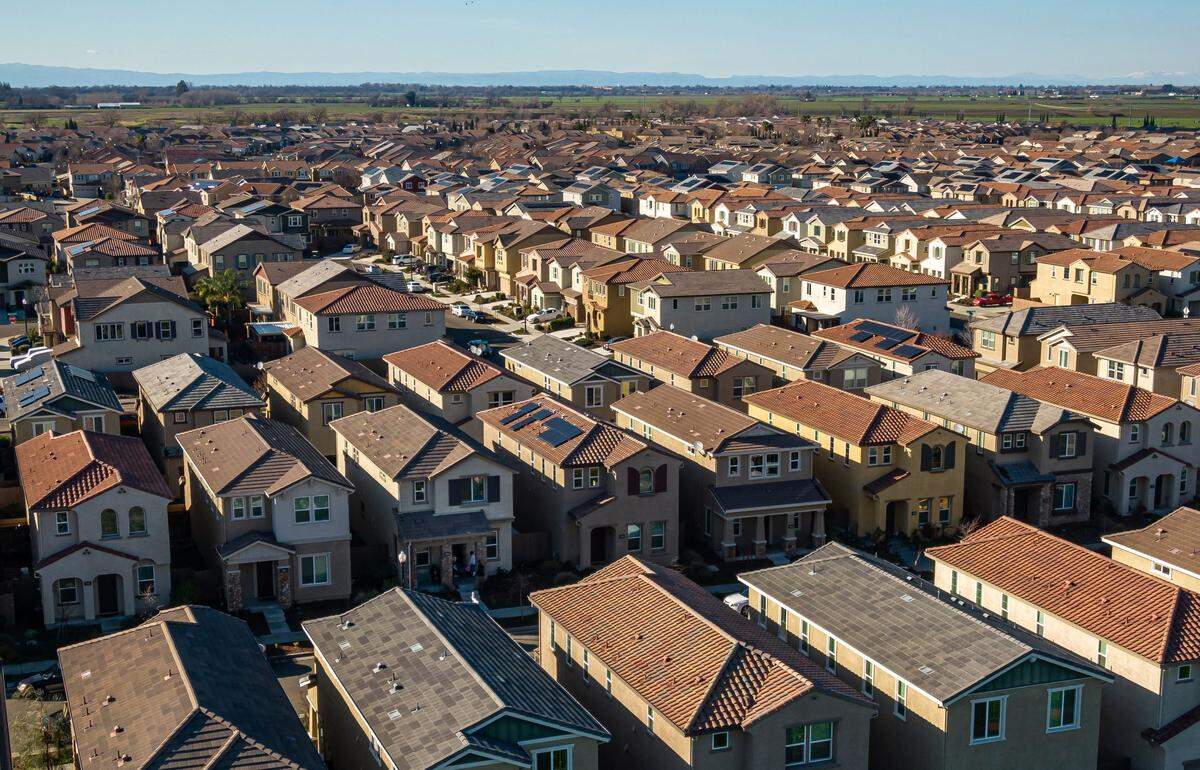
Today, the cedars and palm trees and ornamental pear trees dotting these suburban streets dwarf the homes here. Hundreds of beige and gray two-story homes line man-made lakes and grassy fields.
Most of the area requires a car to get around, but canopied playgrounds and parks are abundant. The North Natomas Regional Park, at the heart of the neighborhood, hosts baseball games for children, and a Saturday farmers market in the summer.

Thurmond remembers a number of Black families like hers moved into the area through the early 2000s. But then came the Great Recession, and a wave of foreclosures hit the neighborhood hard. Thurmond, who also lost her house, said that led to many residents of color moving away.
But she stuck it out, determined to keep her kids in Natomas schools. Thurmond found a rental, and eventually bought another home in North Natomas. She is now a middle school health assistant and a founding member of the advocacy group Natomas Black Parents United.
“You know I love Natomas, because even after I lost my house I stayed in Natomas,” Thurmond said.
Still, a resurgence of Black families moving into the area does not automatically guarantee the existence of close-knit community groups created by and for Black residents — a reality Everett faced when he moved to Natomas. That struggle to find friends with similar life experiences was only exacerbated by COVID-19 lockdown measures in 2020.
So about a year ago, Everett started Natomas Black Residents, a Facebook group designed to organize local meetups, share events, and chat about the community. The group now has about 150 members, and continues to grow, Everett said.
As pandemic restrictions wane, Everett hopes the group will be able to have a larger presence in Natomas through neighborhood parties and cultural events such as a Juneteenth celebration.
“As new Black residents come into the community, they’re able to have almost like an extended family welcome them,” Everett said.
Moving from the Bay Area
Shara Perkins Murphy, 42, never thought she would live in the suburbs. Her sister had lived in Natomas for years, but Perkins Murphy owned a “great bungalow” in Tahoe Park.
But with the birth of her first child, priorities changed. She and her husband wanted more space for their family, and access to top-rated schools. Perkins Murphy remembers visiting the local clubhouse and appreciated the racial diversity of residents. Eventually, her sister persuaded her to take the plunge about six years ago.
“You have an event in the regional park and you can barely go down the street, everyone’s out there,” said Perkins Murphy, another member of Natomas Black Parents United. “We have no intention of moving from Natomas.”
Local school board member Ericka Harden, 50, is also committed to North Natomas.
One of two Black members on the Natomas Unified School District board, Harden moved to the area with her children in 2001 from the Bay Area. “Small and cute” with a family-oriented feel, it was the kind of neighborhood where you could leave your door unlocked, she said.
In recent years, Harden said she has seen more Black residents moving to the area, “whether it be for a better education, or just because they were tired of the hustle and bustle of their old neighborhood.”
“The Black community is coming together, and realizing that we’re stronger together,” Harden said, referring to growing community groups like Natomas Black Parents United. “I haven’t seen anything like that before.”
Moving from other Sacramento neighborhoods
Where many new residents come from is hard to determine. Some may be residents who were priced out of the Bay Area. But others are those raised in Del Paso Heights or Oak Park or South Sacramento, according to local real estate agent Keisha Mathews.
“Now you’re getting second and third generation (Sacramentans) who say, ‘We don’t want to be here ... we want the next best thing — Elk Grove, Natomas, El Dorado Hills,’ ” Mathews said.
That’s a familiar experience for Willie Jefferson, 53. He’s been running Willie J’s Burgers and More with his wife in North Natomas for nearly a decade.
Jefferson was born in Oak Park, but moved around Sacramento growing up, living near Lemon Hills, Meadowview, Rosemont. Watching Oak Park rapidly gentrify. Jefferson feels frustrated: “I don’t know why people of color would feel like they belong when they’re being priced out.”
New developments in suburban areas such as south Elk Grove and North Natomas offer a better quality of life, particularly for Black residents and families trying to leave neighborhoods with higher levels of poverty and crime.
“Whenever you’re leaving the hood, any neighborhood is going to be better for your family,” Jefferson said.
What’s next for Natomas area
New developments coming to the Natomas area make the neighborhood even more attractive, Everett said, noting plans for a new hospital at the former Kings arena and an aquatics center.
The neighborhood isn’t perfect — Everett said he wishes it had more small businesses for shopping and dining, rather than chain stores and franchise restaurants. A long-promised light rail line running through Natomas between downtown and the airport never materialized, irritating Thurmond.
Today, one of Thurmond’s biggest worries is that the qualities that make North Natomas special may be what makes it inaccessible. With a surge in home prices during the pandemic throughout the Sacramento region, homes that sold in the mid-$300,000 in some parts of North Natomas are now selling in the mid-$500,000 to low-$600,000.
“I’m worried with that growth that Black people who want to move to this area and have aspirations to move here will be out-bid and out-priced,” Everett said.
This story was originally published March 27, 2022 at 5:00 AM.