Testimony ends in second death penalty trial for admitted killer of Sacramento cop
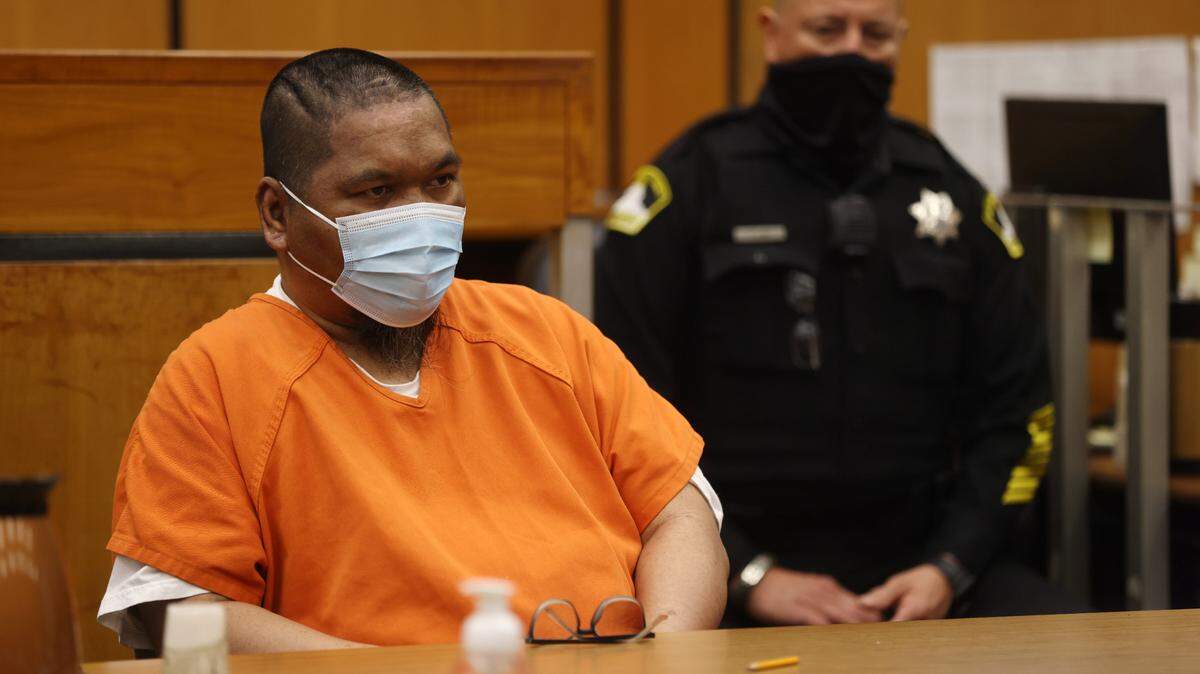
The lawyers representing Adel Ramos, who pleaded guilty in the 2019 ambush killing of police rookie Tara O’Sullivan, interviewed their final witnesses in the penalty phase of his trial on Monday, resting their case that he should not be put to death.
Closing arguments set for Tuesday will wrap the second effort by Sacramento County District Attorney Thien Ho to seek capital punishment for Ramos, 51, after a prior jury deadlocked on his sentence last fall.
O’Sullivan, 26, and training officer Daniel Chipp were trapped in the backyard of a house on Redwood Avenue in Del Paso Heights where they had gone to help Ramos’ girlfriend retrieve her belongings after he began behaving erratically. He showered O’Sullivan with bullets and kept rescuers at bay for 45 minutes as she lay dying on the ground.
The case shocked the Sacramento area and led several of the officers on duty that day to leave the police force altogether.
In testimony from Ramos’ cousin and a psychologist on Monday, defense lawyers Jan Karowsky and Peter Kmeto attempted to show that Ramos’ difficult upbringing in the Philippines left him unstable and with mental health problems that jurors should consider before imposing the ultimate punishment. In their opening statements and at both trials, the lawyers have said that Ramos admits guilt, but should be sentenced to life in prison without the possibility of parole rather than death.
Over the past week, the attorneys laid out their case that childhood abuse by his father and an uncle left Ramos battered and traumatized, while his mother’s departure for Singapore to find work resulted in powerful feelings of abandonment. When Ramos was just short of his sixth birthday, another uncle stabbed his father to death, and the young Ramos was among those who found the body. He tried to stop his father’s bleeding with his own small hands, the lawyers said.
On Monday, Ramos’ cousin Evelyn Sembrano Gali testified that when Ramos was a boy, he fled his childhood home with his younger siblings, showing up on her doorstep an eight-hour bus ride away, covered in bruises and sporting a black eye.
Forensic psychologist Francesca Lehman testified that when children have certain types of very negative experiences they often develop serious problems with both mental and physical health. Using a hypothetical example based on Ramos’ life experience, she estimated he would have experienced at least four such negative experiences, including physical and emotional abuse and abandonment.
Deputy District Attorney Jeffrey Hightower pressed Lehman on the hypothetical nature of her testimony. During the trial, he built a case aimed at showing the deep loss and trauma to O’Sullivan’s family, friends and colleagues at the Sacramento Police Department. He has argued that being abused as a child does not excuse Ramos for murdering O’Sullivan, wounding her colleagues and terrorizing the neighborhood during the hourslong ambush and ensuing standoff.
Closing statements by both sides in the case were set for Tuesday. The case will then go to the jury of eight men and four women, who under California law can only impose the death penalty if they are in unanimous agreement that it is warranted.
If they cannot agree on either capital punishment or a penalty of life without parole, Judge James Arguelles may declare a mistrial, as he did when the earlier jury deadlocked in 2024. After two juries fail to agree, judges under California law can impose life without parole.
Whatever the sentence, it is extremely unlikely that Ramos will actually be put to death in California. The state has not executed an inmate since 2006, and in 2019 Gov. Gavin Newsom imposed a moratorium on the death penalty.
The state has dismantled the death chamber at San Quentin and relocated death row prisoners to other high security facilities.
But despite the prolonged pause in executions, prosecutors in the state continue to seek the death penalty, leading the number of condemned inmates to swell to around 600, and costing the state about $72 million annually in legal and court expenses. There is a backlog of 30 years in assigning lawyers for some of the appeals to which condemned inmates are entitled.