2nd jury to decide if Sacramento cop killer gets life in prison or death penalty
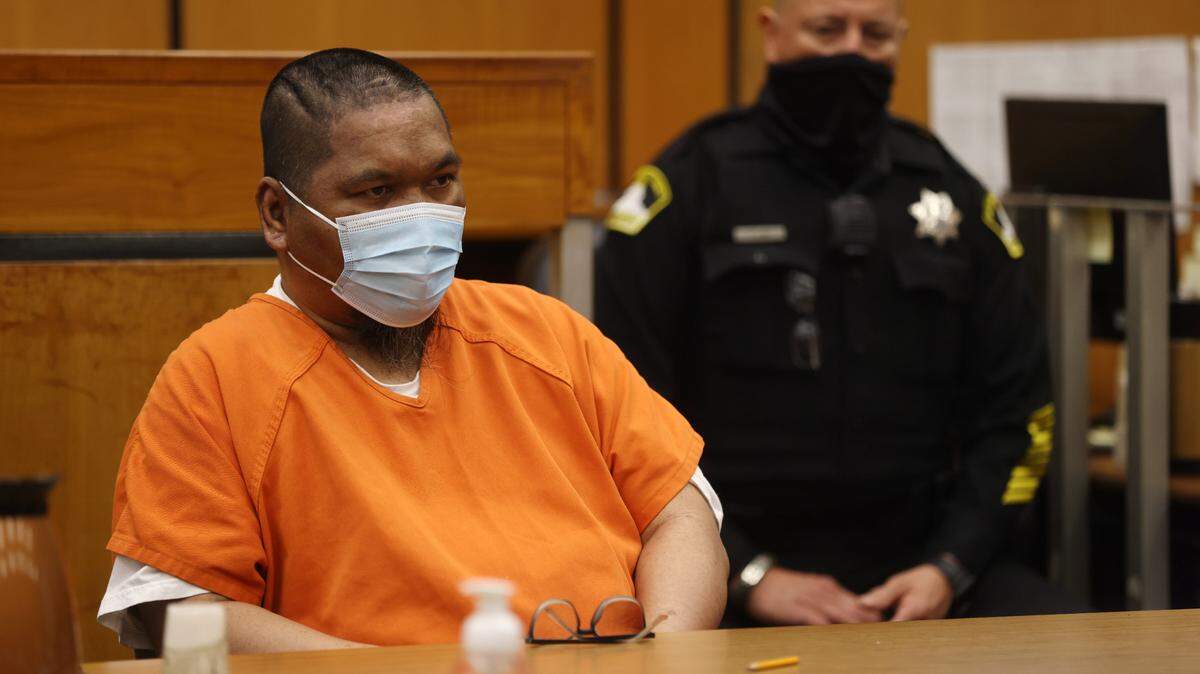
A second jury was asked to weigh in on Tuesday on the question of whether Adel Ramos — who killed a Sacramento police officer in what his lawyers said was a paranoid, methamphetamine-fueled rage — should be put to death for his crime.
Ramos pleaded guilty last August to the 2019 murder of police rookie Tara O’Sullivan, who had accompanied Ramos’ former girlfriend to retrieve her belongings from the Del Paso Heights home where he was holed up and behaving erratically.
This case, which wrapped up with closing arguments on Tuesday afternoon, marks the second time that Sacramento County District Attorney Thien Ho has sought capital punishment against Ramos, after an earlier jury deadlocked on his sentence last fall.
It highlights both the moral and practical questions swirling around California’s implementation of capital punishment: Prosecutor Jeffrey Hightower argued that the suffering of O’Sullivan’s family and colleagues could only be justly concluded with Ramos’ death, while defense attorney Peter Kmeto said that American jurisprudence had long ago abandoned the idea that justice could be brought about through vengeance.
Practical questions about California’s use of the death penalty are also raised by the case. California has not put an inmate to death since 2006, and the state has a moratorium on carrying out executions, yet prosecutors continue to seek capital punishment at a cost of about $72 million per year.
In his closing argument to the jury Tuesday, Hightower began with O’Sullivan’s death, describing her labored breathing as she lay stricken on the ground in the back yard of the house on Redwood Avenue, shot in the head, while Ramos was barricaded inside using assault weapons to shoot at anyone who tried to help her.
Making his argument personal, Hightower said that as soon as he learned of O’Sullivan’s death, he asked his supervisor if he could handle the case, saying he wanted to carry the burden of seeking justice against her murderer. It was a burden, he told the jury of eight men and four women, that he would now hand off to them.
He played a 16-minute video that included the sounds of O’Sullivan’s ragged final breaths and her quiet moans. Another video played at the same time, adding the sound of Ramos ranting at her from the house as she lay dying.
“I am very hopeful that each of you stands up for Tara, and does the right thing in this case,” he told them.
But Kmeto pointed out that the law allows jurors to consider mitigating evidence when deciding whether to take a defendant’s life. California law does not list the impact on a victim’s family as an aggravating circumstance requiring the death penalty, but jurors may consider the impact of putting Ramos to death on his children and family as a reason to avoid the sentence, he said.
Kmeto said that under the law, the simple act of feeling compassion for Ramos was enough to count as a mitigating circumstance in avoiding the death penalty.
He said that Hightower’s argument was designed to dehumanize Ramos and downplay extreme childhood traumas he had experienced, including shortly before his sixth birthday, when he saw his own father bleed out after being stabbed to death by a relative. The young Ramos tried to stop the bleeding with his own small hands.
That event and others in the alcohol-fueled household where he lived as a child filled him with rage and led him to turn to drugs, culminating in the horrible violence of the June day when he sat behind a “murder hole” in his house, opening fire on O’Sullivan, her partner and officers who came to offer help, Kmeto said.
Before that day, past trauma had led Ramos to have problems with anger and relationships, but he had also done kind things, laughing with his children, planting a garden for his mother and building a wheelchair ramp for the grandfather of his girlfriend. He helped raise a child who was not his own, Kmeto said.
“Adel Ramos is a human being,” Kmeto said. “He ‘s not some demon. He’s not some warlock.”
He showed a picture of Ramos as a young man holding a baby with a blissful look on his face.
If the jury does impose capital punishment on Ramos, it is very unlikely that the 51-year-old will ultimately be put to death.
In 2019, Gov. Gavin Newsom declared a moratorium on carrying out executions in the state, and while a future governor could change that, the process would be complicated and time-consuming.
California has dismantled death chambers, moved condemned inmates off of its physical death row and renamed the prison where they were previously housed to the San Quentin Rehabilitation Center.
In addition, it can take as long as 30 years just to assign death penalty lawyers to condemned inmates, who under the U.S. Constitution have the right to numerous appeals of their cases. Currently, about 600 inmates are under a sentence of death in California, some dating as far back as the 1970s.
To impose the death penalty in Ramos’ case, the jury must agree unanimously that the sentence is warranted. The alternative sentence is life in prison without the possibility of parole, but the jury must also agree unanimously on that sentence if they wish to impose it.
In November, the prior jury said it was hopelessly deadlocked in the case, which was so emotional and traumatic in its presentation that Hightower urged jurors to see a counselor to discuss it. In that case, 11 of the jurors voted for capital punishment, but one woman held out. Several jurors from that trial attended the second one as observers.
If this jury also deadlocks, Superior Court Judge James Arguelles can impose life in prison without parole, according to California law.