Budget hole at Sacramento City Unified jumps after double-counting discovered
When a Sacramento City Unified School District financial officer first alerted the board of a major budget deficit in the fall, she used a dramatic graphic of a tsunami wave crashing over a city to symbolize the gravity of the situation.
If the news of a $43 million shortfall was a tsunami, then Thursday’s news is a bomb.
As of earlier this month, the district needed to save about $52 million to save itself from insolvency and state takeover by the summer, with further cuts over the next several years to continue to stay solvent.
Budget information released Thursday shows that the district is worse off in several more ways than was previously understood.
First, the district has double-counted savings from a move that it has not yet made, and is now unlikely to make.
In the district’s first interim budget for the school year, it used one-time funds from a state grant and a disbursement from a retirement benefit fund to shrink its health benefit costs from $140 million to $108 million. Staff incorrectly used that reduced figure when projecting costs for the following two years, despite the $32 million in savings only being projected for this school year.
Of that $32 million in savings, however, $20 million is unlikely to be realized. That money was set to come in by using money from their Other Post Employment Benefits fund, from which the school district pre-funds worker retiree healthcare benefits, instead of it coming out of their general fund. This was recorded in the 2025-26 first interim budget report.
The problem is that interim Chief Business Officer Lisa Grant-Dawson is recommending to abandon pursuing the $20 million OPEB disbursement because the district’s legal team doubts that it is eligible to borrow money from the fund.
So the $20 million, which the district is unlikely to receive, has been counted as already saved for this year and the following two years. But there’s another problem.
The other problem is that the district also included the $20 million disbursement in its fiscal solvency plan, the working document on how it is going to solve the projected deficit based on this year’s first interim budget report, which had already counted the OPEB disbursement. This means that the district needs to come up with $20 million more to prevent insolvency while it is halfway through the school year.
Fiscal solvency plan not panning out
It doesn’t stop there.
Agenda materials for the special board meeting on Thursday night show that the fiscal solvency plan, which should be in its third month of implementation, is both not yet fully operational and unlikely to save the amount of money budget staff had previously projected.
The last version of the document reflected cost savings of $62.3 million. Grant-Dawson’s most recent assessment of the plan shows that “viable options reviewed to date may yield $15 million.”
Some line items on the fiscal solvency plan have been deemed not viable, such as freezing overtime unless required by emergencies. Other items are estimated to save less than initially estimated. For example, the amount saved by reclassifying restricted funding has been revised from $13.2 million to $9.9 million.
Cost savings for most of the actions on the plan have not yet been estimated.
“The budget reductions are not specifically aligned to a plan for implementation for ACTUAL expenditure adjustments, which is a significant part of the review and implementation process,” the report reads.
All of these factors lead to a much more devastating outlook for not only this year, but the following two years. The district needs to act fast to prevent taking a loan from the state, which means the board would lose local control to the state.
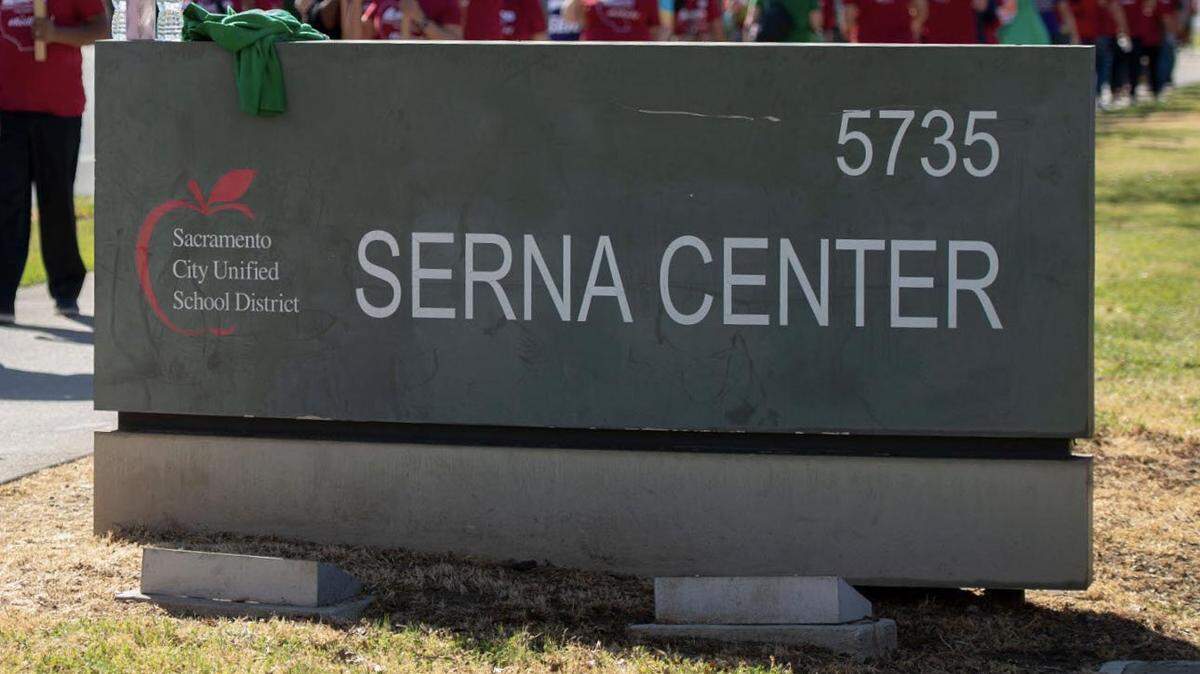
The board will meet at 6:45 p.m. Thursday night at the Serna Center to discuss these revelations and approve an updated version of the fiscal solvency plan that will go to the Sacramento County Office of Education by the end of the week.
This story was originally published January 29, 2026 at 5:13 PM.