Sacramento’s levees, ports, state roads score poorly in infrastructure report
The American Society of Civil Engineers gave California’s levees and roads D grades in its “Report Card for California’s Infrastructure,” while warning that extreme weather events becoming more common with climate change are straining already-stressed waterways and streets.
In its report, ASCE analyzed the condition and future needs of 17 infrastructure categories, such as school facilities, airports, inland waterways, ports, levees and roads. The Sacramento area’s successes and failures were cited most in the analyses of inland waterways and ports, due to the West Sacramento port, as well as the analyses of levees, due to the significant flood risks posed by the Sacramento and American rivers.
Climate change poses a huge risk to the region’s infrastructure, particularly in man-made changes to waterways. Levees and deep water shipping channels are both sustaining more damage due to storms and erosion and landslides that follow drought and wildfires.
The civil engineers’ report also mentioned the statewide crisis of traffic deaths: Around 4,000 people are killed in crashes every year. Although the engineers did not single out Sacramento, the city has previously been identified as having the worst traffic death rate in the state.
The report praised the state’s “multimodal improvements” through the Active Transportation Program. Under Gov. Gavin Newsom, the state cut $400 million in Active Transportation Program funding in 2024 and 2025.
What’s going on with levees?
Levees across the state received a grade of D+.
Flood risk, the report said, is “the most widespread natural hazard in California.” The state needs $59 billion in capital investment to address the risks of flooding. However, ASCE pointed out that even that number is not as accurate as it could be, because the Department of Water Resources has not updated its “California Flood Future” report since 2013 due to a lack of funding.
But in the capital region, the report cited huge investments in safeguarding people around the Sacramento River basin. The region has pursued updates around Natomas and improvements through the American River Watershed Common Features Project, the Sacramento River east levee, the South Sacramento Streams Group Project, Feather River West Levee Project and the Marysville Ring Levee.
The state has 13,800 miles of levees, and many of the levees with the greatest need of repair or reconstruction are in the Central Valley. Human-induced climate change has fueled more extreme swings between droughts and major storms, which has put significant stress on levees. Wildfires can also have secondary impacts on river infrastructure by leading to increased runoff, erosion and landslides that damage levees. Because 100-year floods are now larger, many levees built decades ago are too small to accommodate present-day storms. The engineers cited levee failures on the Pajaro and Cosumnes rivers in late 2022 and early 2023.
The Cosumnes River levee failure was on a privately maintained levee, highlighting some of the challenges faced by the state: Many areas have a patchwork of private levees, which are not subject to the same maintenance and performance standards as publicly-maintained facilities, even though they may threaten public safety. After storms tore a hole the size of a football field in the levee, three people died and Highway 99 flooded.
The engineers’ report also mentioned a nearby event in the Delta, when a sinkhole developed on Twitchell Island, which is in the southern corner of Sacramento County, most of the way to Walnut Creek. That sinkhole, the report said, was “caused by the gradual failure of 30-year-old levee repairs” and, if it had gotten worse, could have resulted in disruptions to highways, power as well as drinking water. A flood could have introduced more saltwater into the Delta, which is a major source of water supplies in the state.
Funding for levee improvements is a huge challenge in the state, and Proposition 218 makes it much more difficult for local governments to levy special-purpose taxes because they must generally face an election and win two-thirds of votes; once a tax has cleared the hurdles of Prop. 218, it is still severely limited by the caps on many property taxes set by Proposition 13.
The state has spent more than $4.5 billion in new flood control infrastructure since 2006. The money from bonds and budget surpluses is “now largely exhausted,” and agencies have returned to working with the U.S. Army Corps of Engineers for levee funding.
Sacramento County roads need help
The report did not single out Sacramento much in its analysis of roads, but it did note that Sacramento County has more than $2 billion in pavement needs over the next decade. That isn’t news to anyone who drives around the county and parts of the city, where potholes are plentiful.
Preventive work is cheaper than emergency repairs, and the report referenced studies showing that “every dollar spent on such mitigation efforts can save six dollars in future costs.” The engineers recommended that the state invest more in maintenance and rehabilitation. They suggested a potential mileage-based fee to supplement road funding. They also said that road design needs to account for the greater wear and tear caused by extreme heat, storms, sea level rise and other events that come with climate change.
Making it safer and more appealing to bike, walk or use transit can ease traffic congestion and help combat climate change, the report said; it supports a more efficient transportation network. When people are not in cars, that takes some of the stress off roads, potentially lowering maintenance costs: Cars are heavy and cause far more wear and tear on streets than cyclists or pedestrians. The report praised “complete streets” approaches — which ensure that non-drivers are accommodated in street design — as well as the Active Transportation Program. However, the report did not note that the state slashed $400 million from the Active Transportation Program.
Sacramento faces a road safety crisis. The report said that, statewide, “The economic toll of traffic crashes in 2023 reached $41.1 billion, driven by factors like lost productivity, property damage, medical expenses, legal fees, and emergency services.”
Ports face trouble
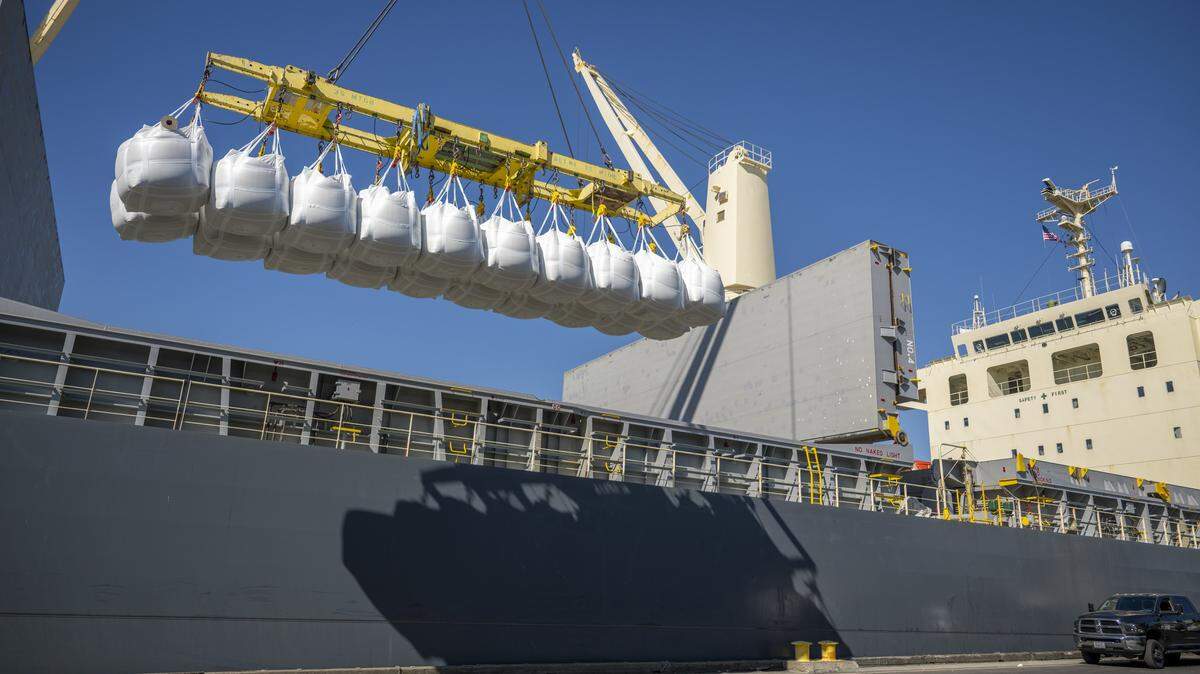
Ports across the state received a grade of B. But inland waterways leading to ports in West Sacramento and Stockton received a D grade. The inland ports “support over $90 million in foreign trade.” But more frequent severe storms due to climate change have increased erosion as well as debris and sediment buildup in rivers. Annual dredging is “barely maintaining the navigability” of deep water shipping channels in Stockton and West Sacramento.
The Sacramento deep water shipping channel is 80 miles long and, “optimally maintained,” it’s 30 feet deep and 200 feet wide.
The condition of these waterways is, the report said, “deteriorating.” Additionally, money is limited. The Harbor Maintenance Trust Fund has limited amounts available for maintenance that would restore channel depths in the Sacramento River. Neither Stockton nor Sacramento’s deep water shipping channels are eligible for funding from the federal Inland Waterways Trust Fund; the Trump administration wants to cut the Army Corps of Engineers budget, which could affect improvements on the Sacramento River. However, the Corps’ funding for operation and maintenance — which would include annual dredging — appears to be safe from cuts.