What must we do to heal Sacramento’s downtown after a year of COVID?
Sacramento’s downtown has never looked worse than it does now. Calling it a ghost town doesn’t begin to describe the surreal, desolate, haunting, shuttered, and anguished place the downtown is today and has been for the last year.
All its promise and progress seemed so close to fruition at the beginning of 2020 but was snuffed out by March of 2020 with the COVID-19 shutdowns, George Floyd protests, smoke from wildfires, wind storms and civic unrest around last November’s presidential election.
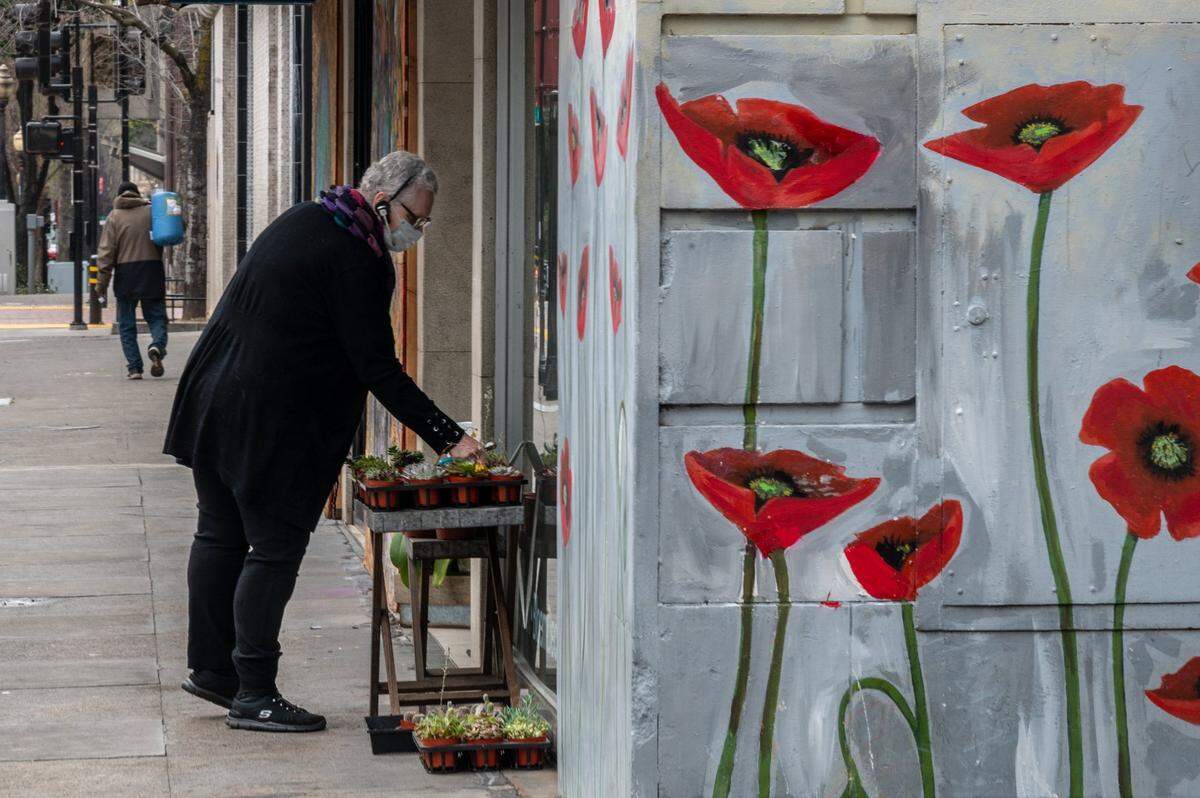
“Our world changed on March 16, 2020, when the state said that all the workers had to stay home,” said Liezet Arnold, owner of Bloem Decor Florist on 10th Street between K and J streets.
“Restaurants started closing, bars started closing, hotels started to shut down...It was very scary,” she said. “I’m the sole bread winner for my family. You have no choice but to take a deep breath and ask, ‘What am I gonna do now?’ ”
Arnold and the few businesses that stayed open in the last year asked that question every day.
This fear was shared by all who have spent time in Sacramento’s downtown in the last year. Arnold feared going bankrupt, getting assaulted. That fear was ever-present as the downtown turned into a barely recognizable place.
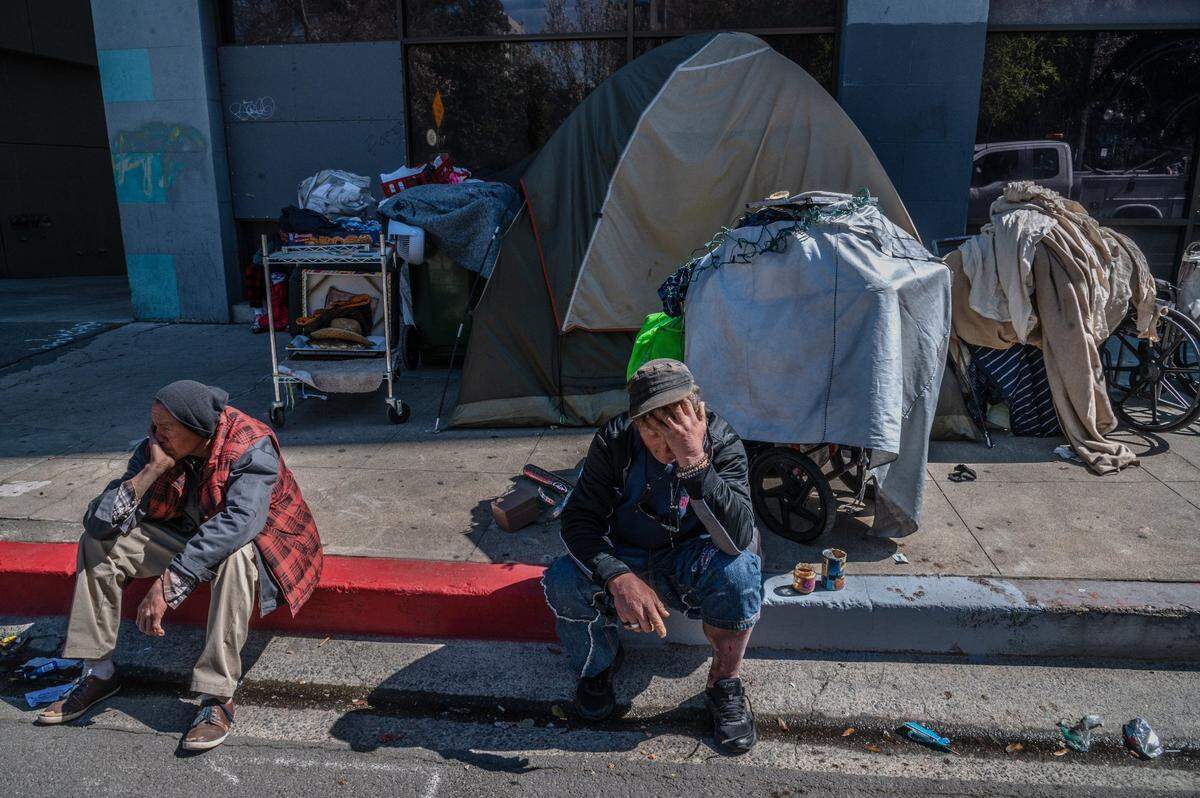
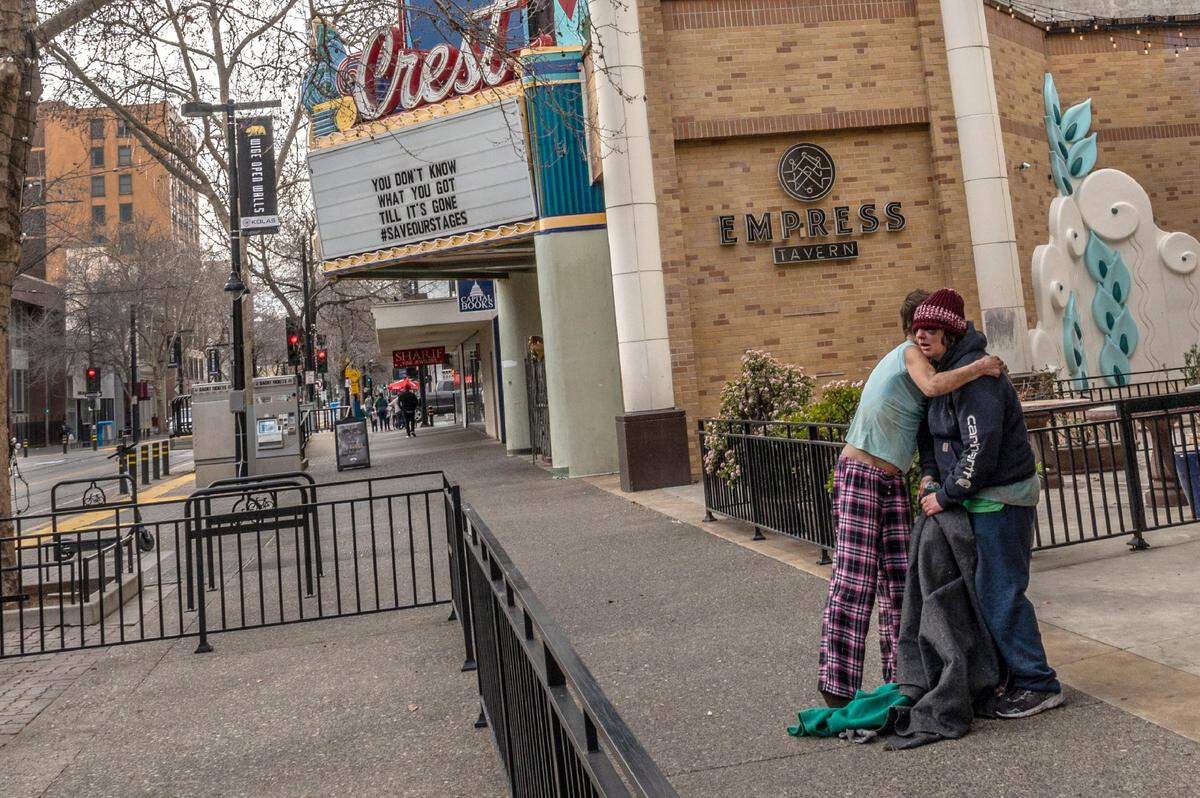
Human suffering set up shop without anyone being able to do anything about it. The homeless people near Arnold’s shop spent every day trying to stay alive.
“I was out on the streets and scared, real scared,” said Deena Smith, a 71-year-old homeless woman living downtown. “I’ve been in shelters and places. I couldn’t pay rent. Rent was way high and my pay isn’t way high. I get social security. That’s all and that doesn’t cover rent anymore.”
How can Sacramento help both Arnold and Smith, the woman running a small business and the homeless woman trying to stay safe, without viewing their fortunes as mutually exclusive?
How to help the homeless and businesses
Most California cities can’t answer that question. In most California cities, the issue of urban homelessness is typically framed as an ideological battle between the interests of someone like Arnold and those of someone like Smith.
Very quietly, some downtown business leaders in Sacramento have been trying to find a new answer that involves helping Arnold without forsaking Smith, and vice versa.
They are putting money and time behind the idea of creating homeless sanctuaries and encampments where homeless people can live safely instead of sleeping in doorways and streets downtown. They are lobbying city and county officials to work together as they never have before to pool their resources to create temporary housing for the homeless as an alternative to camping on downtown streets.
Two members of the Sacramento County Board of Supervisors and two members of the Sacramento City Council have begun meeting regularly to see if the two largest governments in the county can put aside past differences to make a bigger dent in the issue of urban homelessness.
The hope is that city and county politicians, with city and county executives, can formulate a shared vision on how to create immediate help for homeless people. The hope is that the city and county will dedicate real money to the issue.
Sacramento is in line to get $121.6 million in federal COVID relief dollars and the County of Sacramento, $301 million.
The hope is that the city and the county will dedicate a portion of that money to set up temporary encampments and shelters where the city’s homeless can live more safely. The city and the county have always been able to work together in the past – on transportation, flood control, infrastructure, basically every issue except homelessness.
Now, instead of simply yelling at elected officials and bureaucrats to do something about homelessness, downtown business leaders are trying something different. They know a federal lawsuit upheld by the U.S. Supreme Court prevents cities such as Sacramento from displacing homeless people from sleeping in store fronts, or Cesar E. Chavez Plaza or at the Library Galleria unless city and county governments have some place to put them.
So the effort in Sacramento now is to create safe places for them to stay.
A decade ago, local elected officials were dead set against “safe ground” encampments where homeless people would live in tents or tiny homes in designated spaces. Now that resistance has been worn down by a deepening of the homeless crisis.
What used to be criticized as irresponsible is now held up as a potential critical step toward getting people off the streets. At the corner of 12th and C streets, attorney Mark Merin has allowed a homeless encampment to take over a piece of property he has owned for years. That’s where Deena Smith, 71, lives now.
“This place — it’s wonderful. It saved my life,” she said.
Smith found safe shelter on Merin’s property with her dog Molly.
“You don’t want to be here forever but in the meantime when you are trying to find something…something else at least you are safe here, you’re safe and they give you a tent,” she said.
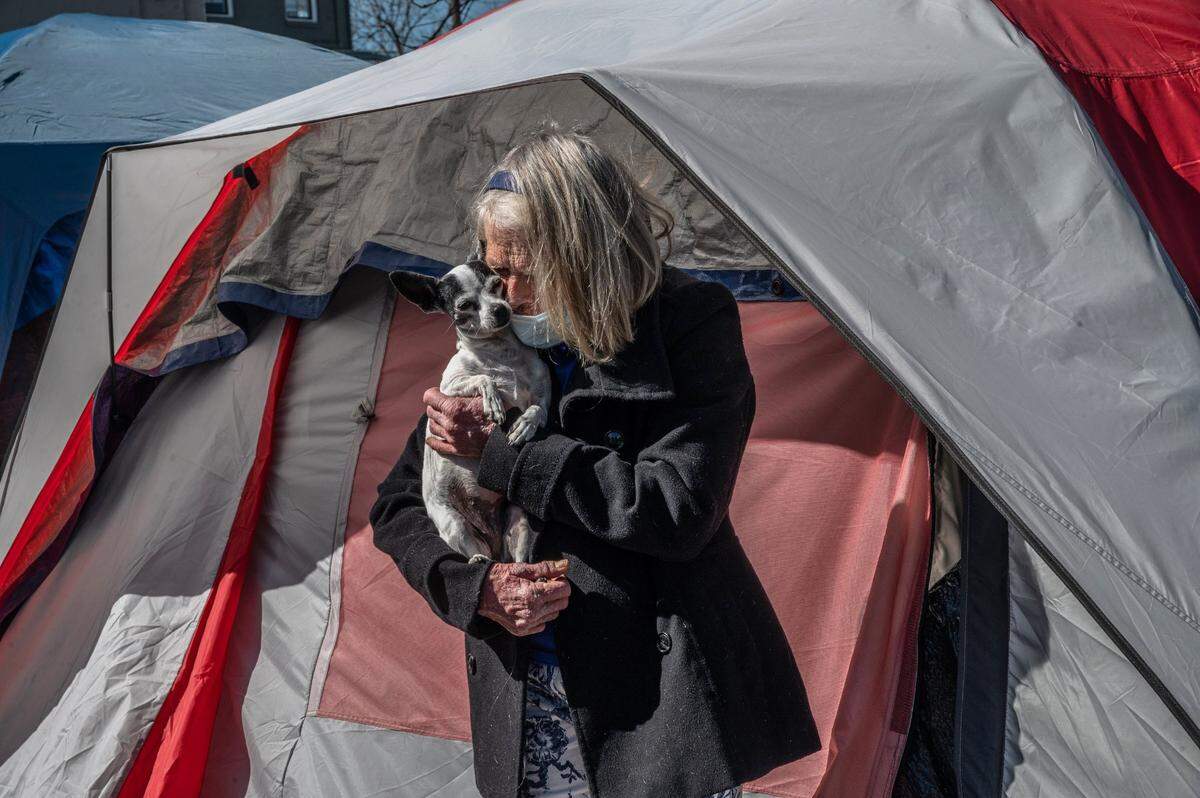
Merin has been allowing a small number of homeless people to live there for about six months. All the residents know the combination lock to get in and out of the encampment. It has a shower and portable toilets. It’s clean and quiet.
But even then, it has restrictions. Merin said his space is not equipped to deal with people who have severe mental illness or substance abuse addictions. The dozen or so people who live in tents on Merin’s land are mostly older, are living quietly and without recent incidents, according to neighbors.
Business leaders see encampments as a critical piece to creating places where the homeless can live more safely than the streets of Sacramento.
“By aligning priorities, resources, and accountability, the county and the cities within it can establish a collaborative approach that makes an impact for our unhoused population in a real and meaningful way,” Michael Ault, executive director of the Downtown Partnership, said.
City and county join forces
At the meeting of city-county leaders, Sacramento Mayor Darrell Steinberg and Vice Mayor Jay Schenirer represented the city; Supervisors Rich Desmond and Patrick Kennedy, the county.
“There has never been a more important time for our city and county to elevate its partnership,” Steinberg said. “We have unprecedented one time-federal and state resources and a problem which everyone agrees needs the kind of unified approach we have shown historically on issues like flood control.”
The meetings, and need for solutions, have an urgency now. After a horrible year, the reopening of the downtown is at hand.
COVID restrictions will loosen as more people are vaccinated. They will return and, we hope, re-energize the vibrant urban life we were beginning to see only a year ago.
Downtown is a critical economic engine for Sacramento. According to the Downtown Partnership, a consortium of downtown businesses, downtown Sacramento generated $75 million in property and hotel tax revenue before COVID.
Downtown Sacramento produced 46% of the city’s total property tax revenue, 42% of the city’s hotel tax revenue, and 39% of the city’s employment population.
“Sacramento’s downtown, and its vital role as the first impression that many visitors have of our city, is incredibly important to the region’s collective success,” said Mike Testa, president and CEO of Visit Sacramento. By the end of May, the city will have completed its yearlong upgrade of the Convention Center.
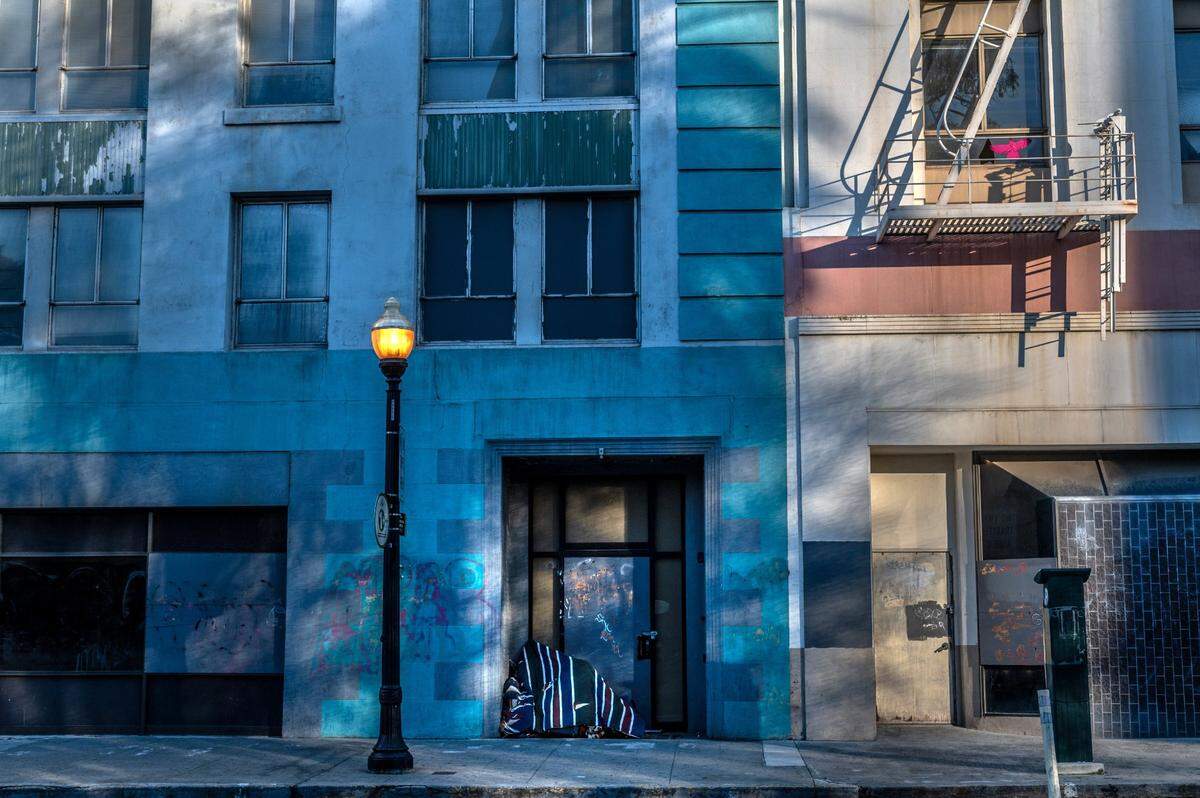
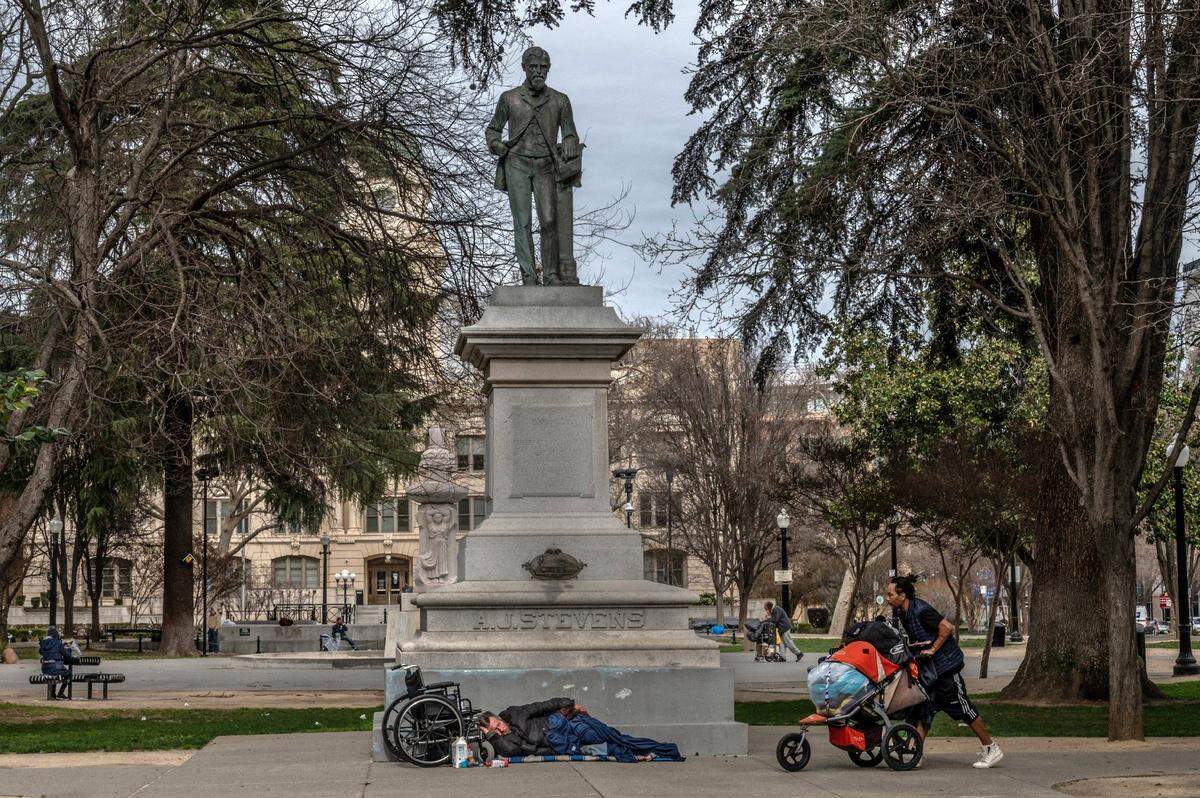
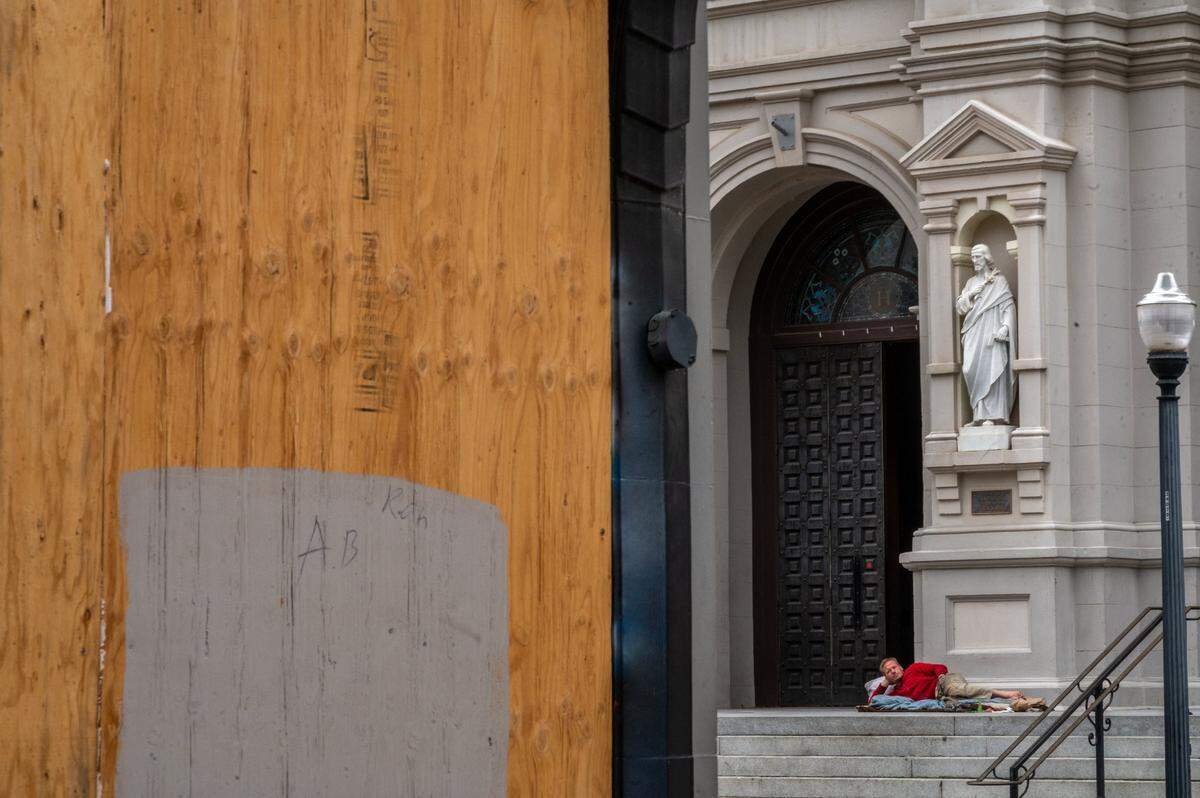
Right now, seeing large groups of people sleeping in Cesar E. Chavez Plaza is not uncommon. Others sleep on the street in front of the ornate Library Galleria. Human waste litters downtown streets. To walk the urban core now is to witness homeless people struggling with addiction, with mental illness.
Recharging downtown
Roughly 80% of downtown workers still perform their duties remotely, so downtown is eerily quiet. People sleep under awnings, in front of boarded-up restaurants.
Downtown’s sound was of cars and trolleys and the hum of constant activity. Now, at busy corners such as K and 11th, right by the Cathedral of the Blessed Sacrament, it echos with the shouts and screams of people suffering from mental illness.
The downtown landmarks are familiar, but the feeling of being downtown there right now is not. It’s painful to see. It’s painful to hear.
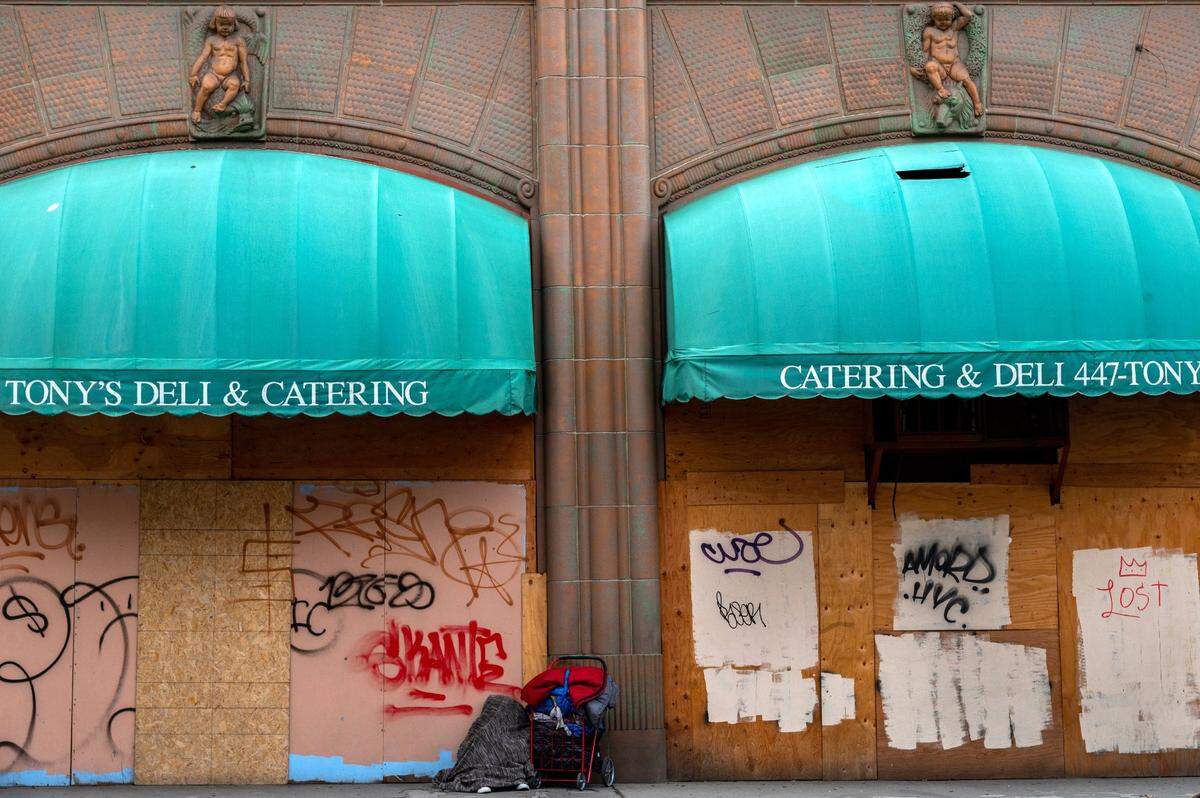
“Normally, I’m very capable of finding a solution but in this type of crisis I don’t know,” said Ernesto Delgado, owner of Mayahuel and La Cosecha. Those are two once-thriving downtown restaurants that he has kept open while most others have been shuttered and boarded up.
“I’m trying to make use of whatever means I can to survive,” he said. “It’s why I keep the candles lit, why I keep the fresh flowers and the service going...I’m trying to survive physically, mentally. I don’t sleep at night because I have a lot of worries and stress with landlords trying to get paid and trying to keep our team employed.”
A lot of people are hurting in Sacramento, our city. The question is: Can elected officials, and the rest of us, get behind he idea of helping everyone? Can we be one city in California that is bighearted enough to move beyond political divisions to help those suffering in our midst?
What city will we return to?
This story was originally published March 23, 2021 at 5:00 AM.