A year gone: How the COVID-19 pandemic upended life in the Sacramento region
Maybe you were at Golden 1 Center waiting for the Kings game to start. Maybe your boss told you to work from home the next week. Maybe you planned to visit a loved one at a nursing home, until you learned it was no longer safe to do so.
Public life as we knew it changed right around this time last year due to the coronavirus, officially declared a pandemic by the World Health Organization on March 11, 2020.
In the year since, California has recorded more than 3.5 million lab-confirmed COVID-19 cases. About 55,000 Californians have died. Hundreds of thousands grew sick enough to require hospitalization, straining hospitals in some places.
More than 95,000 infections and 1,500 deaths have come in Sacramento County, population 1.5 million and the heart of California’s capital region; another 600 people have died across El Dorado, Placer, Sutter, Yolo and Yuba counties, home to roughly another million.
On top of the direct loss of life, businesses shuttered permanently, unable to sustain under pandemic restrictions. Children have missed as much as a full year of in-person learning, with Sacramento’s largest K-12 districts still on remote schedules now. Health leaders told people not to visit loved ones on Thanksgiving or the winter holidays.
Year-old Sacramento Bee headlines document just how fast the capital region jolted to a halt.
The front page March 13: “Sacramento parade, events canceled or postponed due to coronavirus fear.”
On March 14: “Mass school closures to slow virus spread.”
And, on March 16: “Drastic measures,” referencing counties’ local COVID-19 orders but also foreshadowing Gov. Gavin Newsom’s declaration three days later of a statewide stay-at-home order to slow the spread of the virus.
Here is a look back at the local timeline of the coronavirus crisis, one year in.
Shutting down
The shutdown began with heavy uncertainty and the tightest restrictions imposed to date, as experts and policymakers continued to determine which activities were riskiest.
The basics of the early shutdown: People were told to keep 6 feet of distance from anyone not in their household, events involving crowds were prohibited and only businesses considered “essential” were allowed to remain open. In late April, Yolo County also added a mask mandate, weeks ahead of the statewide order issued mid-June.
Sacramento’s booming restaurant scene moved to takeout only, a transition many eateries old and new didn’t survive.
Retail closed, too; Arden Fair mall shut down March 17, followed soon after by other local shopping centers.
Churches took services virtual. (Though others notably rebelled, and places of worship recently won a Supreme Court battle allowing indoor services.)
Personal care businesses like salons and barbershops were ordered shut down, along with gyms and movie theaters.
.JPG "SAC_PK_CORONAVIRUS_0284 (1).JPG")
Panicked, people hoarded toilet paper.
A March 18 Bee headline read: “Stay at home, Sacramento County urges all residents.” Also on the front page: “Restaurant and bar economy shattered.”
“This is what we need to do to flatten this (growth) curve and prevent our health care system from being overwhelmed,” Sacramento Mayor Darrell Steinberg said at the time.
No tip-off
Golden 1 Center, downtown’s state-of-the-art NBA venue, became a floor-seat view of confusion March 11. As the Kings were set to host the New Orleans Pelicans, the road team instead refused to come out of their locker room for fear of exposure.
The NBA season was suspended later that night. It didn’t resume until late July, in a league-isolated camp in Florida.
“It’s crazy that it’s been a year,” Kings point guard De’Aaron Fox said in a recent Bee retrospective. “Time doesn’t feel the same.”
Sacramento’s sports sting extended beyond the NBA. The NCAA’s annual Division I basketball tournament had been slated to host early-round men’s games at Golden 1 — a tourist draw that would boost the economy.
Instead, March Madness 2020 was scrapped entirely.
More recently and potentially much more damaging to downtown, the pandemic’s financial impact prompted billionaire Ron Burkle to pull out as lead investor in Sacramento’s Major League Soccer expansion deal.
A deadly outbreak
Public health measures helped flatten the growth of new cases, state and local health data show. But the virus still took aim at vulnerable populations.
In Yolo County, a 48-bed convalescent hospital called Stollwood in Woodland suffered a relentless outbreak resulting in 17 coronavirus deaths, most of them in April.
Stollwood closed permanently at the end of September, unable to recover from one of the deadliest outbreaks at a Northern California nursing home at the time.
But Stollwood was a grim foreshadowing of more devastation. Skilled nursing facility residents now account for about 9,000 of the state’s 55,000 virus fatalities — 16% of the death toll, despite accounting for less than 2% of all cases.
Trying to reopen
As spring came to an end, Newsom and state health officials unveiled a phased reopening system to gradually allow certain economic sectors back open.
The state did so after key metrics of virus spread — hospitalizations, rates of tests returning positive, etc. — stayed low most of April and May.
The state gave the OK for personal care services and retail shopping to reopen in May. Arden Fair mall reopened for in-person shopping. Barbers began cutting hair again.
California state offices reopened, though three-quarters of state workers continued to telework.
In June, indoor restaurant dining and bars also got the green light. It didn’t last long: As the local rate of new COVID-19 cases started to spike that month, the county’s then-health chief Dr. Peter Beilenson ordered bars closed in late June at the state’s recommendation.
On July 1, restaurant dining was shuttered again in Sacramento County — and, later in July, throughout the state as California suffered its first surge in COVID-19 infections since imposing the stay-at-home order.
Summer surge
Restrictions tightened again, but COVID-19 battered Sacramento County for weeks.
The number of hospitalized virus patients countywide shot from 14 on June 1 to 281 on July 30, before gradually declining in August and September. The trajectory was similar in Placer County, which has the next most hospital beds in the region.
Local and state health officials attributed the summer surge to a number of factors, but centered blame on gatherings and parties, saying friends and family members were becoming too lax about social distancing and mask protocols, including around the July 4 holiday, though it started before then.
Some also expressed a bit of reopening regret.
“I’m disappointed with what I saw, frankly, at bars, especially when you look at how other businesses are operating,” Beilenson said at the time.
July and August became the two deadliest months of the pandemic up to that point, locally and statewide. At least 181 Sacramento County residents died last August, according to the local health office, 10 times worse than May’s toll of 18.
Autumn: Reopening, take two
As case rates declined from summer peaks, the state put reopening on pause until the end of August, when the California Department of Public Health unveiled a new system: the color-coded framework, still in place now.
Starting in September, counties were classified into one of four tiers based on recent COVID-19 case and test positivity rates. The tiers governed which businesses and activities were allowed to resume, and how tight restrictions such as capacity limits must be.
Tiered reopening had a solid start. Through September and October, numerous counties including Sacramento moved from the strict purple tier to less-restrictive stages as COVID-19 rates stayed low. Indoor restaurant dining and gym workouts were permitted once again.
Again, it wouldn’t last long.
The winter surge
The tide turned as the calendar flipped to November, when a massive surge hit the Sacramento region and the rest of the state.
Cases skyrocketed, from 175 per day the last week of October in Sacramento County to over 600 by late November to nearly 1,000 by mid-December. Virus hospitalizations, which had peaked around 280 in the summer surge, shot above 500 the week of Christmas.
Lagging a few weeks behind infections, 144 county residents died in November, then 384 in December and 319 in January.
The statewide trend was similar, leading Newsom and CDPH in mid-November to pull an “emergency brake,” demoting the vast majority of California counties into the purple tier, including Sacramento and all counties bordering it.
As California’s crisis grew even more dire, including ICUs exceeding capacity in the San Joaquin Valley and Southern California, the rules tightened more.
Newsom in early December announced a regional stay-at-home order tied to ICU availability, which put most of the state back into the tightest restrictions since last spring.
Once again, restaurant dining closed in Sacramento — but this time, personal care businesses had to shut down again as well. The state set a 10 p.m. curfew for non-essential activities, though enforcement was scarce.
Where are we now?
Numbers dropped fast after the surge lasting from November through early January finally broke. Statewide test positivity shrank to its lowest reading of the entire pandemic earlier this month.
Sacramento’s daily case rate cut from 900 in early January to 300 in early February.
Hospital strain eased across the state. The regional stay-at-home order and curfew were allowed to expire.
Right in the worst heights of the surge, good news arrived: The first two COVID-19 vaccines, from drugmakers Pfizer and Moderna, were authorized for emergency use in the U.S. in mid-December. Each were deemed safe and extremely effective in preventing the disease.
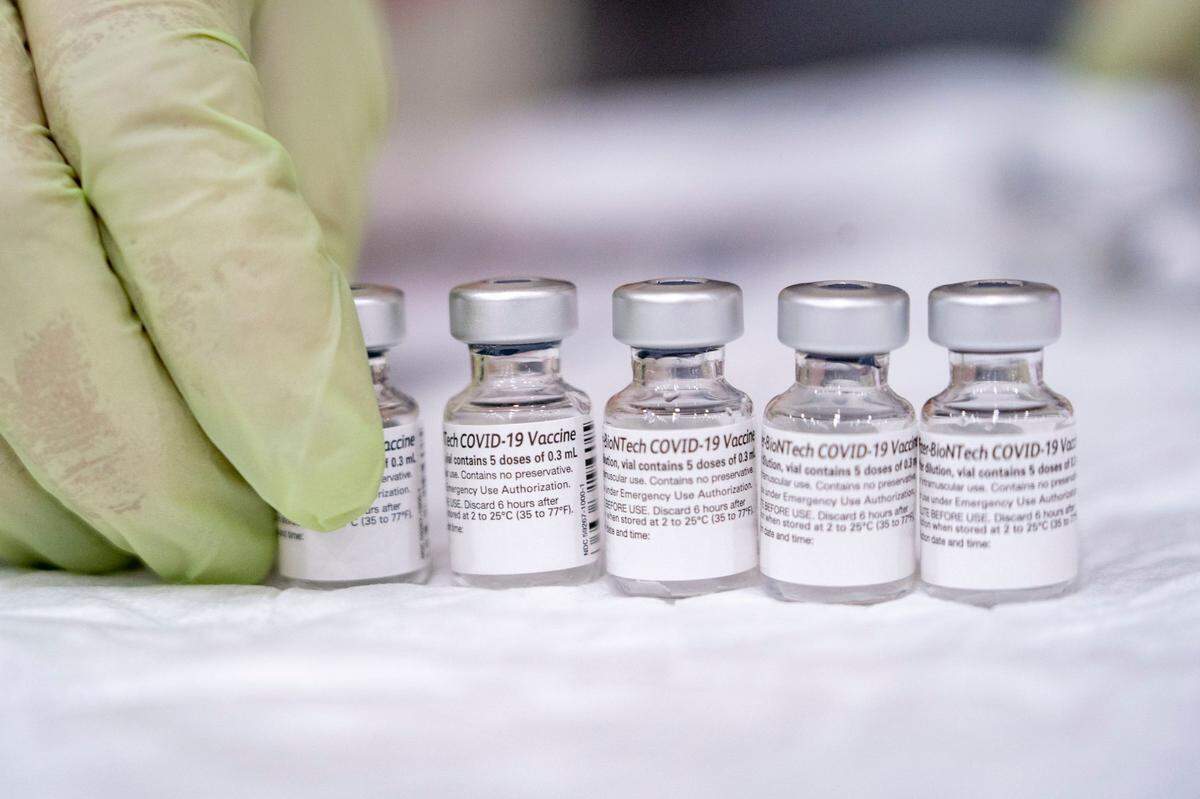
That brings us to the present: One year after the pandemic was declared by WHO, California once again finds itself attempting a reopening of the economy as well as K-12 schools.
This time, though, the state has the key tool of vaccination on its side.
Although the state’s rollout has proved messy, with eligibility priorities confusing and ever-changing, California has managed to inject more than 11 million doses of vaccine. According to the U.S. Centers for Disease Control, 25% of the state’s adult population are at least partially inoculated and about 12% are fully vaccinated.
Vaccine providers and local health offices, including Sacramento County, have alleged they are not getting their fair share of doses as the state continues to adjust allocation formulas. Those conversations are ongoing.
Conversations will also continue on what is and isn’t safe to do as case rates drop and vaccine rates rise.
The CDC recently released guidelines on how fully vaccinated people can gather safely. Newsom and lawmakers struck a deal on how to incentivize K-12 schools to reopen for on-campus instruction. CDPH in the past week announced outdoor sporting events and performance venues can reopen to fans April 1, with restrictions and capacity limits established in the tier system.
California and its capital are still more than a few tweaks away from pre-pandemic normalcy. Mass vaccination should help accelerate that timeline, and health officials are cautiously optimistic that the worst of the health crisis might be over.
And, when the pandemic finally is over, Sacramento can shift its focus from ending the health crisis to recovering from it.