
If shaming Sacramento’s homeless people solved anything, we’d have declared victory by now
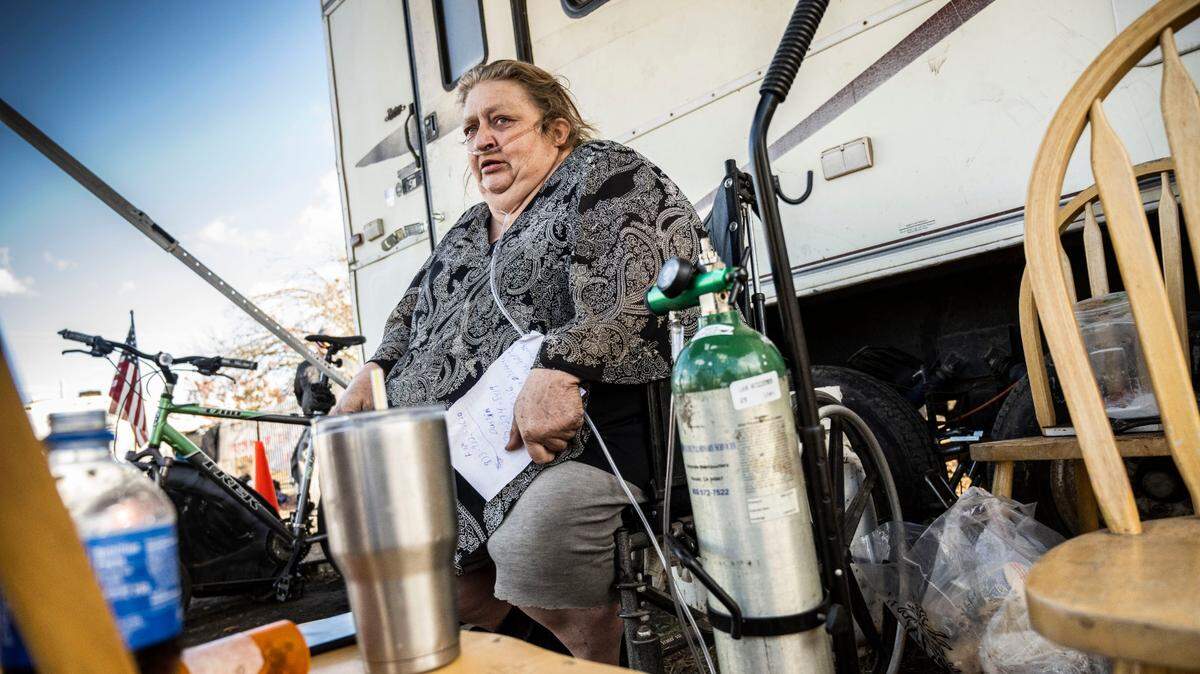
Shonn Adams, who was born in Roseville and has been homeless in Sacramento for the last 12 of her 53 years, told me about her life by starting at the beginning: “My dad was a biker, and my mom was a hooker.” When I responded with an “I’m sorry,” she immediately set me straight: “Why? I’m not.”
Most of us will never know how we would have coped with a childhood of watching “my alcoholic dad beat my mom” followed by years of domestic abuse from her own so-called partner. As a 16-year-old runaway, she didn’t even feel she could report it when the 31-year-old she’d met at a mall got drunk on peach brandy and shot her while she was pregnant with his child.
But Shonn, who has mostly supported her family by selling drugs and sex, wants us to see her, and also to see her as she is: “I don’t apologize for anything I’ve ever done. I did what I had to do.”
For as long as I can remember, I’ve wondered why we so reflexively resent the luckless. We assume the worst of the poor and hold them to high standards, yet are ludicrously quick to believe the best of even the most undeserving rich.
We routinely support giveaways to those who need help the least and often choose to see past their foibles and failures, little or large. When it suits us, we can even forgive their thievery at our expense.
People who live on the street often seem to have internalized our certainty that they must deserve their piles of trash and lack of plumbing. But if shaming the homeless held the key to solving their problems, we would have done so long ago.
Perhaps it’s in reaction to all of that disdain that I sometimes see the poor presented in a way that is almost as airbrushed as a celebrity profile. Only, prettying up reality hasn’t made a dent in homelessness, either.
I thought a long time about telling Shonn’s story, and repeatedly asked her if she was sure that she wanted me to, knowing that she’d be judged. “They already do,” she answered, “so I have nothing to worry about.”
She lived for years in a tent on the American River, and still lives in an encampment near there, in a leaky motor home that’s covered with a tarp and heated by a generator that recently failed, so there went $600 of the money she’d been hoping to use to rent a real home. The whole place, which she shares with her dog Honey, her cat King Tut and her former fiance Steve, is about as big as a four-person tent. Because she uses a wheelchair and an oxygen tank, even climbing in and out of it is an ordeal.
Though she says she doesn’t care what anybody thinks, it does hurt when the Uber driver won’t pick her up to take her to the doctor after all, after arriving and seeing that she’s homeless. When she felt a little better, she could get by on her disability plus recycling, but a couple of times she has had to stand outside a grocery store with a sign asking strangers for gas money to keep her generator running. One of those times, she was there for hours and took home nothing. “That is a hard thing to do,” she said, crying. And she does care when people won’t even look at her. “We are human beings, too. We are just like you, with feelings and dreams.”
In fact, Shonn is so radically human, and so uncommonly honest, that she refuses to be seen as either the creator of all of her own problems, or as someone who had no hand in them.
From runaway to selling sex
When Shonn ran away from home on the last day of her 10th grade year, it was after her father had left her a letter telling her he wanted to have sex with her. Yet by the time he died on Christmas Eve of 2019, she had long since forgiven and taken him in, nursing him both when she had a home and after she lost it and was living on the river. “He was still my dad.”
She also spent the last three months of her mother’s life nursing her, fully aware that “she took a lot of hits for us,” literally and otherwise. “She made sure I had Christmas even if our electric got shut off the next month.”
Oh, she does feel remorse: At 17, “I put a girl in a wheelchair for the rest of her life” in Stockton, during a fight that “was so stupid.” And the last time she ever saw her father, she was angry at him and had refused to sit with him until he fell asleep. “I carry a lot of guilt” over that.
Still, she paid more heavily for some of those times when she did what we’d call the right thing. Like when she was evicted and first became homeless, also at age 17, after refusing to sleep with a landlord who’d said that if she’d do that, well then he’d let the rent slide.
By 19, she had almost died from a tubal pregnancy and by 22, had learned firsthand that “the cops don’t consider it rape when you work the streets.”
She stopped drinking at age 26, but “I still do meth; I won’t lie. Everybody has a coping mechanism, and mine’s not legal.”
She served time twice, for selling crack and for intentionally running over a man who, according to her, had molested one of her daughters. And that last crime, you might not be surprised to hear, she only regrets executing so poorly.
Nor is she at all ashamed to have supported her children through sex work: “I kept a lot of marriages together. Your heart’s not involved; we’re not going out to dinner and to see a movie. You’re paying me for my time.”
In search of peace and a bathroom
She did try to become a vet tech, taking classes at Cosumnes River College for three years, and she speaks with pride about a couple of her straight jobs, including one washing dishes at the Stockton State Hospital, which closed in 1995.
It was after she was laid off from her low-paying but on-the-up-and-up job at a call center that she was evicted from the Oak Park home she’d been renting for nine years. “I loved that little house,” she says, and was so glad to have been able to give presents to the mail carrier and even the landlord at Christmas.
It was an achievement to have survived to raise her three children, and the blow of her life was losing the youngest of them on Jan. 20, 2022, to the fentanyl that her daughter had thought was a Percocet for back pain.
Shonn herself is in poor health, with COPD and congestive heart failure, but has not given up on finding a place that she can afford. “I just want to live in peace for a little while, and not have to move again, and have a bathroom” that’s fully functional.
I know from experience that readers will let me know that she does not deserve these basics, or any assistance from us. Because they have already written to say that if homeless people can afford to have a tattoo, or a cellphone, or if they smoke or eat enough to be overweight, then they can obviously afford to pay rent.
No matter what life has handed them, they should simply have walked away, or worked harder. And since they didn’t, why should any of the rest of us have to pay for their poor decisions?
Not even Shonn would say she hasn’t made some of those, though it wasn’t her choice to be born into a violent home.
So why does she deserve peace and a bathroom? Only one reason, really. Because, as she says, she’s a human being.
This story was originally published December 30, 2022 at 5:30 AM.