
I was a child in Iran, like the girls killed in bombing the U.S. may have caused | Opinion
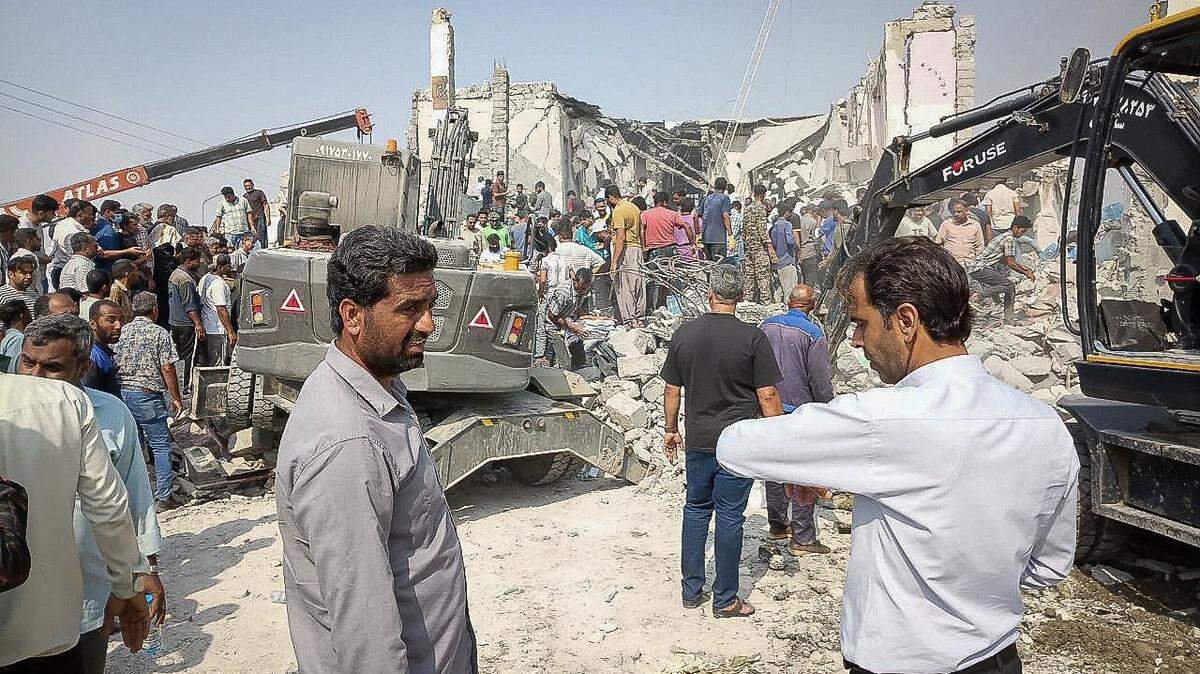
On Saturday, Feb. 28th, the U.S. and Israel launched a military operation in Iran, unleashing 2,000-pound bombs on the country’s ballistic missile facilities. That same morning, between 10 and 10:45 a.m., a missile struck an all-girls elementary school in Minab, Shiraz. At least 175 children and staff were killed. The U.S. has admitted it was “likely responsible” for the strike.
“In one video, a very small child’s severed arm is pulled from the rubble,” wrote The Guardian in the aftermath of this unspeakable tragedy. “Colorful backpacks covered with blood and concrete dust sit among the ruins. One girl wears a green dress with gingham patches on her pockets and the collar, her form partly obscured by a black body bag. Screams can be heard in the background.”
When I was a school-aged child growing up in Tehran almost 14 years ago, I remember lining up in the school courtyard, chanting the morning prayer — the only words I can recall are “Bismillah Rahmaneh Rahim,” “In the name of Allah, the most gracious, the most merciful.” I remember my mother brushing my hair and separating it into two plaits before braiding them, my curls disappearing under the white linen of my headscarf.
I remember a third-grade French teacher explaining that the school week in the U.S. was Monday through Friday. It struck me as so foreign before I immigrated to California with my parents in 2012. In Iran, the school week runs from Saturday to Thursday, which is why little girls were sitting in those desks when the bombs dropped.
Those of us within the Iranian diaspora are reeling from news of the war and are divided by it.
Videos online show Iranians dancing and celebrating the airstrikes, which have struck many non-Iranians as bizarre if not outright deluded. For many Americans, the war feels unprompted and unnecessary. How could Iranians be celebrating it?
This is a question I’ve been grappling with for the past year, ever since the U.S. bombed Iran’s nuclear facilities during the 12-day war with Israel last June. I wrote a column urging the U.S. to stop. There are more than enough think pieces about why the Iran offensive is a good or bad idea, whether it’s another Iraq or Vietnam, how Iran is engaging in horizontal escalation and a lot of other jargon.
I oppose the war simply because I don’t want to watch my home country burn, for people to die. As the U.S. started to bomb oil depots in Tehran, the sky was black as tar; you could hardly see one foot in front of you. Tehranis are struggling to breathe; they don’t have food or water. What good is liberation if everyone is dead?
But many members of my family welcomed the airstrikes.
In December 2025, mass protests in Iran greeted the Iranian currency’s drop, making it worth zero U.S. dollars. In solidarity, there were mass protests in Los Angeles and Orange County, where 400,000 Iranians live, the biggest population of Iranians outside the country. A few of these protests took place at my local Persian supermarket. In January, I attended one of these protests to understand what members of my community were thinking.
Many of the Iranians who organize and show up at these protests are monarchists rooting for U.S. intervention in Iran and the installation of the exiled son of the former king, Reza Pahlavi. Many of them are Trump supporters who voted in hopes that he would interfere in the Islamic Republic’s killing of protestors.
I spoke to one middle-aged woman, Mitra, who was there to protest. “Since three years ago, we’ve been trying to reach the administration, to reach Congress, that people in Iran need support,” Mitra told me. “Their only weapon right now is their lives. Fortunately, this administration is noticing it. So this means a lot for us.”
I also spoke to Faramarz Dorani, an Iranian man in his 70s who immigrated after the 1979 Revolution, put it in stark terms. The Iranian regime trains and funds many different proxies in the Middle Eastern region, such as Hamas in Palestine, Hezbollah in Lebanon, the Houthis in Yemen. Israel’s attacks on these groups, coupled with the bombing campaign in the summer of 2025, severely weakened the Iranian regime. But to Faramarz, it isn’t enough.
“If you have a sick tree, and it’s got a lot of sick branches, like Hamas, Hezbollah, Zainbin, Fatima, like Hashem in Iran, like some of the Syrians and so forth,” Dorani said. “Let’s say those are branches, but the main tree is Iran. It’s very simple. So what is the purpose of cutting the branches of a sick tree? The tree is going to remain there. What they need to do is to just get this tree out and burn its roots so they don’t exist anymore.”
This is the kind of mentality many in the Iranian diaspora have adopted, that the ends justify the means. As I watched videos of protesters in the streets of Tehran and Karaj, flesh meeting gunfire, I felt the same desperation as Mitra and Faramarz. I started to realize that those in my community who see American intervention as a necessary evil are people who have been hurt so excruciatingly.
After the elementary school bombings, I looked at images of parents scrambling among the ruins of the school, salvaging pink backpacks and tiny shoes, and memories from elementary school came back to me. Fourteen years after my parents and I moved from Iran to the U.S., they’re worn, like a faded photograph.
When members of the Iranian community attack those of us who are against the war, I only think of the dead little girls. When I look at photos of them smiling in their green school uniforms, their almond-shaped eyes the same shade of brown as mine, I see my friends and I running around on hot, sunny afternoons, sweating under our uniforms.
They didn’t ask for the U.S. to bomb them. They didn’t know their government wouldn’t protect them, would shove them into a white van for not wearing their headscarf “properly.” They didn’t ask for any of this, but they paid for it.
Tania Azhang is a graduate student at Columbia University and was a Sacramento Bee intern in 2025.
This story was originally published March 10, 2026 at 2:29 PM.