
Mayor Steinberg: Aggie Square community benefits deal proves political unity is possible
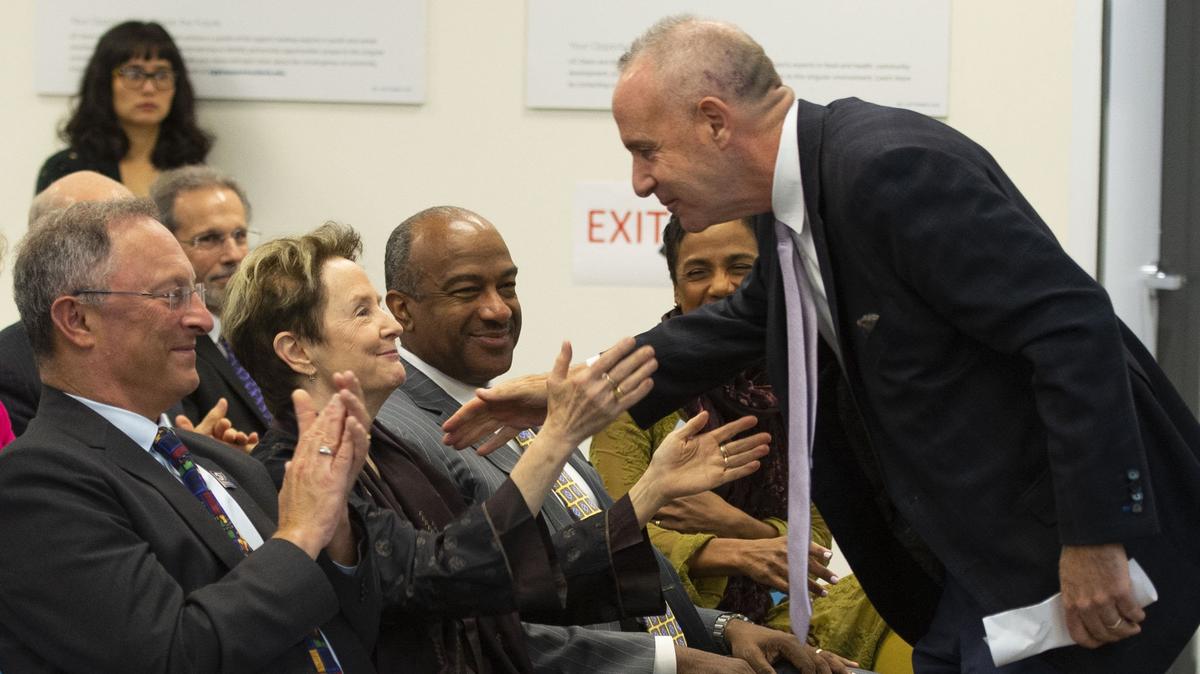
The great political divide between progressives and moderates is not confined to Capitol Hill. It’s also the dominant political divide in our city.
As Sacramento grows and changes, the traditional power centers are being challenged. Younger voters rightly demand urgent action on historical racial inequities, income inequality, affordable housing and climate change.
Business leaders, especially after the crushing pandemic, worry that too much government activism will make it harder to recover, slow down industry and job growth, and limit the emerging aspiration of Sacramento as a great cosmopolitan city.
This is our reality — unless we join to create a more unified and productive one that both delivers on the promise of equity and promotes jobs and economic growth.
That’s what we have done with Aggie Square. The new innovation district is not just a $2 billion-plus investment with UC Davis that will create 5,000 plus jobs in a struggling part of our city; it also represents a paradigm shift in our city’s politics and its center of power.
First, a little history. When UC Davis Chancellor Gary May, business leaders and I proposed building a multibillion-dollar economic project adjacent to the university’s Stockton Boulevard health campus, progressive neighborhood leaders and the American Federation of State, County and Municipal Employees (AFSCME), the union representing UC service workers, sounded the alarm.
What are the community benefits, they asked? Specifically, how would this project benefit the moderate- to low-income residents of the adjoining neighborhoods? Wouldn’t all the new high-wage workers flooding in displace existing residents? Would the private-sector companies recruited as Aggie Square tenants pay their service workers lower wages and benefits than those employed by the university?
The neighborhood leadership and AFSCME used their power and separately sued the UC and Aggie Square developer Wexford Science + Technology, seeking to stop the project unless their concerns were addressed.
This generational economic growth opportunity was at real risk of disappearing. Fingers were pointing in every direction. Proponents pleaded that without the project, there would be no community benefits. Skeptics said that without guarantees, the growth produced by Aggie Square could hurt the people who were already there, many of them struggling economically.
Then something remarkable happened: With a little nudge and a little facilitation from city leadership, the committed parties started to talk. There wasn’t much of a relationship or trust at the beginning. Sometimes, trust can only be built by painfully working toward a real result.
Months of dialogue, negotiation and difficulties were completed earlier this month. The result: Both the neighborhood and AFSCME lawsuits have been settled, clearing the way for Aggie Square to break ground.
The agreements with Sacramento Investment Without Displacement, a coalition of organizations representing vulnerable communities, and AFSCME will deliver big for the community. Ten million dollars — half from UC Davis and half from the city — will go to help existing residents and lower-wage university employees maintain and improve their housing situations by assisting with such items as home repairs, down payments and emergency rent. The city and Wexford have pledged another $40 million to partner with the private sector to build more affordable housing in the Stockton Boulevard corridor.
Affordable housing is only a start. Residents of Oak Park, Tahoe Park, Med Center and other south Sacramento neighborhoods must get 20% to 25% of Aggie Square jobs. Most service workers will be UC employees with higher negotiated wages and benefits; contract service workers will be paid comparable wages and benefits.
The parties are investing $1 million in a one-stop employment training center. Aggie Square will be built by workers paid prevailing and living wages. UC Davis and Wexford will create permanent community spaces at Aggie Square and invest millions in climate-friendly infrastructure, including expanded transit options for all new companies and workers.
We view the comprehensive set of benefits negotiated for Aggie Square as a model for building a true partnership with the community.
Politics doesn’t always have to be about division. Unity creates so many more possibilities.