Blue Diamond finds buyer for majority of midtown campus. Developer plans housing
Blue Diamond said Tuesday that a local developer intends to buy 35 acres of the almond collective’s sprawling plant in midtown, and build it out with housing and retail.
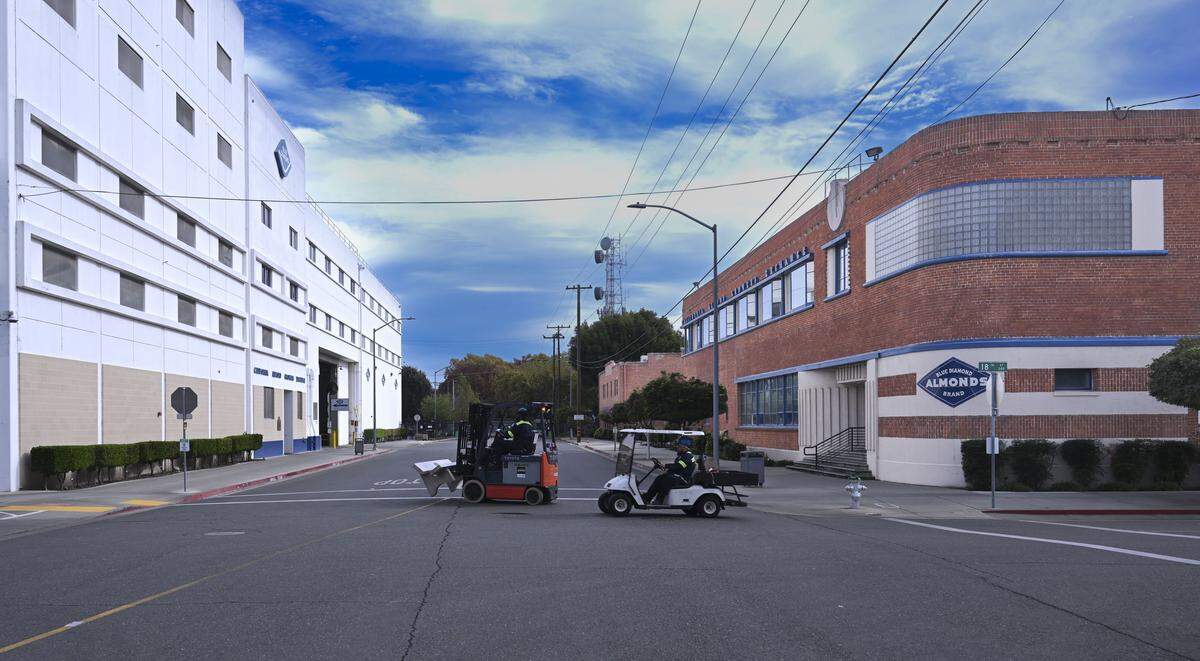
The announcement marked a sign of progress in the months-long effort to ensure the century-old manufacturing site is converted for new uses. Blue Diamond officials announced last June they intended to close the aging plant — which had become difficult to maintain and has an inefficient layout — and consolidate its manufacturing into sites in Turlock and Salida. Locals had worried about the future of the expansive campus, which occupies 53 acres on the edge of residential midtown.
The developers — Bardis & Miry Development — said in a news release Tuesday that their “initial vision” for the property sees it transformed into a walkable, mixed-use community with 1,000 to 2,000 homes, ground-floor retail and other amenities.
Still, they are evaluating the site, and “all redevelopment options remain on the table,” Bay Miry, one of the firm’s principals, said in a statement. The overall cost of the sale was not disclosed.
The property has represented a major question mark for civic leaders, and a 53-acre opportunity. It is located on the edge of midtown, one of Sacramento’s central neighborhoods, and on the edge of the River District, a historically industrial area that has seen new housing and interest from developers in recent years. Meanwhile, long-awaited projects are underway in the nearby Railyards, from Kaiser’s hospital to the Sacramento Republic FC stadium.
“We’ve just unlocked this massive chunk of land that is sort of, up for discussion in a way that it hasn’t been for 100 years,” said Councilmember Phil Pluckebaum, whose district includes the Blue Diamond site. “That’s a big opportunity for the community, to think about what kinds of investments we want to see. I think housing is right in line.”
Sacramento-based Bardis & Miry led development of the Mill project, a former lumber mill that occupied 30 acres south of Broadway, The Bee previously reported.
“The Blue Diamond plant site has been a part of Sacramento for over a century, and we are grateful for the opportunity to build on that legacy in a way that will serve the community for many years to come,” Katherine Bardis, a principal at Bardis & Miry Development, said in a statement.
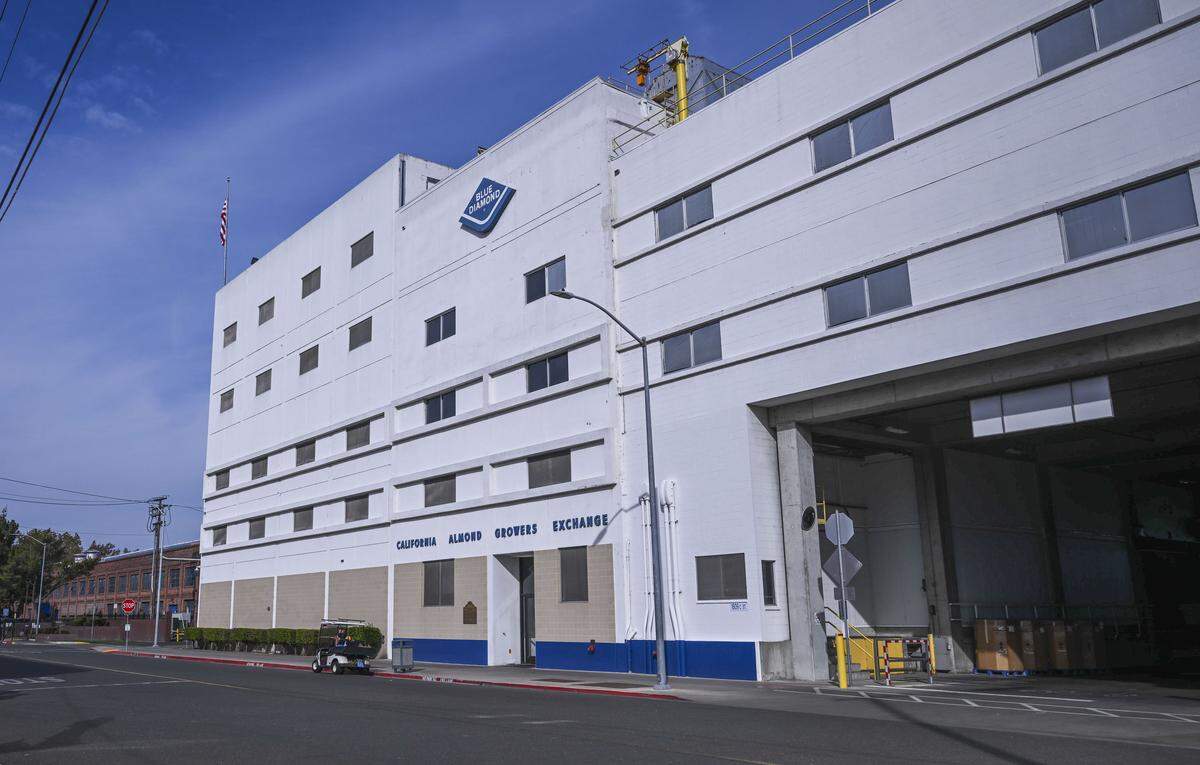
Blue Diamond said it will retain the remaining 19 acres of the site, on the northeast side of the campus to continue in-shell almond processing. The cooperative’s leaders announced last month they would keep that portion of the plant running, a reversal from their original plans to fully end manufacturing at the campus.
That section, the cooperative said last month, will support about 90 jobs. The plant employed more than 600 as of last summer, but has been reducing positions in phases.
Blue Diamond said Tuesday that it had agreed to lease back its corporate headquarters for three years, ensuring it will remain at the midtown property until at least April 2030. The cooperative had committed to keeping its corporate headquarters in the Sacramento area, though leaders previously said they hadn’t determined where in the area it would be over the long term.
Blue Diamond was represented in the deal by Ken Turton, of Turton Commercial Real Estate, whose firm has handled other complex transactions in the region. It represented CalPERS in the sale of 301 Capitol Mall — the vacant city block that was once home to the Sacramento Union newspaper — to the Shingle Springs Band of Miwok Indians in 2024. His firm handled the sales of a handful of buildings on K Street, consulted on Project Elevate, a retail and entertainment project in Elk Grove, and was hired to lease the retail space in the “Downtown Dova” project in Rancho Cordova.
Turton declined to comment Tuesday.
The Blue Diamond campus sits in an incongruous section of Sacramento that is in somewhat of a transition, bordered to the west by the suburb-bound 16th Street corridor and to the south by residential midtown.
“It’s kind of a crucial time,” said Devin Strecker, executive director of the property-based improvement district for the River District, where the plant sits.
Developers announced plans a few years ago to convert an old produce terminal nearby on 16th Street into a mixed-use project called the “Growers’ District.” Another location along the corridor is for sale, Strecker said, and he has been encouraging the brokers to “think big” about what it could become.
Strecker’s agency, in planning documents, has envisioned a future for that section of Sacramento that would retain the historic, red brick buildings, but bring new restaurants and activity.
“It’s just really exciting to think that, in a few years’ time, that vision could be shifting into reality,” he said. “It seems like things are starting to take shape over there.”
Strecker and Pluckebaum said they were pleased that housing was at the forefront of the developers’ plans. And the proposal raises new possibilities in its proximity to the American River and its bike trail, which connects to midtown at C and 19th streets alongside Blue Diamond. It could serve as an opportunity for Sacramento to make greater use of its riverfront, Pluckebaum said.
“All these things we’ve been working on for decades may, finally start coming together,” Pluckebaum said. “I’m sure eventually it’ll be the decade that we finally see Kaiser in the Railyards, and Republic, and the Grower’s District. And this project. And you start seeing the dominoes start to fall.”
Still, for the Blue Diamond site, there are challenges ahead that can’t be discounted — namely, financing, entitlements and planning review, Pluckebaum said.
“That has been the sort of Achilles’ heel of all other projects in the region for the last decade,” Pluckebaum said.
This story was originally published May 19, 2026 at 10:54 AM.