
The Sacramento Bee got this story wrong for more than 100 years. This is our plan to change that
Hello, Sacramento. My name is Marcus D. Smith, and I am the new reporter covering Black communities for The Sacramento Bee’s Equity Lab.
That’s my beat, and it’s pretty groundbreaking. I’m the first reporter in The Bee’s 164-year history focused exclusively on serving our Black communities.
My intentions are to amplify Black voices in the Sacramento region, and in doing so, to contribute to the empowerment and advancement of Black people.
That begins with reaching those who look like me. Let’s show the next generation of thought leaders and influencers that there are role models making a difference in my hometown, the “City of Trees.”
The Bee, like most other mainstream media outlets, has failed to adequately serve Black communities for decades. The paper has too often hurt the community or has fallen short of reflecting its needs. And this isn’t just ancient history; as recently as the 1990s, at times The Bee inflicted harm on the Black community.
While the paper has had reporters covering diversity issues in the past, it wasn’t until 2020 — following a summer defined by a social justice movement — that The Bee launched the Equity Lab, a team of community-funded journalists focused solely on serving communities long neglected by mainstream media. My position is part of that team.
I grew up in Sacramento. Some of you know me from playing basketball at parks and gyms around the city. I graduated from Franklin High School and went on to further my education at Texas Southern University, obtaining my bachelor’s degree in journalism.
Friends and family who have been following my young career know that sports journalism was my first passion. However, after completing my bachelor’s degree and then returning home, I wanted to find ways to apply the lessons I’ve learned and the knowledge I’ve gained.
I want to engage our communities in productive conversations and encourage you to share your stories. I am committed to telling those stories with transparency and integrity. I will report stories about our people, our triumphs and our challenges — a beat for us, by us.
Our newsroom has had other journalists who have covered some of these issues: an ethnic affairs reporter, a minority reporter, a culture reporter and reporters focused on issues related to diversity. Those beats covered a range of communities but did not sufficiently serve Black communities.
A beat for our Black communities
My commitment is to provide the type of coverage that allows Black communities in Sacramento to be heard. The type of coverage that acknowledges our viewpoints, celebrates our highs and elevates the conversation on social issues.
I’ve already written a range of stories that have highlighted the talent in Sacramento, honored community leaders and pioneers and featured local Black businesses.
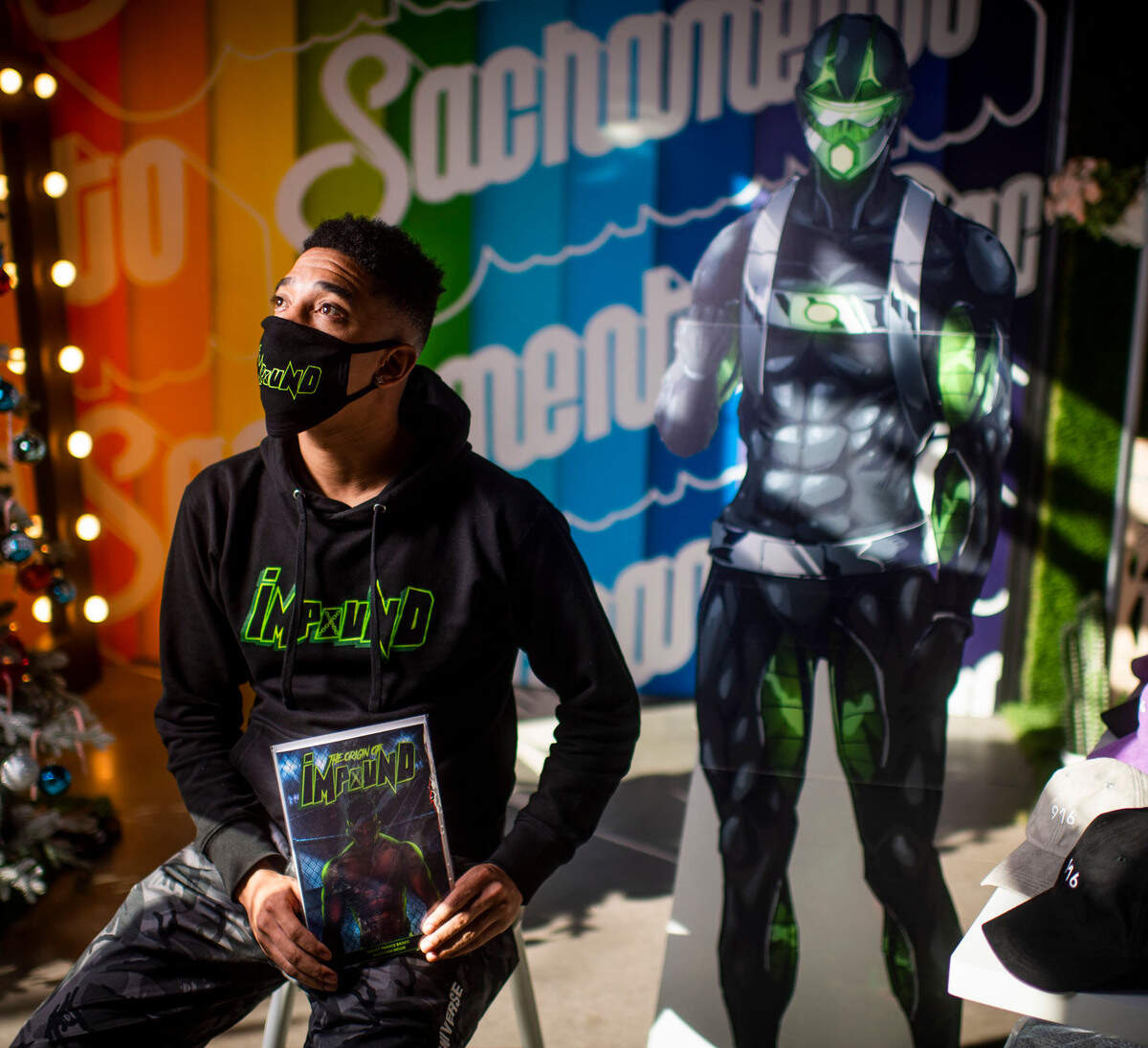
There were stories about Voice of the Youth donating holiday gifts to families in need, U-CAN providing tools and resources to students for a college education and a profile of a Sacramento native creating a comic series, Impound Comics, based on his hometown.
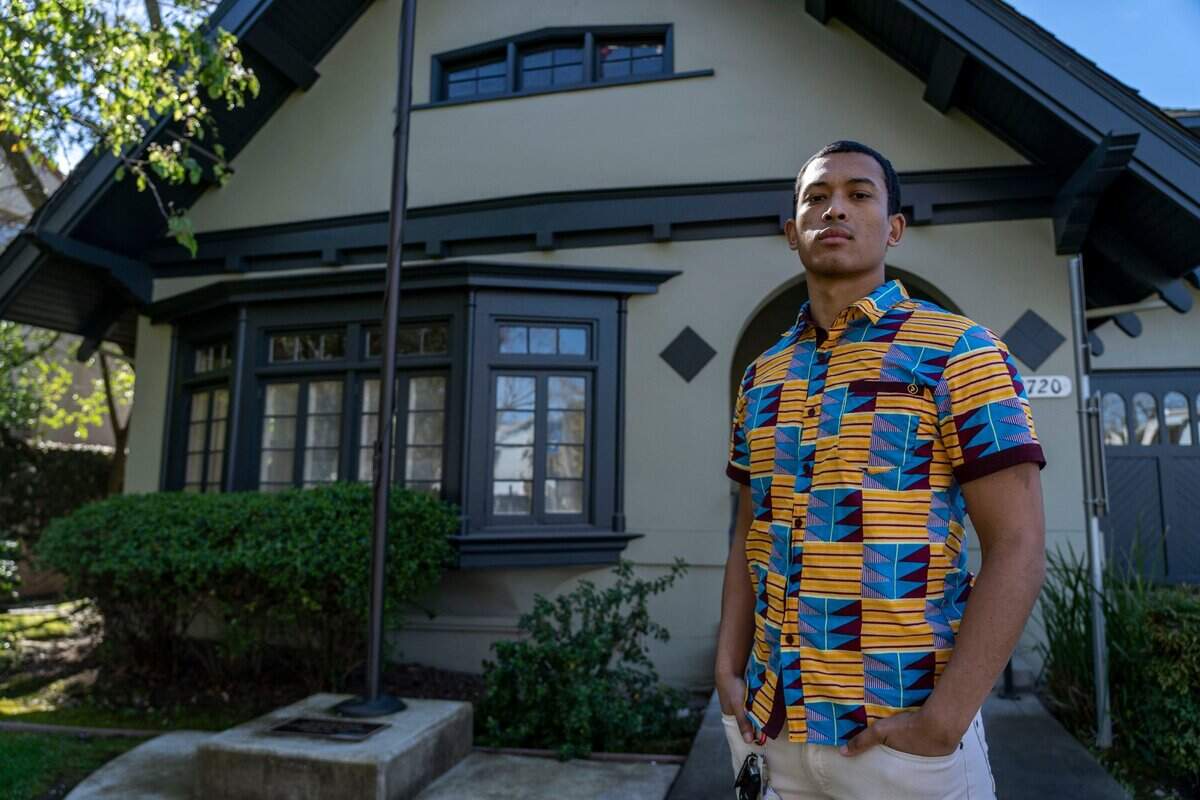
I’ve also held people accountable. I recently reported that current and former members of the Sacramento Fire Department have been subjected to hazing and racist remarks.
That’s only the beginning.
But what about the past? To understand where you are and where you are going, it’s important to examine where you have been and consider the consequences of past actions.
I wanted to examine The Bee’s history and its relationship with our community to gain an understanding of why the paper created this position.
I began this beat in October to illuminate the lives of those who have so often been ignored — and at worst, have been maligned by mainstream media. However, upon accepting the job, I did question a few things.
Why is this beat new? What did The Bee do before to cover Black communities? And is The Bee, like many other American companies and organizations, suddenly pandering to the Black audience?
Last fall, I began researching The Bee’s history and its relationship with Black communities. And what I found is that The Bee historically failed to report fairly on Black communities and failed to reflect the positive contributions of Black Sacramentans.
I spoke with Sacramento residents, historians, business owners, Sacramento Bee staff (both former and current) and others in the media to find answers to my questions. All in some way expressed disappointment with our coverage of Black people.
Bee’s past coverage of Black communities
For decades, this publication has perpetuated inaccurate and incomplete representations of Black residents.
“Thanks to a number of honest conversations, I came to understand where I thought we were not engaging as a full participant in the conversation about Sacramento’s future,” said former Bee president and executive editor Lauren Gustus, who led the newsroom when it established the Equity Lab and my job. “With support from both inside The Bee newsroom and from stakeholders in Sacramento, we created the Black Communities reporter position.”
By looking back through the history of what Black communities have overcome — and continue to overcome — we can understand the significance and value of this newly-created position and what it can bring to the city.
Coverage of Black people in all media, including the McClatchy family’s Sacramento Bee, often misrepresented who we are and contributed to cultural, social, economic and professional biases.
“A discussion point for many years is how we teach our history and how we have left out a lot of people,” said Sacramento historian Marcia Eymann. “We’ve left out big chunks of our society, and that (became) a norm to the white majority at that time. I think you can look at the McClatchys — they did a lot of good, but they also neglected a lot.”
In The Bee’s early decades, Black men and women were depicted in stories as angry, criminals, gang members, homeless or drug addicts.
When Black people were mentioned in the paper, they were regularly described with derogatory language. The n-word — with the hard “r” — appeared in headlines, stories and in quotes.
The archives show the many ways Black people were denigrated. We did not see “us.”
“I’m struggling to document African Americans here in the Sacramento area,” said Eymann. “The only place in the 19th century or in the early 20th century where I can get (good) images of people of color is to go to the (police) mug books. What does that tell about where we come from? The majority of the images that I have of people of color are in the mug books. Otherwise, they’re not being recorded.”
As early as the beginning of the 20th century, Black people felt alienated from The Bee and reached out to newsroom leaders, hoping they would listen.
D.W. Griffith’s film “Birth of a Nation,” which played in Sacramento at the Clunie Theatre — a popular movie house — was advertised by The Sacramento Bee despite requests from the Black community to stop. The film, which focuses on the Civil War and the Reconstruction era, is widely viewed as racist propaganda, depicting the Ku Klux Klan as heroes and Black men as violent, animalistic criminals.
The NAACP and pastors wrote to the mayor. Black residents wrote to The Sacramento Bee, pleading with the staff to ban the advertisements, citing the racial content and scenes showing hatred and bigotry.
The Bee and the city ignored the pleas, saying the film was a form of freedom of expression. The film continued to be advertised by The Bee and played in theaters in Sacramento throughout the early 1920s.
Decades later, in 1955, following the lynching of 14-year-old Emmett Till, The Bee covered the Mississippi case extensively, focusing on the acquittal of the two white men. The outcome sparked tension throughout the country in Black communities. The Bee reacted by trying to improve its relationship with the Black community in Sacramento by covering protests and meetings arranged by the NAACP. And things seemed to be improving as NAACP leaders were appreciative of The Bee’s coverage of their protests.
“Thank you for your excellent coverage of our Emmett Till protest meeting,” NAACP Sacramento branch president, Alvernon Tripp, wrote in The Bee. “We believe this was the largest meeting of this type ever held in Sacramento by the NAACP.”
Trust fades
It didn’t take long for The Bee to lose the trust it was building.
In 1967, The Bee published a front-page headline that proclaimed, “Capitol is Invaded,” describing dozens of armed protesters, including members of the Black Panther Party, walking into the Assembly chambers to protest a bill that would make carrying guns in incorporated areas illegal.
The protesters were taken into custody — even though authorities said no laws had been broken — and for days, The Bee continued to publish headlines about the Capitol being “invaded.” It highlighted police saying they “feared for their lives.”
Those headlines left a stain and undermined The Bee’s credibility in Black communities.
“I’m a Bee subscriber; I have a lot of issues with The Bee,” said Julius Cherry, an attorney and longtime Sacramento resident who is a former city fire chief. “I’ve been in Sacramento over 40 years. We appear in The Bee a lot for negative stuff, and there’s also a lot of good (that) people in African-American communities have done for Sacramento for a long, long time.”
The late Raymond J. Charles — whose obituary I recently wrote — was one of those people. His appointment as Sacramento’s first Black fire chief in 1986 was barely covered by The Bee. Readers didn’t see many stories about him or other Black residents who had deep roots in Sacramento and contributed positively to the community.
The Bee did not hire its first Black reporter until 1969, some 112 years after it was founded. Richard Harris was a brave, fiery and outspoken journalist who paved the way for all the Black journalists who followed him at The Bee.
In 1971, the Sacramento Newspaper Guild pressed the paper to adopt a nondiscrimination clause requiring the company to hire minority employees.
The next year, The Sacramento Bee hired its first Black woman reporter. Bertha Gorman — whose granddaughter, Amanda, found fame with her powerful poem at President Joe Biden’s inauguration — started as an intern and was promoted to cover youth, education and women’s rights. During the 1980s and 1990s, The Bee newsroom became more diverse. Yet issues remained.
“I was reading the paper, and it was just too much negativity about our community,” said Fahizah Alim, a former Sacramento Bee staff writer hired in 1982. “Showing one side of our community, and that’s just not reality.”
Alim wanted to break down negative stereotypes about Black people and portray us as a diverse and productive community. She covered a variety of issues and wrote a column from her personal point of view. Those who worked with her said she was passionate, caring and committed to conveying the reality she knew was true.
Despite efforts to improve, The Bee continued to make errors in judgment. In 1991, a photograph of elementary school kids dressed up for Halloween was featured on the front page. The photo showed a Black girl who was dressed as a servant and appeared to be tending to a white girl. The headline read, “Getting into character.”
A few years later, in 1994, the n-word appeared in the caption of an editorial cartoon about Louis Farrakhan. The cartoon by Dennis Renault was condemned by local elected officials, and hundreds of Bee readers canceled their subscriptions. Even all these years later, both of those incidents resonate with Sacramentans.
When The Bee failed its Black readers, they turned to Sacramento’s first Black newspaper, the Sacramento Observer, which was founded by William Lee in 1962. It has been the main source of news for Sacramento’s Black communities ever since.
The Observer is a trailblazing publication that became the outlet for Black audiences and remains so because of the dedication of Lee’s son, Larry Lee.
“When it comes to the African-American community, I think they have fallen short, but they are not alone in that,” Lee said. “That’s not solely on The Bee. That would apply to local television stations and local radio stations as well. The Black community’s experience has never really been well documented by a mainstream medium.”
Rising Twenties: A new decade, a new approach
Like all media outlets, The Bee has made serious mistakes. We have had to grapple with and acknowledge our failings and our inadequate coverage of the Black community.
Last summer, The Bee banned the publishing of most “mugshots” in an effort to address some of these issues; police surveillance and booking photos feed stereotypes about who commits crimes. Following conversations with community members during the weeks of demonstrations about the police killing of George Floyd, The Bee largely banned the term “looting,” a phrase that had been weaponized against Black men.
“Today, we’re taking a clear-eyed look at the areas where we’ve fallen short in the past, acknowledging that we too often ignored entire swaths of our community. And we’re committing to do better,” said Colleen McCain Nelson, executive editor of The Sacramento Bee.
“We have a lot of work to do, but every day, we will strive to make progress, to elevate diverse voices and to place a priority on covering communities that have been underserved by The Bee in the past.”
We’re more than 100 years removed from those “Birth of a Nation” advertisements. Coverage of our communities may still fail to provide a complete picture of who we are. But I am committed to helping change that. I want to build your trust.
I let my hair down while writing this piece. I combed out my afro with my Black peace and unity hair pick, a symbol of what my presence at The Bee means. I believe that through constructive and meaningful news coverage, Black communities can not only improve our self-image but also thrive.
“The future belongs to those who plan for it today,” Malcolm X said.
The Bee now has an opportunity to hold its own newsroom accountable and provide coverage of thriving communities, while addressing the inequities that exist in the Sacramento region and holding our elected leaders to account.
The Sacramento Bee Equity Lab team is committed to that mission. We’ll provide Black residents with coverage that avoids stereotypes and portrays the diverse, complicated and dynamic experience that is living in the Black community.
“Black power is giving power to people who have not had power to determine their destiny,” activist Huey Newton said.
This is our chance to define history and tell the stories of how our generation created change that will last for centuries.
For us to control that destiny, we must consider where we are, where we came from and where we’re going.
We are the present — the leaders of the new school — paving the way for the future. The time is now.
This story was originally published March 31, 2021 at 5:00 AM.