
Car pursuits can be deadly to suspects, bystanders. California cops are shielded from lawsuits
READ MORE
California police pursuits
Slightly more than half of police chases conducted from 2018 to 2021 started when the initial criminal charge was an infraction.
Expand All
Exclusive: Sacramento police have highest vehicle pursuit rate in CA, Bee investigation finds
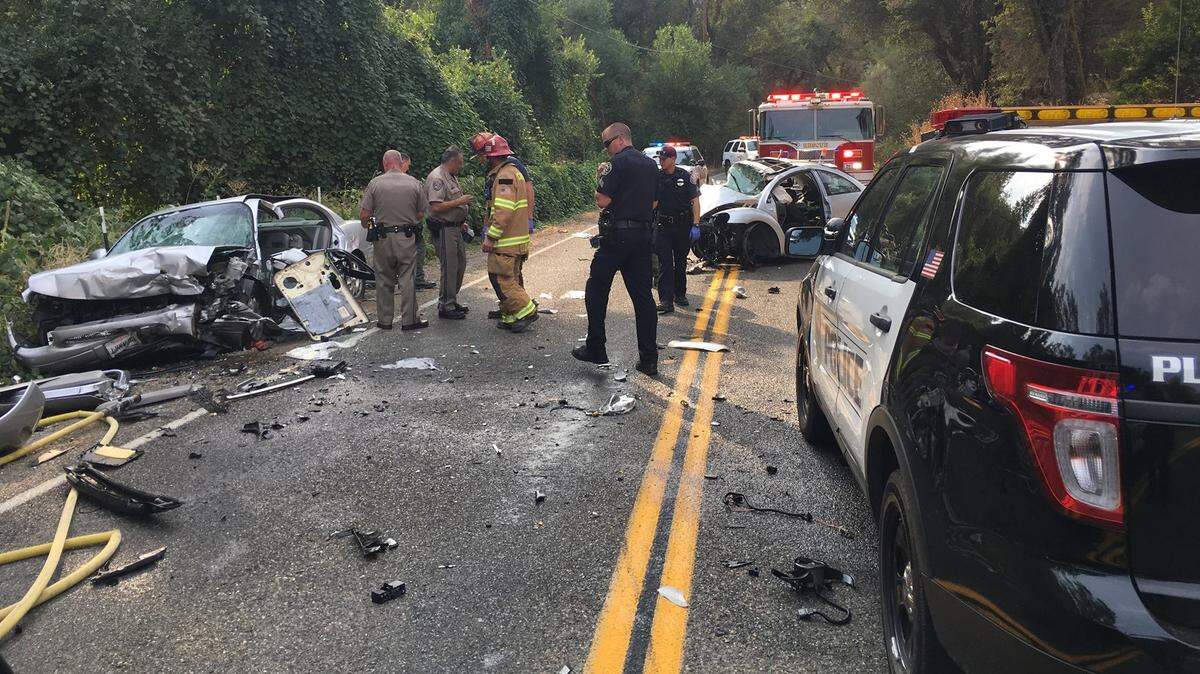
Car pursuits can be deadly to suspects, bystanders. California cops are shielded from lawsuits
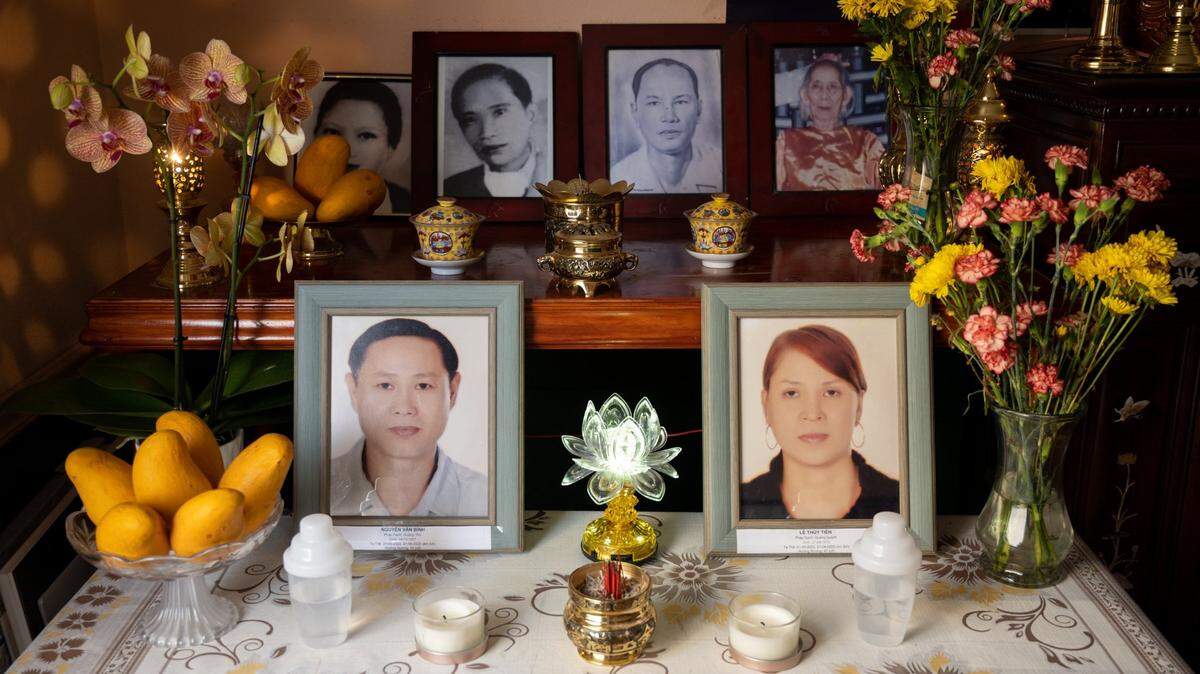
‘Relationships take time and care’: My lesson from interviewing a grieving Sacramento family
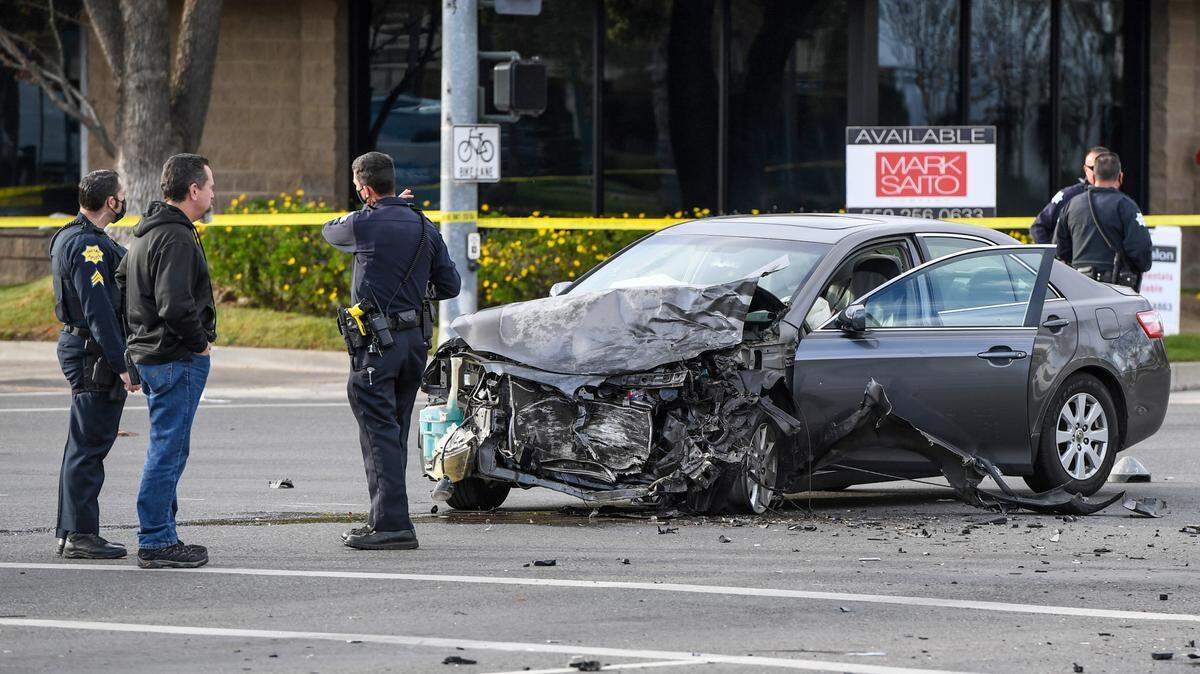
Searchable database: See how often California law enforcement agencies pursue suspects
An increasing number of people — including innocent bystanders — are being hurt or killed as a result of police chases in California.
But for the victims of those crashes and their loved ones left behind, there is another devastating truth: They will be hard-pressed to receive a dime from the police departments whose officers instigated the chase, even if it was clear the pursuit didn’t need to happen or it violated department policy.
Despite recent reforms around police use-of-force, California lawmakers have left intact a decades-old provision that largely shields police and sheriff departments from paying victims and families after a pursuit.
That kind of “immunity” is important so officers aren’t left to second-guess their actions to protect the public, police unions say. But a growing chorus of critics say those immunity rules are fueling California’s soaring number of pursuits and making it difficult to hold law enforcement accountable in an era of police reform.
“It’s not the money, as much as it is we want to fix this problem, to prevent other families from having to endure this pain and suffering,” said Candy Priano, an advocate for changing the immunity law.
.jpg "Candy_cropped_2018 (1).jpg")
She knows the dangers better than most.
Priano’s 15-year-old daughter, Kristie, was killed in 2002 on her way to a basketball game.
Police were chasing a joyriding teenager in an SUV through a residential neighborhood in Chico. The pursuit ended when the SUV smashed into the Priano family’s minivan at 65 mph. The impact crushed Kristie’s brain stem and killed her almost instantly.
Priano said there’s no reason for police to have kept chasing the teen. Because her mother was the one who reported she took the vehicle, they easily could have caught the teen when she returned home. “But instead, she was chased into us,” Priano said.
Since then, Priano has made it her mission to change California’s rules on chases to keep officers accountable and following their own policies. Too many innocent people are still dying, she said.
“One of the hardest things,” she said, “is seeing these tragedies repeat themselves.”
Experts say that most police chases put the public at unnecessary risk and regularly end in crashes that take innocent lives. Across the country in recent years, some lawmakers and police departments alike have restricted when officers can pursue suspects.
In other states, lawsuits are all-but-expected when a questionable chase ends in injury or death.
Police misconduct lawsuits are a fundamental tool for police accountability since the threat of paying a large settlement creates a financial incentive for officers not to engage in risky behavior, researchers have found. Litigation also is among the few ways for the public to obtain records detailing law enforcement’s inner workings, internal investigations and failures — records that inform policy making and improvements. Plus, settlements often involve requirements to improve policies and procedures in the hopes of avoiding future tragedies.
But in California, the most basic legal question after a chase isn’t whether an officer violated his or her department policy. All that matters under California law is whether the department had a pursuit policy, and that officers were trained on it.
It’s a feature; not a glitch. And it’s one that California’s recent police reforms have not touched — even with local, state and federal lawmakers prioritizing reform in the aftermath of the murder of George Floyd more than two years ago.
“It’s almost as if (a deadly pursuit) just doesn’t have the political bite that the intentional deadly force cases do,” said Robert Weisberg, a law professor at Stanford University. He said California’s law around immunity after a pursuit needs to be revisited.
“It’s been off in its own world and not getting the attention that police homicides have gotten.”
Deaths and injuries on the rise
An average of 350 innocent bystanders are injured each year in California, and 10 completely innocent bystanders are killed because of police chases. It’s a slight decline from two decades ago. The state Highway Patrol has touted that as a sign of progress.
“Despite significant media coverage, only a small percentage of enforcement actions lead to a vehicle pursuit,” the Highway Patrol wrote in last year’s report to the Legislature. “Law enforcement agencies overwhelmingly use sound, professional judgment when attempting to apprehend fleeing suspects. The vast majority of pursuits (78.8%) end without a crash or any injuries to the suspect or uninvolved third parties.”
Even still, the past two years have been particularly risky, according to the Highway Patrol records. An otherwise steady tally of reported pursuits soared by 30% in 2020. That year, 61 people died as a result of pursuits. A dozen of those killed were completely innocent bystanders.
“Police pursuits should be restricted to only those cases where the justification of use of deadly force is warranted, because it’s well known in the law enforcement industry that police pursuits are inherently dangerous,” said Andrew Scott, a retired police chief of Boca Raton, Florida whose doctoral dissertation was on police chases.
.jpeg "image0 (81).jpeg")
Tim Davis, president of the Sacramento Police Officers Association, doesn’t think changing the rules is necessary, even though Sacramento has the highest pursuit rate among large California cities. Davis said if officers aren’t able to give chase, “nobody will stop and everyone will just flee.”
He said giving officers immunity from most lawsuits doesn’t mean they’re not held accountable. There are “multiple layers of oversight,” including supervisors monitoring pursuits with the option to call it off if they deem it too risky. After each chase, supervisors review camera footage to ensure the officer acted appropriately, Davis said.
“If violations are seen, officers are disciplined for that,” he said. And if an officer’s conduct is particularly egregious, Davis said there are “still ways to hold the department civilly liable.”
“It’s not like the system doesn’t work,” he said. “It works.”
California’s pursuit immunity laws are different from federal qualified immunity, a far-reaching shield that was front-and-center two years ago during a nationwide reckoning on police accountability. That legal doctrine protects government employees, including police officers, from being subject to litigation unless there is extremely specific precedent for someone alleging their rights were violated. Many of those national efforts stalled in Congress.
Simultaneously, California lawmakers last year created a process to revoke an officer’s badge. The legislation, SB 2, also removed some police immunity provisions, potentially opening agencies up to additional lawsuits.
“The civil court process should ensure that peace officers are treated fairly,” the law states, “but that they can be held accountable for violations of the law that harm others, especially the use of excessive force,”
Yet California still has among the most far-reaching protections for law enforcement officers whose chases kill or wound someone. In most states, officers or departments are liable, at least to some extent, when someone sues after a chase. The specifics of those other states’ laws vary widely. But in California, immunity applies as long as a department has a policy and officers are trained on it.
“It’s as if the state of California thinks, ‘Well, that’ll get us where we want to get to,’ even if it’s a very different approach than what other states do,” said Weisburg, the Stanford professor.
Sen. Steven Bradford, D-Gardena, said it’s time for lawmakers to reform the pursuit immunity protection. Bradford, who chairs the Senate Public Safety Committee, wrote SB 2 and has long called for greater scrutiny of law enforcement.
He called the blanket liability protection for pursuing officers “crazy.”
“There’s no doubt that things need to be changed,” Bradford said in an interview. “I mean, if we’re going to have significant and real police reform, it’s essential that this law is changed, and that we hold officers accountable for their negligent actions.”
Pursuit kills teen, lawmakers kill reform
By 2001, one person in California died in a police chase every week, on average, according to federal data presented to state lawmakers. A bystander was killed, on average, twice a month.
Priano’s daughter would soon be among them.
.jpg "Kristie-B-ball_2001 (1).jpg")
After Kristie died, her family filed a lawsuit against the city. It was rejected due to the 1988 immunity law that gave blanket protection from lawsuits to California police officers when a car chase kills someone, as long as the department had a written pursuit policy.
And the Chico Police Department had one.
Around the same time, California’s 4th District Court of Appeal rejected a similar case brought by a family that sued the Westminster Police Department after an officer chased a suspect in a stolen van onto a school’s athletic field and into a crowded parking lot.
The suspect’s van rammed a dumpster, which slammed into a man, who died from his injuries.
Citing the same legal rationale that killed Priano’s lawsuit in Chico, the court reluctantly sided with the police after that man’s family tried to sue Westminster.
“We urge the Legislature to revisit this statute and seriously reconsider the balance between public entity immunity and public safety,” the judges wrote. “The balance appears to have shifted too far toward immunity and left public safety, as well as compensation for innocent victims, twisting in the wind.”
Giving department immunity was meant to be an incentive for police to adopt a written policy on pursuits — something that might make the streets safer for everyone.
“But,” the judges wrote, “the law in its current state simply grants a ‘get out of liability free card’ to public entities that go through the formality of adopting such a policy.”
Police unions fight against changes
Kristie’s family founded a nonprofit, PursuitSAFETY, that seeks to end unnecessary police chases. They also turned to their local Republican State Senator, the late Sam Aanestad.
The senator proposed a law that would only grant departments protections from lawsuits if officers started chases when they knew a driver had committed a violent felony or if the public was in “imminent peril.” Suspected shoplifters, joyriders or drivers who refused to pull over because of a broken tail light would not be grounds for a chase if the department wanted immunity.
Aanestad, an oral surgeon, compared the need for families to be able to sue after their loved ones were killed in a pointless police chase to how doctors can be sued for malpractice.
“I have lived my whole life putting people to sleep and doing surgery on them, realizing that any mistake can jeopardize my career and the life of somebody else,” Aanestad told The Los Angeles Times when he was crafting the bill. “And that doesn’t stop you from doing your job.”
Aanestad called it “Kristie’s Law.”
The bill faced intense pushback from the state’s police officers unions, which at the time had broad bipartisan support in California’s union-friendly state house. Lawmakers shot it down.
Then-Attorney General Bill Lockyer, a Democrat, warned in a letter that if members of the public were allowed to sue cops following chases “the public’s safety could potentially be at risk if officers fail to conduct these pursuits.”
The police unions proposed a compromise.
Lawmakers in 2005 passed the union-sponsored bill that granted police departments immunity from pursuit lawsuits on two conditions: Officers had to undergo annual training, and their departments have “a requirement that all peace officers … certify in writing that they have received, read, and understand” their chase policy.
The number of deadly police chases declined in the following years. But they still happened, occasionally igniting debate and litigation about the state’s immunity law.
Scott, the former Florida police chief, called California’s pursuit immunity law “crazy.” He said giving law enforcement that kind of shield removes a source of accountability that makes officers more likely to engage in reckless chases, increasing the risks to innocent bystanders, the suspects and the officers themselves.
“It’s a horrible thought,” he said.
The State Supreme Court in 2018 upheld the law after a mother who’d led police on a chase sued a Southern California city’s police force after her son, who was a passenger in her pickup, died in the ensuing crash. The Supreme Court rejected the woman’s arguments that she could sue for wrongful death, because even though 11 of the 92 officers at the Gardena Police Department hadn’t completed the annual training, the officer involved in the chase had done so.
The city’s lawyers argued that requiring every officer at a large department to meet the training requirements, would “result in the absurd circumstance that the failure of a single officer to complete a written certification in an agency employing thousands could undermine the agency’s ability to claim immunity, even though the agency conscientiously implemented its pursuit policy.” The Supreme Court agreed.
And so immunity remains a go-to argument for departments facing scrutiny over their pursuits.
Two innocent bystanders, for example, were killed in West Covina in 2019 — a year after the Supreme Court’s ruling — when a fleeing suspect and officers blew through a red light and crashed into them. Relatives filed a wrongful death lawsuit. But West Covina had a policy and had trained officers on it.
A judge in September dismissed the case.
“West Covina,” the judge wrote, “has fulfilled its obligation to establish immunity.”
This story was originally published October 27, 2022 at 5:30 AM.