
Dangerous by design: How Sacramento’s un-walkable roads imperil and kill Black residents
READ MORE
Sacramento’s Dangerous Streets
Black pedestrians die at a disproportionate rate in Sacramento County traffic accidents — and the number of victims is growing, according to the latest state and federal data.
Expand All
Dangerous by design: How Sacramento’s un-walkable roads imperil and kill Black residents
In her own words: A mom mourns her daughter killed in Sacramento hit-and-run
Walking in Sacramento is dangerous. Criminalizing jaywalking doesn’t help, experts say
Is your Sacramento neighborhood dangerous for pedestrians? How to advocate for safe streets
Sacramento streets aren’t safe for people of color. It’s not an accident
Onaya Davis woke up before sunrise to catch the 6:15 a.m. train to La Entrada Continuation High School in Fair Oaks.
Davis, 17, had recently moved to Meadowview. It was an hour and a half trek to school, but she was almost always the first to arrive at class.
This warm September morning in 2016 would be the last time she left her father’s south Sacramento apartment to make her way to the nearby light rail station. It could have been a 10-minute walk down Meadowview Road. But Davis knew better than to walk along the busy five-lane road, with its narrow sidewalks and limited street lights, said her mother Nadea Becknell.
“She was a smart thinker.”
So Davis crossed the street at Coral Gables Court and Meadowview Road, just steps from her house, to hop on the 56 bus, even if it was only for a few blocks.
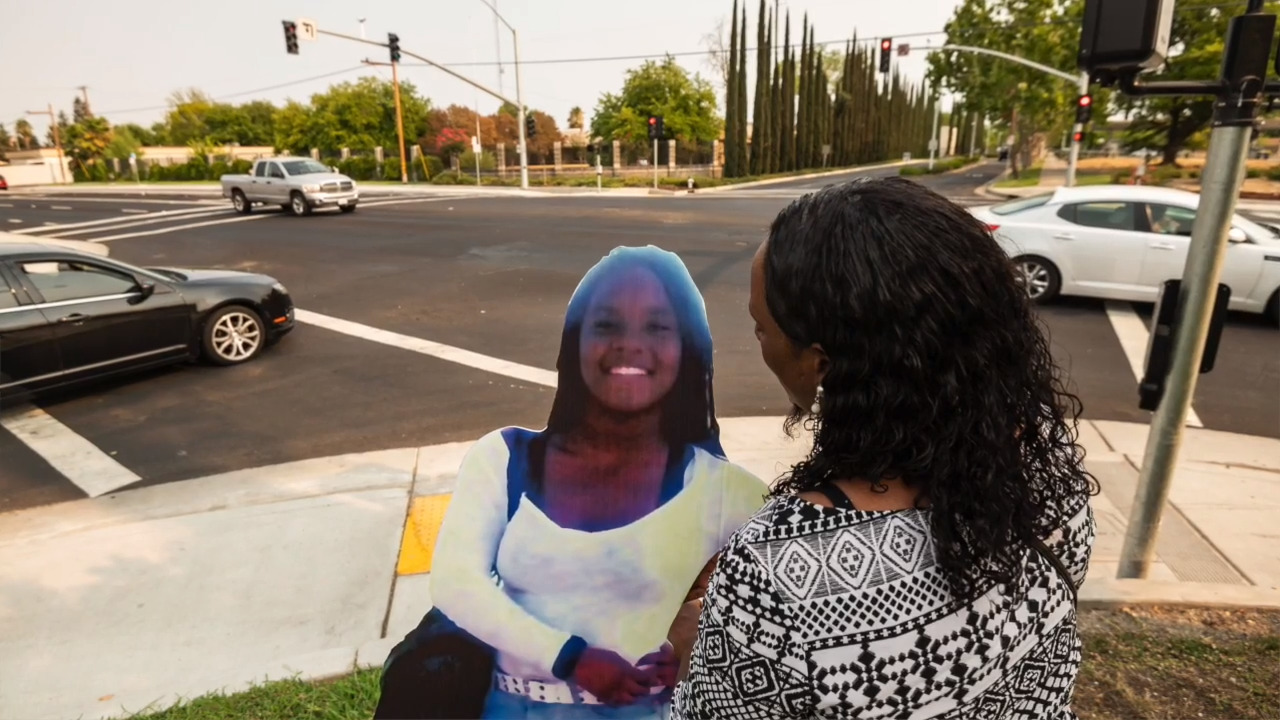
The details of what happened next are still unclear. Residents from apartments nearby say they heard the sound of the crash. Police released a grainy photo from a nearby camera of the car, but the driver was never caught. Davis died in the street, Becknell said, the road littered with school work that had flown out of her backpack on impact.
Davis’ killing represents a startling trend: Black pedestrians die at a disproportionate rate in Sacramento County traffic accidents — and the number of victims is growing, according to the latest state and federal data.
Of the 410 pedestrians who died in traffic accidents in Sacramento County from 2011 through 2020, 76 people, or 19%, were Black, even though Black people make up only about 9% of the county’s population.
In addition to those deaths, about 25% of the 4,559 pedestrians injured in traffic accidents during the last decade in Sacramento County were Black, according to data collected by the California Highway Patrol and disseminated by the University of California, Berkeley.
Put another way, Black pedestrians in Sacramento County were more than twice as likely to be killed in a car collision and three times as likely to be injured compared to the rest of the county.
Among the 10 most-populated counties in California, Sacramento had the third-highest death rate for Black pedestrians, following Fresno and Santa Clara counties. The lowest death rates were in Orange and Alameda counties.
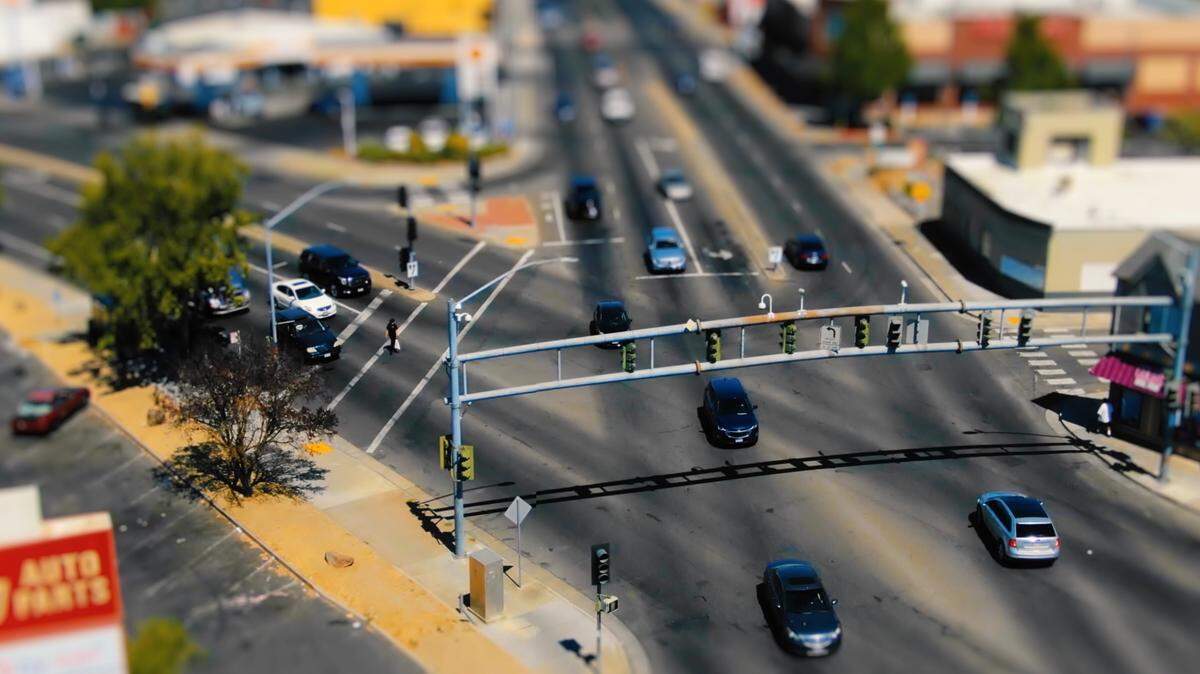
City planners, state officials and traffic engineers have for decades prioritized cars as the predominant means of travel. Streets have gotten faster and roads have grown wider, with major urban thoroughfares slicing through low-income neighborhoods and communities of color. In the areas of Sacramento where people are most likely to lack access to a car, walking or biking to nearby stores, parks, clinics or public transit stops is a risky undertaking.
“Who should have access to certain public spaces and who is afforded basic human rights, all of those things are rooted in structural racism,” said WALKSacramento executive director Kiara Reed.
Given that, the disproportionate deaths and injuries are “not a surprise,” she said. “It’s by design.”
A city made for cars
Before the advent of the automobile, the city’s central grid was built inherently with pedestrians in mind.
By the early 1900s, streetcars bloomed off the edges of the city’s central grid to streetcar suburbs in Land Park, Curtis Park, Oak Park and East Sacramento, shuttling middle-class workers and families to jobs and schools.
Land developers worked hand-in-hand with streetcar operators such as Pacific Gas and Electric to draw homeowners into growing neighborhoods outside the grid. Today, these neighborhoods generally have fewer pedestrian crashes than would be expected for such populated areas, said city transportation planning manager Jennifer Donlon Wyant.
After World War II, the next ring of suburbs developed. Through the ’50s, ’60s and ’70s, neighborhoods such as Meadowview were designed with cars in mind. Roads were widened, speed limits were raised. As populations in more distant suburbs like Folsom and Elk Grove exploded, so too did the traffic.
In the quest to cater to commuters residing in suburbs and reduce traffic congestion, engineers, city planners and officials built massive highways. Interstates 5 and 80 and Highway 99 would sever and ensnare communities, and major urban thoroughfares would expand and crisscross into neighborhoods in south and north Sacramento.
At the same time, sprawling parking lots sprouted next to convenience stores and gas stations. Drive-through restaurants and shopping centers were erected. Sidewalks were narrow, or non-existent. Lighting was limited. Streets became actively hostile to people getting around on foot or by bike.
These transportation arteries brought prosperity and connectivity to some areas, but saddled neighborhoods made up of largely African American, Asian and Latino households with heavier traffic, dirtier air, fewer trees, lower home values and a poorer quality of life.
“Fifty years ago, we were planning for our community, not with them,” Donlon Wyant said. “We weren’t aware about equity. We weren’t aware about social justice. And so instead, 50 years ago, neighborhoods were destroyed because of the bigger picture of transportation.”
It’s a paradigm that is evident across the United States, said Angie Schmitt, a writer and planning consultant who recently published “Right of Way: Race, Class and the Silent Epidemic of Pedestrian Deaths in America.”
Assumptions about the most valuable members of a community, and about who the transit systems are supposed to serve, have historically dictated infrastructure spending, Schmitt said.
“A middle-aged man who commutes from the suburbs into downtown, that’s a lot of where the highway spending is focused around,” Schmitt said. “It’s not a disabled retired person who is low-income and makes short trips around their neighborhoods.”
In the city of Sacramento, half of crashes resulting in a pedestrian killed or seriously injured occur in disadvantaged communities as defined by the state, despite those same communities accounting for only 25% of the roadway network.
“The walkability and the sense of community compared to the Pocket area, it’s very different,” said Councilwoman Mai Vang, who represents the Meadowview neighborhood. “The social conditions are obvious to the folks who walk on those streets and bike on those streets.”
Injuries and death along Sacramento streets are worsening. The number of Black pedestrians killed in Sacramento County grew from 35 in 2011 through 2015, to 41 from 2016 through 2020, part of a broader increase in pedestrian deaths in the county. The same patterns and trends have occurred across the state.
“Year after year, the same populations are disproportionately more likely to be struck, killed and injured, and yet governments at the federal, state, regional and local level still have not designated funding commensurate with the need and with the trauma that these communities are facing,” said Charles T. Brown, principal of Equitable Cities and adjunct professor at Rutgers University.
The same intersections that have become major conduits for traffic throughout the region are also hubs for social and economic life that nearby residents depend on — mini-marts, grocery stores, bus stations, schools, restaurants, day cares, retail shopping and more.
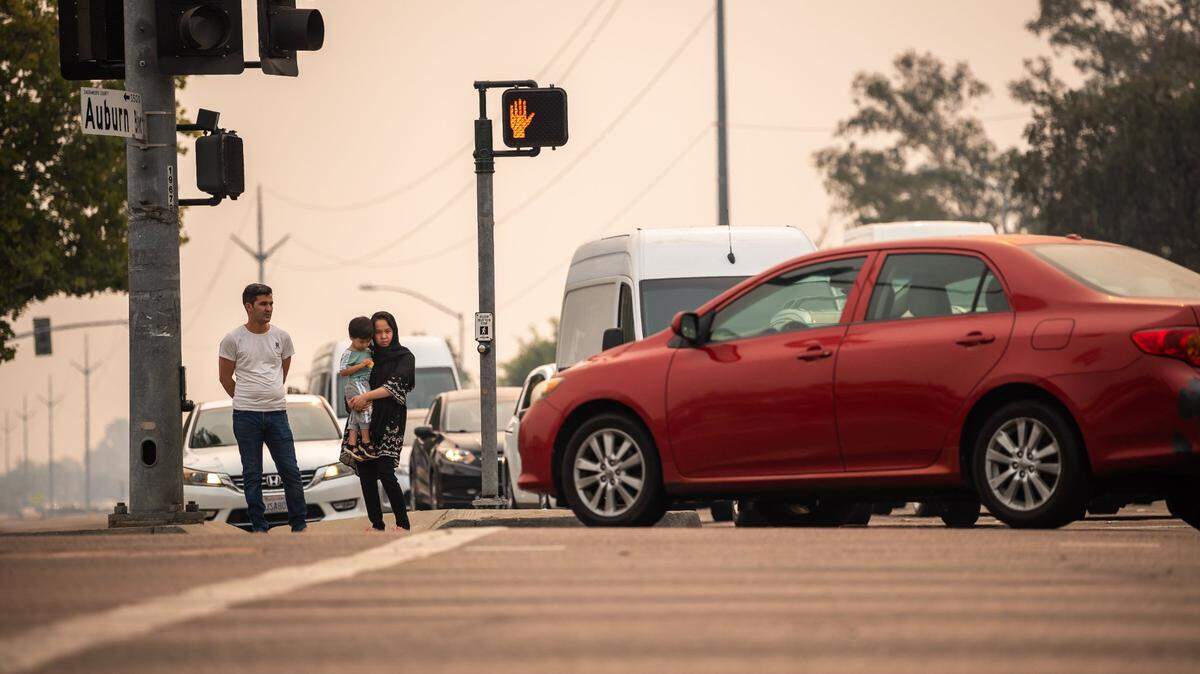
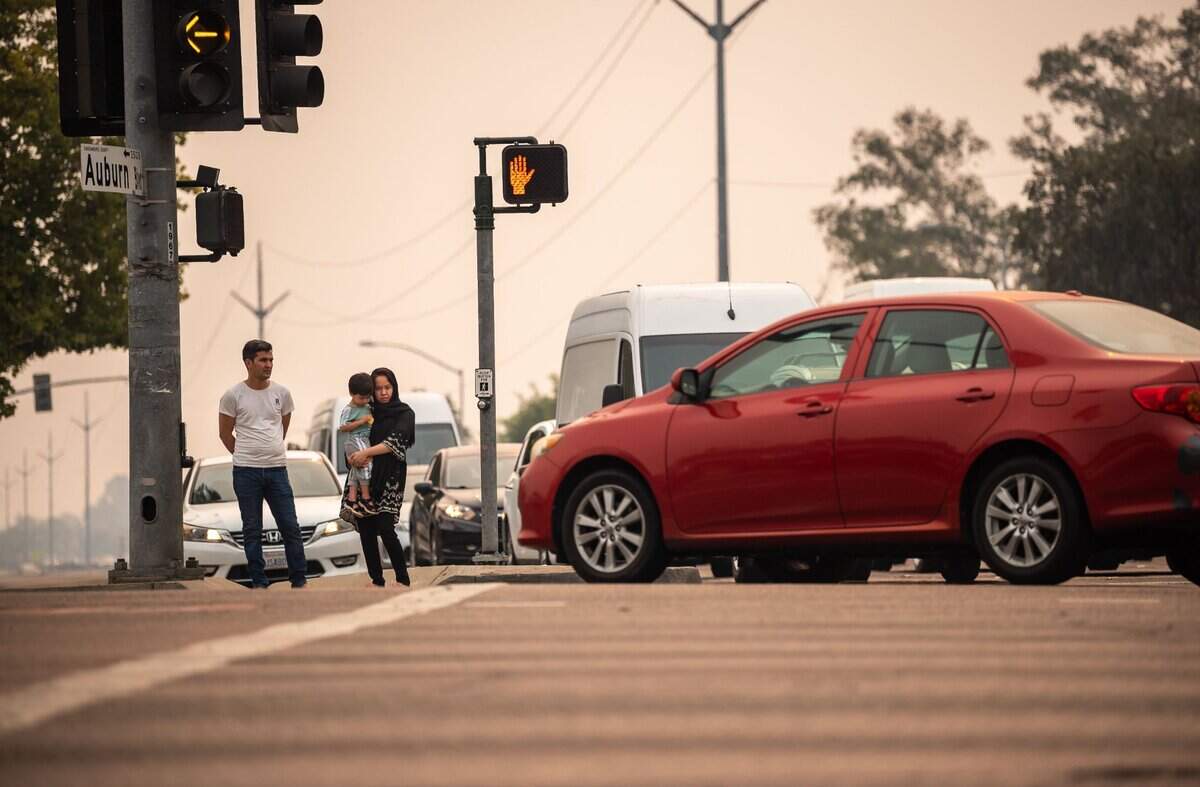
Among the most dangerous intersections for Black pedestrians in the county: El Camino Avenue and Del Paso Boulevard, near the Grocery Outlet; Stockton Boulevard and Florin Road, near the newly opened 7-Eleven; Mack Road and Center Parkway, near the Mack Road Valley Hi Community Center; Florin Road and Franklin Boulevard, near the Southgate Plaza; Watt Avenue and Auburn Boulevard, near Shams Market.
At or within a block of each of these intersections, between six and 10 collisions occurred that killed or injured Black pedestrians in the last decade.
It’s a reality that Aaron Boyce said he has seen firsthand, as marketing manager of Florin Square, a cornerstone shopping center in Meadowview that is home to dozens of Black-owned businesses located just off Florin Road and 24th Street.
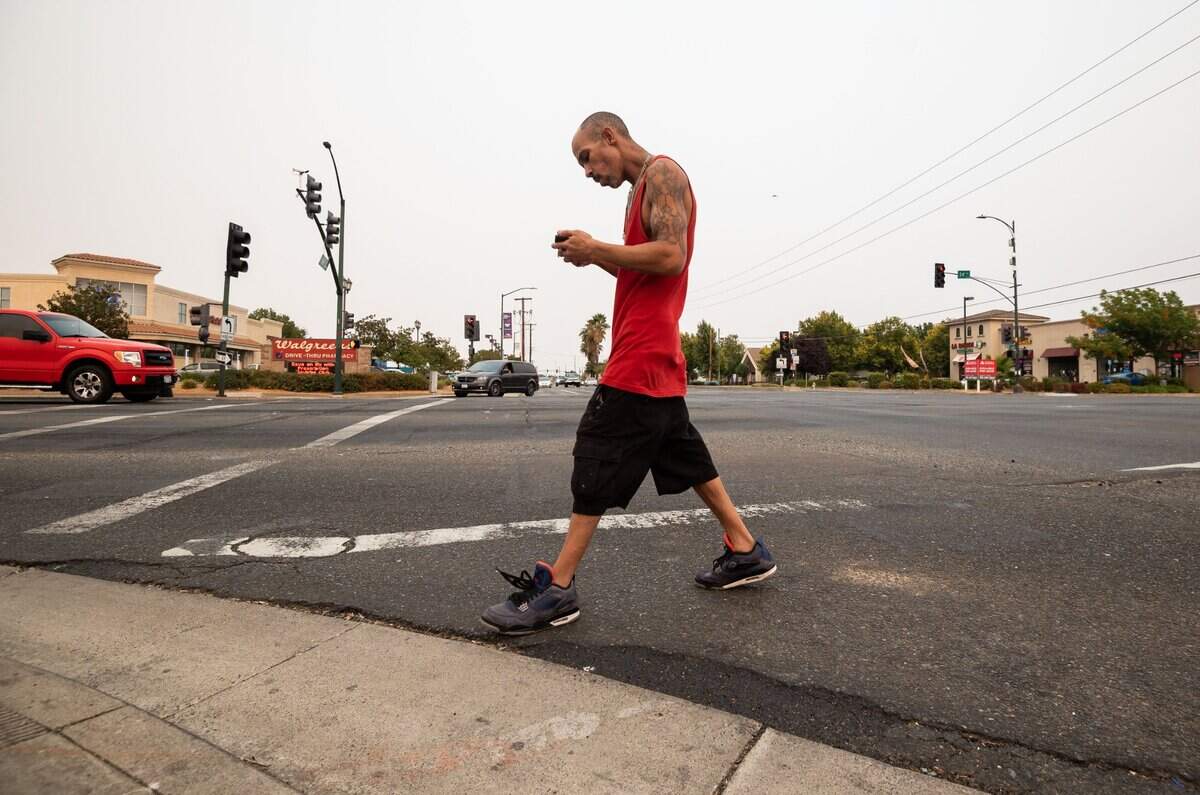
Here, buses, trucks and cars whiz down Florin Road at 40 miles per hour or more, some making fast right-hand turns as pedestrians try to use crooked crosswalks. The intersection is littered with smashed car window glass, and some of the nearby narrow sidewalks sink directly into the streets to form driveways for surrounding gas stations and shopping centers. When the walk signal blinks on, residents hustle to cross the street in under 20 seconds, faced with six lanes’ worth of cars.
Boyce said he and many of the people he works with have seen pedestrians get hit by cars, or almost get hit by cars, at the nearby intersection that serves as a major transit crossroad in south Sacramento between I-5 and Highway 99. At least seven Black pedestrians have been injured or killed in the last decade at that intersection, according to state data.
Each crash devastates the community, he said, and makes the area feel more unsafe for customers who want to visit the shopping center. The makeshift memorials up and down the neighborhood, with the crosses and flowers and pictures, are taking a toll, he said.
“It hurts us both ways,” Boyce said.
Safer infrastructure in Sacramento
Making streets safer consistently ranks as a top priority for Sacramento residents. And city officials have been aware of how dangerous its streets are for years — Between 2008 and 2011, the state Office of Traffic Safety ranked the city of Sacramento as the No. 1 worst city in overall traffic safety when compared to California cities with a population greater than 250,000.
So why is it so hard for improvements to be made?
Some limitations stand in the way, Donlon Wyant said. Federal and state guidance dictates things such as speed limits and the number of lanes a roadway should have based on how many cars use it, she said. But some “wiggle room” exists that allow cities to prioritize communities and their needs, she said.
But transit improvements are also notoriously expensive, she said. Just purchasing a new traffic signal can cost more than $1 million, she said. City and county officials say they are frequently scrounging to find money for important safety improvements.
“It took me five years to get a quarter of a mile of sidewalk funded,” said County Supervisor Patrick Kennedy of the project along Power Inn Road that ultimately cost nearly $1.9 million. “It shouldn’t take five years when there are recorded deaths there.”
Back in 2016, a proposed half-cent transportation sales tax ballot measure in Sacramento County that would have raised $3.6 billion over 30 years failed, just 1% shy of passing.
Whiter, wealthier neighborhoods including Land Park, Pocket, East Sacramento, Carmichael, Fair Oaks, Citrus Heights and Folsom voted down Measure B, a Bee analysis of precinct-level data showed. In neighborhoods in north and south Sacramento with larger Asian, Black, Hispanic and low-income communities most affected by disinvestment in infrastructure, Measure B passed.
Those voting patterns reflect a larger issue that troubles Councilman Sean Loloee, who represents north Sacramento. Residents in his district are forced to endure unsafe conditions that other districts wouldn’t tolerate, he said.
“Is this something that someone in other communities would accept and say is fair?” Loloee said, referring to the disproportionate collisions in underserved neighborhoods. “I don’t know if in East Sacramento, would that be the first statement you say? ‘For the next seven years, we will lose a few people, but in seven years, it will slow down.’ ”
Sacramento County leaders again decided to put a similar transit measure on the ballot for the 2020 general election. Measure A would have generated $8 billion during the next 40 years. The proposal was ultimately pulled last summer, though, since a major sales tax measure seemed unlikely to pass during the pandemic.
Now, the earliest a new ballot measure could pass would be in 2022.
With Congress considering a $1 trillion infrastructure bill this year — which includes $11 billion in traffic safety funding focused on reducing crashes and fatalities particularly among cyclists and pedestrians — having local matching dollars on hand to apply will be vital, said Councilman Eric Guerra, who represents the city’s southeastern area.
In 2017, the Sacramento City Council approved a resolution aimed at eliminating traffic fatalities and serious injuries by 2027, with a focus on making major safety upgrades to five corridors in Sacramento that had the highest numbers of fatal and serious crashes involving pedestrians, bicyclists and motorists.
The recommended upgrades as part of the plan are a smorgasbord of changes: new traffic signals, expanded curbs on street corners, higher visibility crosswalks, roundabouts, pedestrian scrambles, coordinated green lights and more.
It’s part of a traffic safety philosophy called Vision Zero, which posits that traffic crashes aren’t accidents, but rather preventable incidents that can be avoided with better infrastructure and improved street design and community engagement.
“We really are committed to stopping the epidemic of people dying on our streets or being severely injured,” Donlon Wyant said.
A major project like Sacramento’s Vision Zero plan would normally take 10 to 15 years, Donlon Wyant said. City transit officials plan to aggressively seek federal and state grants and put in more local funds than usual to speed up the timeline.
But the nearly $60 million project is years away from being realized. Engineering design work has only just begun on Florin Road.
Some experts point to tactical urbanism as a more immediate, albeit temporary, solution to some of Sacramento’s most troubled intersections. It’s a growing movement that focuses on engaging with communities and implementing short-term, low-cost ideas that could catalyze long-term changes.
Tampa and Baltimore, for example, have painted attention-grabbing murals across intersections as a low-cost solution to cars speeding in the daytime. Placing plastic posts between lanes can slow down traffic, as can temporary curb extensions that square-off street corners and force drivers to turn more carefully.
Sacramento has already embraced tactical urbanism. In 2019, the city temporarily blocked the sliver of road on 2nd Avenue between Broadway and 34th Street where a disproportionate number of collisions were occurring in Oak Park. The pilot program received overwhelmingly positive feedback from residents, and as of this month, will now be permanently closed to car traffic.
“I no longer accept as a response that the only solution is waiting 10-plus years to see change in a neighborhood,” Brown said.
‘Nothing’s done’
Shortly after the death of her daughter, Becknell moved out of Sacramento with nothing more than a suitcase and the clothes on her back. Even now, when she finds herself in the middle of the city, Becknell feels frantic and nervous, “an awful feeling.”
Her family was shattered by grief, the kind that made Becknell feel like her “whole soul got snatched out of my body.” It has taken years of therapy and spiritual guidance for her to even begin to come to terms with her daughter’s death.
Ultimately, though, her suffering was private. The media attention waned and police leads grew cold.
Becknell says she will always feel grateful for the kindness of the Meadowview community during those early days of mourning. At the grassy lawn near the intersection where Davis was killed, neighbors built a memorial filled with candles and balloons and flowers.
But she has no kind words for the city she and her family have largely left behind, only feelings of bottomless anguish and rage.
“It’s not safe for the kids,” Becknell said. “There are so many hit-and-runs that happen on these streets (and) nothing’s done. They just put them in a body bag, and that’s it. Nothing else.”
This story was originally published August 29, 2021 at 5:00 AM.