
Why traffic gridlock is about to hit the Sacramento region — and how it can be avoided
READ MORE
Commuter Traffic in Sacramento
As the coronavirus pandemic eases and workers head back to the office, what will commuter traffic look like in the Sacramento region?
Expand All
Why traffic gridlock is about to hit the Sacramento region — and how it can be avoided
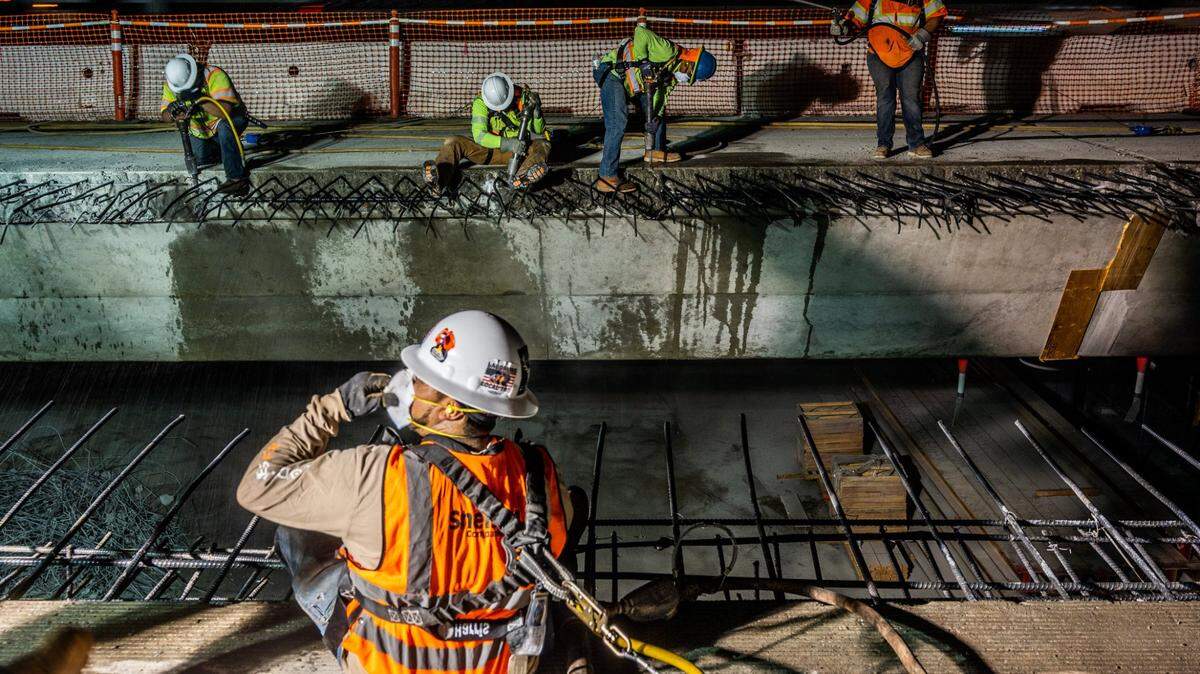
These 6 major construction projects will slow your Sacramento-area commute this summer
Video: Why we’re about to see some intense traffic congestion in Sacramento region
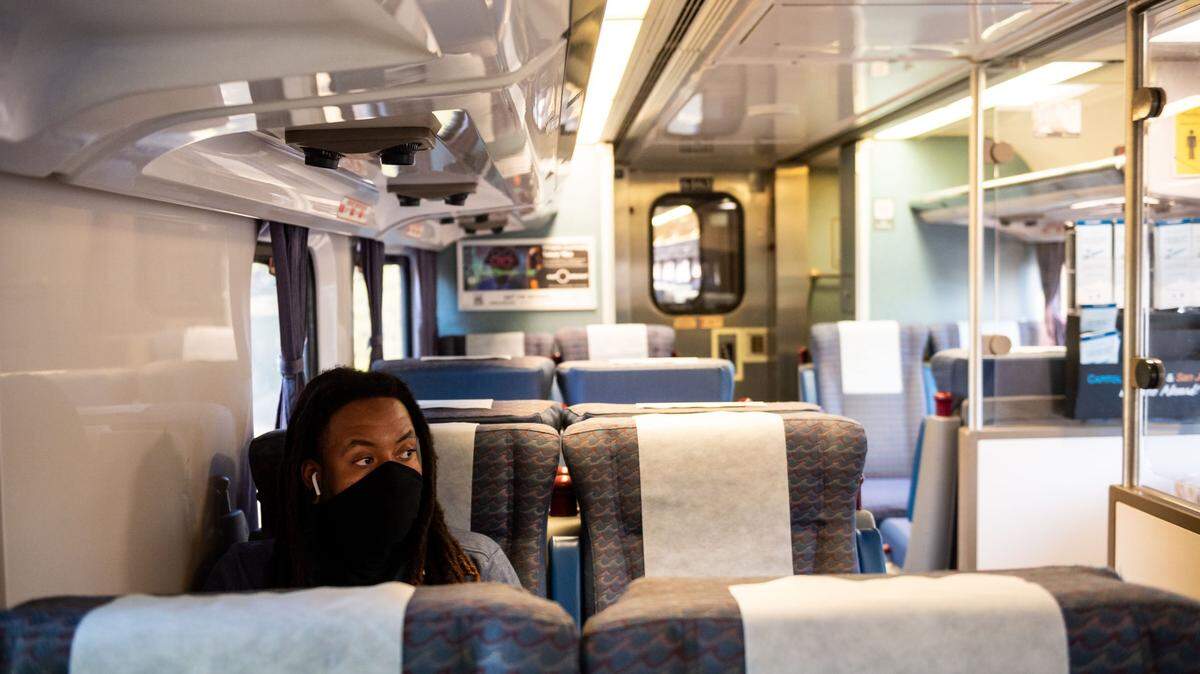
Future of Sacramento region transportation is long distance transit, not wider highways
The pandemic is easing. Life is beginning to return to normal.
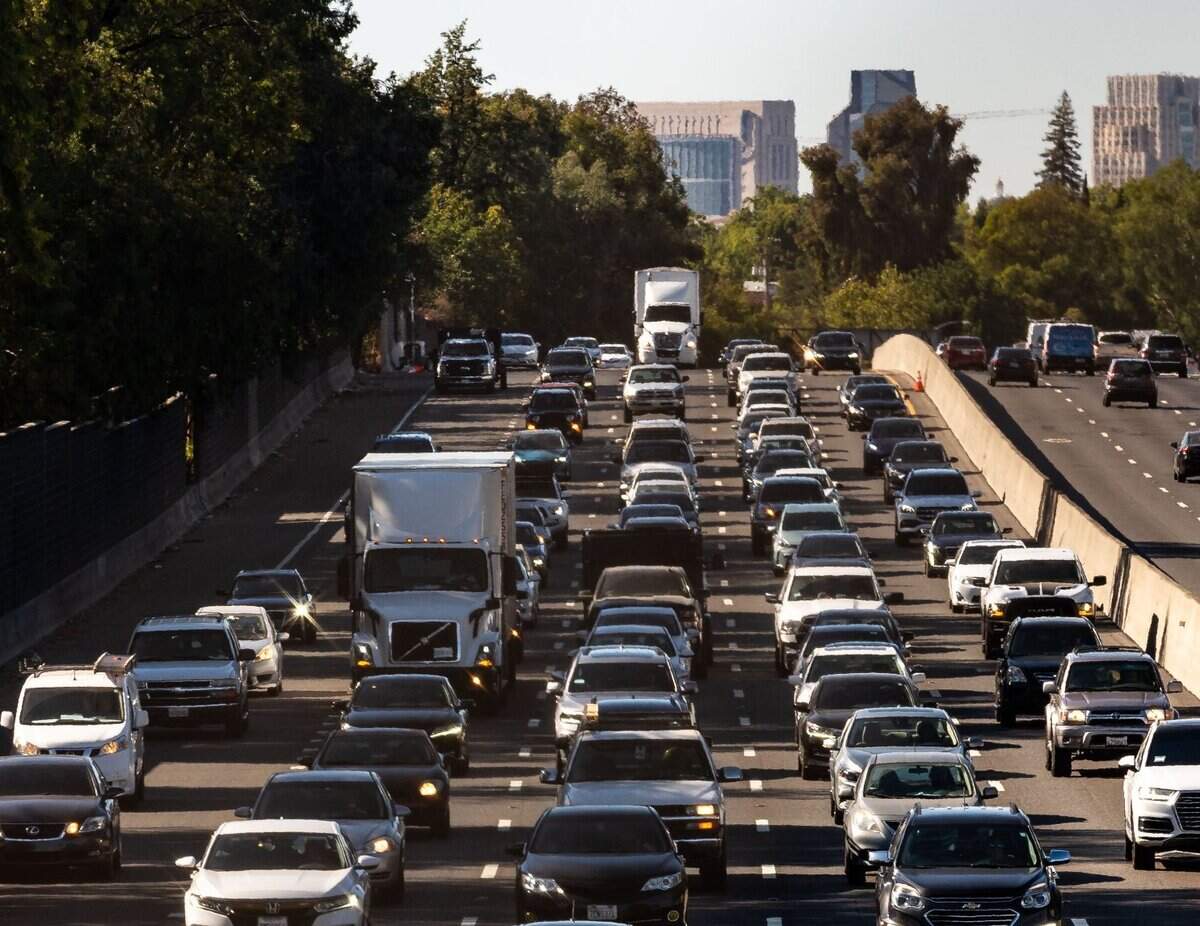
And that means one element of pre-coronavirus life that none of us missed — freeway gridlock — is coming back.
Sacramento may be just months away from experiencing the most intense congestion ever seen on local roads, transportation analysts say. D-Day likely will occur in October, when a series of events — most of them the result of a post-COVID world — converge.
Everyone who is going back to the office will likely be doing so by then, and the numbers could be substantial. Schools and universities will reopen for on-campus instruction, a major source of traffic on local roads close to schools and on freeways, especially Highway 50 near California State University, Sacramento.
Adding to local commuting challenges will be the recent influx of Bay Area pandemic refugees, many of whom landed in already-congested Folsom, Roseville and Elk Grove.
All of this is creating a moment of uncertainty: How many more commuters will crowd onto the region’s freeways each day? Will some people be willing to go back to riding the bus and light rail? Who will work from home, and how many of those people will hit local streets for mid-day shopping or chores?
“Nobody knows what the new normal will be,” says the region’s lead transportation planning official, James Corless, head of the Sacramento Area Council of Governments. “The year ahead will be unlike any other we have ever seen. I would call this moment the great re-sorting.”
California highway officials say the same situation will play out in metropolitan areas across the state. And that’s raised yet another question: How should billions of dollars in transportation funds be spent in the coming years?
“This is an extremely dynamic situation,” said Ellen Greenberg, Caltrans’ deputy director for sustainability. “Transitional, for sure.”
It starts with one of the most consequential economic and cultural phenomena of the pandemic: teleworking.
Traffic nearly back to pre-COVID level
COVID-19 hit the Sacramento region in March 2020, and tens of thousands of office workers in the metro area immediately hunkered down at home teleworking rather than driving into the office each day, virtually turning highways into open breezeways.
But traffic only disappeared for about two months. It has since returned with gusto, even though many people are still teleworking. That has analysts worried.
“Traffic is already (nearly) at pre-pandemic levels, and many people are still working remotely,” said UC Davis transportation expert Giovanni Circella, who has been analyzing travel patterns for planners in Los Angeles and Sacramento. “It is totally possible we are going to have more volume of cars on the road.”
Although companies have maintained productivity during the teleworking era, managers are eager to bring more people back to the office. The ramping up has begun in some job sectors, but how many downtown state workers will be back is uncertain.
“More people will be going back to the office in July, more in August, and more in September,” Circella said. “By October, we will reach high office occupancy again.”
But many likely will not be coming back full-time. A recent survey by local planning group Valley Vision found that 69% of workers in the Sacramento region want a “hybrid model,” allowing them to work a few days a week in the office and the rest at home.
“Flexibility is here to stay,” says Evan Schmidt, head of Valley Vision. She is back in the office three days a week, and loves it. “People want to get back to the office. They are isolated and want to get back to their work teams. That’s how I feel.”
Valley Vision currently allows employees to choose whether to come into the office. But, “in September and October, we may look at some mandatory days in the office,” Schmidt said. “We’ll assess our needs.”
Travel patterns changing
Caltrans’ Greenberg said she expects companies and employees to do a lot of experimentation in the coming months. The state highway department is monitoring what effect that will have on freeways, and ultimately on how the state spends money on transportation.
“We have lots of questions,” she said. “Is everybody going to choose to work remotely on Monday and Friday, or will distribution (be even) across the week?”
The morning commute traffic so far has not come back as strongly as the afternoon, she and others say. That trend could be permanent, especially if office managers start allowing some workers to start their day working from home and then head into the office later for face-to-face time.
But surface streets could well be more congested this fall, with parents driving children to and from school at the same time that teleworkers with flexible schedules are out making personal trips during the day.
Researcher Circella of UC Davis said the afternoon peak travel hour currently is almost as congested as it was before COVID-19, in part because regular commuters are now mixing with some of those remote workers who, by late afternoon, want to get out of the house to take care of personal business or to socialize.
Road rage simmers
With traffic more spread out, some major intersections are not yet suffering from those peak-hour backups that force commuters to wait for six full minutes to get through an intersection.
Sunrise Boulevard saw a notable drop before beginning to rise again, but not to the ugly levels it once saw during peak hours. Arden Way, on the other hand, not only dropped dramatically, but it has not yet come back to anywhere near normal, possibly because retail outlets such as Arden Fair mall do not have the crowds they once had.
That appears to have lowered the stress and anger levels among drivers, for now, although complaints of bad driving in recent weeks have grown.
Doug Maas, an engineer at the Sacramento County traffic control center, programs traffic signals at intersections — and handles the angry calls when commuters have to wait too long at intersections.
“When COVID hit, my phone stopped ringing,” he said. “It’s ticked up, but barely. I keep waiting for it to ring more. Drivers may have things on their mind right now.”
Bay Area emigrees, supercommuters
The trend of teleworking induced by COVID-19 has had another notable effect on Sacramento: It has prompted more people to move out of urban areas — notably San Francisco, San Jose and Los Angeles — to find less expensive houses and apartments here.
The 10,000 or so people who moved here last year from the coast generally landed in suburban cities such as Folsom and Elk Grove, Woodland and El Dorado County.
One of the looming questions: How many of them will continue to telework from home and stay off local roads? How many will be required to commute back to Bay Area jobs a few days each week or month?
That could create a new generation of “super commuters” on Northern California freeways. That includes Bay Area residents who moved out to rural hill and mountain areas such as Grass Valley, South Lake Tahoe and Truckee.
Those new arrivals may be surprised to discover traffic congestion that they didn’t experience and didn’t expect when they moved here during the relative quiet of the shutdown days.
Interstate 80 between the Sacramento region and the Bay Area in particular already was overcrowded with traffic funneling through Yolo, Solano and Contra Costa counties before the pandemic, leading to bottlenecks in Davis, Dixon, Vacaville and Fairfield.
Caltrans has announced one major plan to deal with that new traffic. The state will add a lane to I-80 through Yolo County, past the city of Davis and over the Yolo Causeway into West Sacramento. That lane is expected to be designed to serve as a toll lane seven days a week from about 6 a.m. to 8 p.m. Solo drivers will have to pay a fee to use the lane.
Capitol Corridor train’s big moment
The moment may have arrived for the Capitol Corridor inter-city passenger trains to play a bigger role for commuters between the Bay Area and Sacramento. The system runs multiple trains daily from the capital region through the Bay Area to as far south as San Jose.
“I think the economic benefit of the Capitol Corridor is reinforced with COVID,” train system executive Rob Padgette said. “Rail services should connect economic centers: Sacramento, Oakland, San Jose, San Francisco, the San Joaquin Valley. It keeps jobs in California. We don’t want a company to decide to move from San Jose to Austin. Maybe instead they want an office in Sacramento.”
Ridership has jumped in recent weeks but is still only one-third of pre-pandemic levels. Transit riders must still wear masks, and that requirement likely will continue into September.
Will state and federal officials be able to make good on longstanding but as yet unrealized plans to expand and improve the service so that it can adequately serve south Placer County, where many Bay Area refugees have found new homes?
Added service would reduce congestion on I-80 between the Roseville area and downtown Sacramento, as well as boost the number of people willing to forgo their cars for the ride to Richmond, where riders can transfer to BART into San Francisco.
Capitol Corridor, BART and others have also embarked on planning for a second transit tube under the bay between the East Bay and San Francisco, a project that could allow Sacramento riders to get to San Francisco without a transfer.
Train officials will hold an online public meeting to discuss the project with Sacramento-area residents on Thursday from 5:30 p.m. to 7 p.m.
RT’s creative reinvention
A bigger uncertainty may be the role Sacramento Regional Transit and other local bus services will play. Most had been struggling financially before COVID-19 hit. All lost most of their customers during the virus year.
Ridership has been on the rise in recent weeks, officials say, but Sacramento Regional Transit is still carrying only about half as many people on buses and light rail trains as it did before the pandemic. With more office workers likely to telework at least in hybrid fashion, RT may struggle to play a role in lightening the freeway congestion load.
But RT is proving to be nimble, using the pandemic to explore ways of reinventing itself as a community resource that does more than simply ferrying commuters to work in the morning.
The transit agency sent buses to take people for free to polling sites for the November election. It has helped county health officials by transporting some people to COVID-19 vaccine sites and has brought homeless people to Project Roomkey hotel sites. It has been helping the city by offering shuttles to warming and cooling centers during extreme cold and heat. And it turned buses into food service deliverers during the pandemic.
The agency also has taken steps to modernize and personalize its approach, adding app-summoned “micro-transit service” shuttle buses, called SmaRT Ride, which serve as a group ride share, picking people up at or near their starting point and dropping them off directly at their destination. Those shuttles did not take the ridership hit that regular buses and light rail did. RT plans to expand its use of that service this year.
“We want to be more (of) community value,” RT chief Henry Li said. “We expect that to continue.”
Building less congested communities
But the biggest question may be this: Has the pandemic caused Sacramento to veer back toward suburban sprawl growth, where more people live on the expanding suburban fringes and far from job centers? If so, more congestion and longer commutes are inevitable, even with hybrid teleworking.
Anecdotally, Bay Area residents and some local residents went looking for more elbow room during the pandemic. Teleworking will free up more people to live non-urban lifestyles.
Despite that, many will still want to live amid the action of a city or a close-knit, mixed-use community, said Mike McKeever, a national transportation consultant and former head of Sacramento’s SACOG. McKeever has been a leader in the push to design communities where people can live and work without having to crowd onto freeways.
“The region needs to control (growth) on the edge more, but that is not the biggest problem,” McKeever said. “The problem is lack of infill housing.”
Some of that is happening already, mainly in the core areas of Sacramento, but also to a small extent in places such as downtown Roseville and downtown Folsom.
More is on the way. Citrus Heights is attempting to turn the failed Sunrise Mall shopping center into a site where people can live and perhaps work at a local business without driving.
“You can save billions of dollars in transportation costs from road construction and put that money into building (better communities) and reduce the pressure to build in agricultural areas and in wildfire zones,” McKeever said.
“We need to stop acting like these forces are out of our control. We can decide we are going to stop investing in freeway capacity. There is a need to radically rethink where the next big transportation investments are.”
This story was originally published July 14, 2021 at 5:00 AM.