California is trying a $15 minimum wage. Is it time for $20 – or $0?
READ MORE
California’s $15 minimum wage
California set out in 2016 to become the first state on a path to a $15-an-hour minimum wage. Five years later, how’s that going? And why can some workers earn less than the minimum wage?
Expand All
California is trying a $15 minimum wage. Is it time for $20 – or $0?
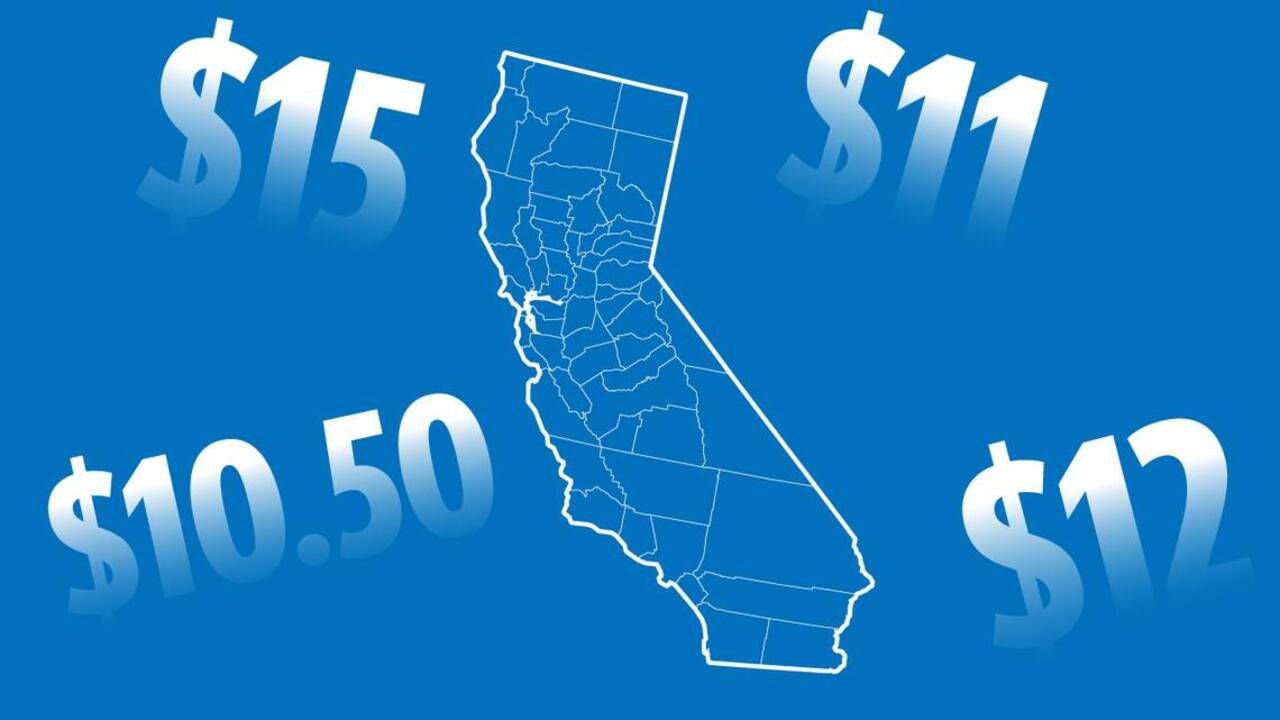
Here are 36 California cities and counties where the minimum wage is higher than $14 an hour
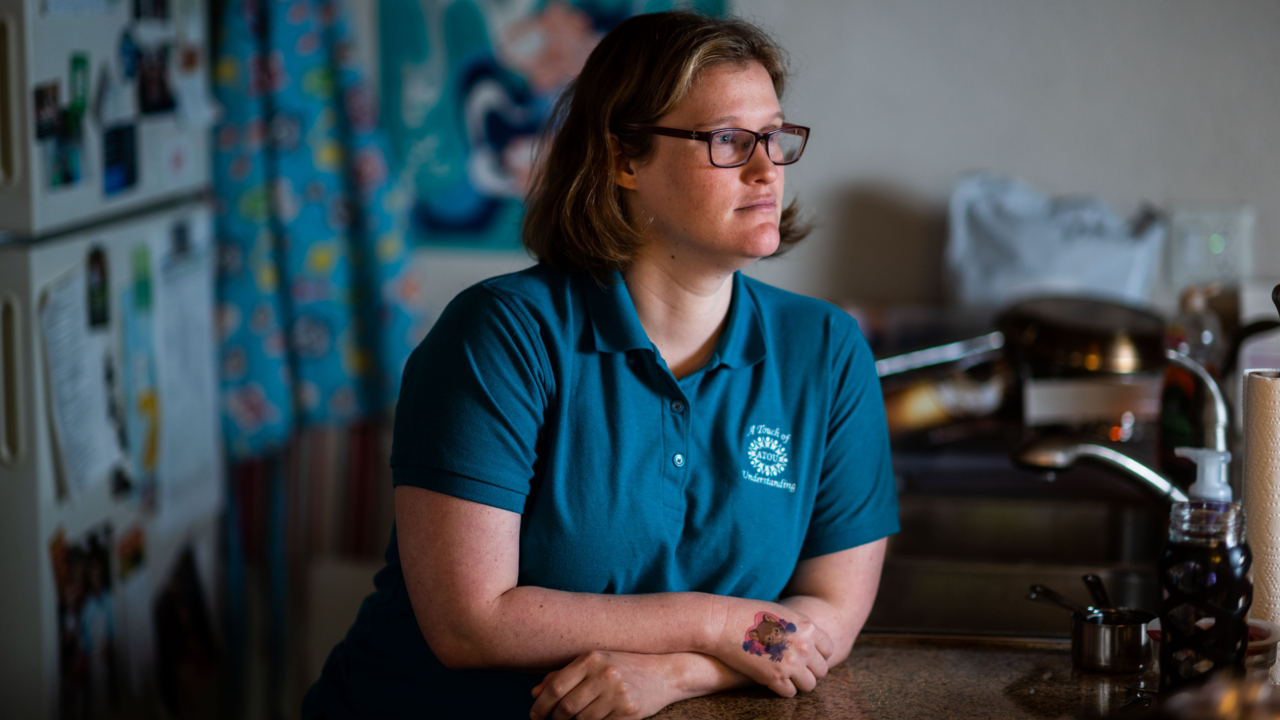
Some Californians make less than minimum wage. Here’s why
Who’s hiring in the Sacramento region? Here are the top sectors for job seekers
Uber, Lyft drivers have no right to minimum wage; that must change
Conservatives call it a job killer. Liberals call it an anti-poverty measure.
However you describe it, a $15-an-hour minimum wage is coming to California. It will become a reality for the state’s bigger employers by next year.
California set out in 2016 to become the first state on a path to a $15-an-hour minimum wage, capping a major victory for unions and low-wage workers who began pushing for the law in 2012. The state’s minimum wage now stands at $13 or $14 an hour, depending on the size of the business.
The policy has gained traction across the country, with seven other states from Florida to Illinois raising their minimum wage to hit the $15 figure during the next several years. Prominent politicians and companies from President Joe Biden to Amazon have embraced it.
But years into California’s journey of gradual wage increases, the effectiveness of the policy remains an open question.
Feared extensive job losses did not materialize. Employers, facing worker shortages, are voluntarily boosting wages past $15 an hour.
On the other hand, the cost of living in California is skyrocketing, outpacing the income growth for many low-wage workers. A recent report from United Ways of California found that nearly one in three California households struggled to pay bills even before the pandemic.
“It’s helpful to a lot of low-wage workers, but in and of itself, it’s not a solution,” said Jeffrey Michael, an economist at the University of the Pacific. “When you see rents rising so quickly and the cost of living continues to be very high, minimum wage by itself is not a solution.”
Meanwhile, debate over minimum wages in California is likely to continue even after workers earn at least $15 an hour.
SEIU 2015, a union representing 400,000 nursing home and home care workers, has begun pushing for a $20-an-hour minimum wage for its members.
“We do have to continue the conversation in California about what is a wage that doesn’t just allow people to scrape by or have to work multiple jobs to be able to feed themselves and their children,” SEIU 2015 President April Verrett said.
Larry Elder, the leading Republican candidate seeking to replace Democratic Gov. Gavin Newsom in the Sept. 14 recall election, wants to eliminate the minimum wage entirely.
“For somebody who’s never run a business to tell business people ... ‘I’m going to jack up your price of labor, and you’re going to deal with it,’ to me, it’s offensive,” Elder said.
Jobs and wages
The California Chamber of Commerce in 2016 was quick to call the minimum wage increase a “job killer.”
“This is too much too fast,” the organization’s president and CEO, Allan Zaremberg, said in 2016. “It is unfortunate the Legislature didn’t take advantage of the opportunity to address the issue in a more balanced manner.”
Flash back to 2016, and even Gov. Jerry Brown had his reservations about the consequences of advancing the minimum wage in what then seemed to be a dramatic fashion. He worried that such a then-drastic increase was not smart economically.
Looking through the lens of 2016, you see the “Fight for $15” effort culminating in State Sen. Mark Leno’s SB 3 setting out the staggered increases over the next six years. The minimum wage then was $10 an hour, the highest in the country. With the first increase in 2017, it jumped only 50 cents.
“Full-time workers in this state should not be forced onto public assistance simply because they earn the minimum wage,” Leno said then.
Brown echoed the sentiment, signing the bill in April 2016. Economics and business aside, he said escalating this base pay for Californians was “part of living in a moral community.”
Today, Allynn Umel, “Fight for $15’s” national director, says a $15-an-hour minimum wage is the difference between scraping by and experiencing small comforts that most people take for granted. Bartolomé Perez would agree.
He has worked in fast-food restaurants in Southern California for more than 30 years. And the increased minimum wage has changed his life.
“I’m able to buy better groceries. I’m no longer dependent on buying close-to-expired food because it’s cheaper,” Perez said through a translator. “I’ve been able to have more, to eat out once a week, that I didn’t have the luxury to before.”
Perez’s and the lowest-paid workers’ hourly wages grew much faster in California than those in the rest of the nation. But the costs didn’t put a dent in hiring. Buoyed by a strong economy pre-pandemic, California continued to add jobs at the same rate as the rest of the nation, even with increasing minimum wages.
Although no study has looked specifically at California’s minimum wage increase, economists have a few potential explanations. Higher wages, for example, may push more people to go back to work.
Till von Wachter is faculty director of the California Policy Lab, a University of California non-partisan research institute dedicated to examining evidence and data and how it affects public policy. The lab’s study concluded that some companies can handle the increases in the minimum wage without cutting employment.
“When wages are below marginal productivity, as with monopsony, employers are able to increase wages without laying off workers,” von Wachter wrote.
The data have limitations.
The increases in the minimum wage have not pushed up wages for those in the middle class or higher incomes. The median hourly wage grew at about the same pace in California as the rest of the nation since the state passed minimum wage increases in 2016.
Michael also noted that because the pandemic hammered low-wage industries such as hospitality and retail more severely than others, evaluating the consequences of minimum wage hikes on jobs and wages has become more difficult.
“COVID impacts have completely swamped the minimum wage impact right now,” he said.
Michael expects the effect of the hikes could become more pronounced in coming years, especially in regions such as the Central Valley, where employers have typically paid workers less than in other parts of the state.
“We’re learning, and the process of learning is ongoing,” he said.
And some industries — again, hospitality and retail — did see their rates of job growth slow even before the pandemic, noted Michael Saltsman, managing director for the Employment Policies Institute, which has advocated for a lower minimum wage.
“If you look at just the state of California and employment growth, just because California continues to grow, let’s say, because of the tech industry, that doesn’t necessarily mean the minimum wage isn’t having an impact,” he said.
The argument for years has been that a $15 minimum wage may make sense in the Bay Area, but not in the Central Valley.
The Sacramento Bee spoke with three business owners in the region, each of whom in 2016 expressed their concerns about the higher minimum wage.
Five years later, they described the effects of the wage increases as a mixed bag.
‘Only so much money’
Ray Pogue owns party supply stores in Modesto and Stockton.
He predicted in 2016 he would have to cut the number of employees at his shops as the minimum wage increased.
That concern has become a reality, he said.
In 2016, Pogue employed 45 people. Now, he said he has about 25 workers. Only three people work in a 10,000-square-foot building on a Friday afternoon, he said.
“After a while, there’s only so much money,” he said. “It’s really hard to do, because you’re simply not able to fully staff the store.”
Pogue also said he is not hiring as many teenage workers as he used to.
“In the past, I can bring on four kids and invest in them, spend time with them,” he said. “I can’t do that anymore.”
Lost some clients
Steve Rank owns an investigation and security company in Modesto.
He said that, so far, most of his clients have stuck with him even as the minimum wage has increased. But not all, he said.
He said the burden in employment extends beyond the higher minimum wage. Employers must also pay more for workers’ compensation insurance and other benefits tied to employees’ income.
“We had a couple clients — the rate we were charging them was not sustainable.,” he said. “We got to the point that ... we had to pass on the rate increase, and they said they can’t afford those, so we lost their business. But we had to pass it on.”
Remaining competitive
Edwarda Alderete owns Verona Cucina Italiana in Modesto with her husband.
She was also skeptical about how the minimum wage increases would work out for her business.
“We have no choice but to pass it on to the consumer. But you wonder how much they can afford. You don’t want to price yourself out of the market. That is our biggest concern,” Alderete said in 2016. “The economics of Modesto, the Central Valley, I don’t see how it is justified paying that kind of pay for someone just starting out in the (restaurant) industry.”
Now she said she finds herself offering more than minimum wage to attract workers. Dishwashers are paid $2 an hour above minimum wage, for instance, she said.
“We had never paid dishwashers so much, that’s for sure. But we need them, so we’ll do what it takes to keep them,” Alderete said. “You have to be competitive, or you’re going to lose your talent.”
The increased demand for catering, as well as customers eating out after months of staying at home during the pandemic, led Alderete to hire several employees. Customers, meanwhile, have accepted paying higher prices.
“I’m glad to see I was wrong,” she said.
Addressing income inequity
The number of households failing to meet their basic needs dropped by 500,000 between 2014 and 2019, said Henry Gascon, director of program and policy development at United Ways of California.
Higher minimum wages as well as the state’s creation of its own earned income tax credit in 2015, which offers workers as much as $3,000 a year, could have contributed to the decrease, he said.
Low-income families also began making substantial gains in their income over the past few years, for only the second time in 40 years, according to a December report from the Public Policy Institute of California.
Still, both advocates and opponents of higher minimum wages agree: The policy has limitations when it comes to addressing poverty. Minimum wage cannot combat the cost of California housing, for example.
“Lifting the minimum wage is a good thing, but it’s not enough,” said Kent Wong, director of the UCLA Labor Center. “When you have a situation where housing is skyrocketing and outpacing the increases they’re getting in wages, it means the problem is not addressed.”
Wages for the lowest-paid workers in the Sacramento area, for instance, grew by about 30% between 2016 and 2020. But rents for a one-bedroom apartment grew even faster during the same time period.
Chris Thornberg is the founder of Beacon Economics and director of the UC Riverside School of Business Center for Economic Forecasting and Development. He has been skeptical about the benefits of a $15 minimum wage.
“I haven’t seen much evidence that higher minimum wage has done anything to reduce income inequality,” he said. He believes a strong pre-pandemic economy, not the higher minimum wage, drove wage gains for low-income families.
Thornberg called for a higher earned-income tax credit, as well as providing pre-kindergarten programs. Newsom signed the latter into law this year.
Those policies have been proven to address income inequality in ways minimum wage hikes have not, Thornberg said.
“How much effort, how much political capital has been expended on fighting this fight when we know it doesn’t move the needle?” he said. “That’s my biggest problem here.”
Higher pay, fewer hours
California may also need to strengthen its labor law to address the side effects of higher minimum wages, said Qiuping Yu, a professor of operations management and business analytics at Georgia Tech.
Yu’s recent research, which was done with Shawn Mankad from Cornell University and Masha Shunko from the University of Washington, found higher minimum wages led California fashion retailers to increase the number of workers but cut their hours to avoid paying benefits such as health care. Retailers also made their workers’ schedules less consistent, she said.
Yu said “fair workweek” laws could help mitigate those side effects of a higher minimum wage. Cities such as San Francisco and San Jose have passed such laws in recent years, requiring some businesses to provide workers with their schedules weeks in advance and to offer extra work hours to current part-time employees before hiring new staff.
Meanwhile, Wong said wage theft remains a serious concern for many low-wage workers. When minimum wages increase, there’s a lag in employers complying with the law, he said, with some of them shorting workers’ pay for weeks or even months.
“The problem is that most employers who violate minimum wage laws or engage in wage theft are not punished, so largely they continue those practices with impunity,” Wong said. “There are still insufficient inspectors and government representatives who are enforcing wage theft laws.”
Ken Jacobs, chair of the UC Berkeley Labor Center, noted California still has many workers who don’t make minimum wage, such as those who take care of people with disabilities or workers with disabilities.
Future of minimum wage
California’s minimum wage has been in the crosshairs recently. Elder told McClatchy’s California editorial boards that he believes no minimum wage should exist. He noted that a New York Times editorial in 1987 advocated a $0 hourly minimum.
“The idea of using a minimum wage to overcome poverty is old, honorable – and fundamentally flawed,” the editorial said.
The Times’ editorial board reversed its position long ago, citing economists’ studies over the years that have found that higher minimum wages have had a relatively small impact on employment.
Even Saltsman, who has called for a lower minimum wage, said whether to have a minimum wage at all is “a debate that happened decades ago.”
“It’s not worth fighting over at this point,” he said.
More likely is a fight over boosting wages beyond existing law.
After 2023, the state will tie its minimum wage to inflation. But labor and worker advocacy groups want more faster.
SEIU 2015 has started an “It’s Time for $20” campaign, pushing for a $20-an-hour minimum wage for in-home caregivers. The union helped gather signatures for a ballot referendum setting a $15-an-hour minimum wage before Brown signed it into law in 2016.
“What we’re calling for is setting wages for the long-term-care sector that begin to get those workers to wages that allow them to lead comfortable lives, get them out of poverty and also address the concerns that we all should have about how we have a workforce that is going to meet the needs of an aging population in California,” Verrett said. “If that means these wages go up every year, so be it.”
Verrett said the union will roll out its campaign starting in Los Angeles and Alameda counties as it negotiates on behalf of in-home caregivers.
Carmen Roberts, who is a caregiver in Pasadena, said she doesn’t see $15 an hour as a livable wage in Southern California.
“We needed to get to $15, but the cost of living goes up every year,” she said. “Everything else goes up. With the economy in this country, we’re unable to get out of poverty. We just need to be able to take care of our families while we take care of those who need us.”
Michael urged caution. There eventually comes a breaking point in which a higher minimum wage does lead to significant job losses, he said.
“I would recommend sort of going slowly,” he said, “and evaluating as we go along.”
The Sacramento Bee’s Philip Reese contributed to this report.
This story was originally published September 8, 2021 at 5:00 AM.