
Uber, Lyft drivers have no right to minimum wage; that must change
READ MORE
California’s $15 minimum wage
California set out in 2016 to become the first state on a path to a $15-an-hour minimum wage. Five years later, how’s that going? And why can some workers earn less than the minimum wage?
Expand All
California is trying a $15 minimum wage. Is it time for $20 – or $0?
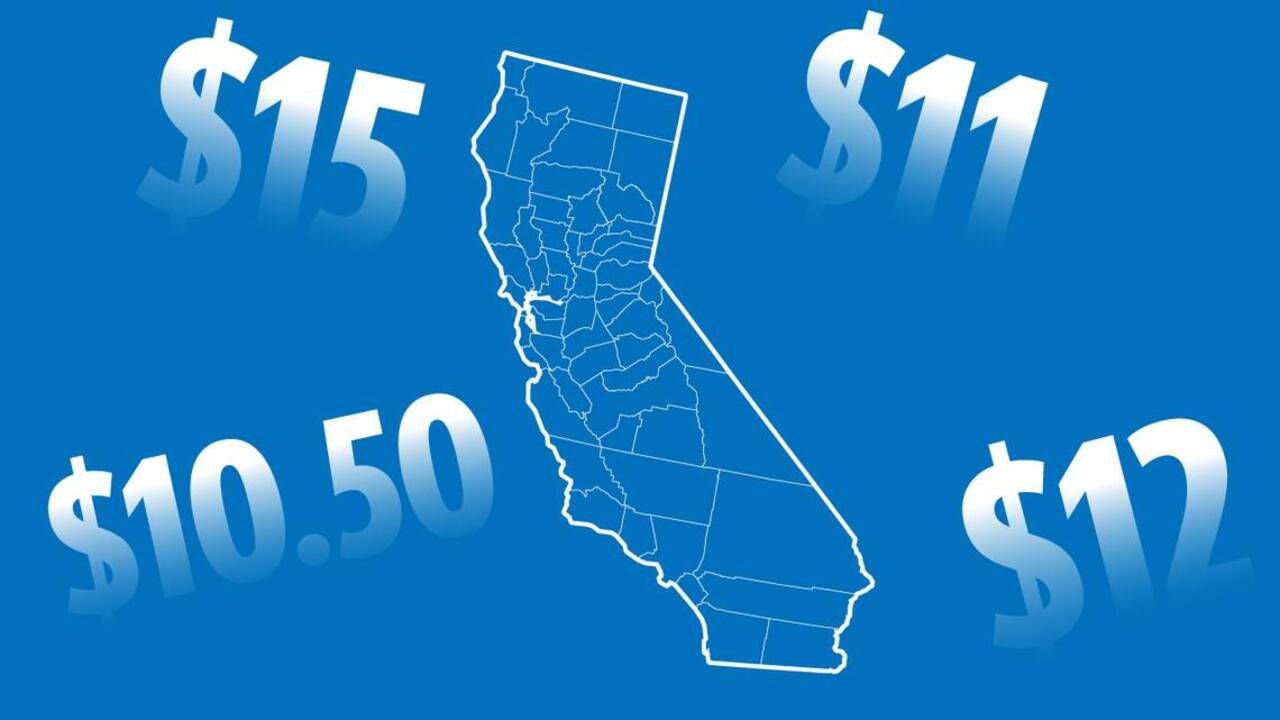
Here are 36 California cities and counties where the minimum wage is higher than $14 an hour
Some Californians make less than minimum wage. Here’s why
Who’s hiring in the Sacramento region? Here are the top sectors for job seekers
Uber, Lyft drivers have no right to minimum wage; that must change
Who wants to spend their most productive work years in a “gig” — where you can’t count on a steady income or access to unemployment benefits and have no rights on the job?
Sure, students and retirees have always sought to earn a few extra bucks here and there, but not typically as drivers — once a family supporting career, now a “gig” designed by app companies like Uber and Lyft. Through the “gig” model, drivers lack steady earnings with minimum wage and overtime protections. Instead, their hourly wages are determined by algorithms designed to squeeze as much work for as little earnings as possible.
Uber and Lyft built the gig model off a singular lie: “flexibility.” They say that because their “flexible” model allows drivers to log off whenever they want, drivers aren’t technically employees but independent contractors. Yet, according to a 2020 app worker survey conducted by UC Santa Cruz, this isn’t a “gig” for most app workers. It’s a full-time job. In fact, 50% of app workers reported working more than 40 hours per week, and 30% reported working more than 50 hours.
If you can supposedly “make your own hours,” as Uber and Lyft claim, why would you choose to work over 50 hours per week?
Probably because, after expenses, drivers need to work that long just to break even. As independent contractors, drivers receive no assistance from Uber or Lyft to cover basic workplace expenses such as gas or car repairs. Drivers cover it all out of their own pockets.
It gets worse: Without employee status, drivers have no right to a minimum wage and often earn far less than that. In fact, an estimated 20% of app workers likely earn nothing. That’s right: After expenses, their net earnings are zero dollars.
App companies preach flexibility, but for roughly 50% of all app workers who aren’t earning enough to cover a $400 emergency expense, flexibility sounds like nothing more than a Silicon Valley-generated buzzword.
COVID-19 exposed the app companies for what they are. Thousands of drivers reported suddenly losing 100% of their income. Without a set hourly wage or unemployment benefits to fall back on, the pandemic combined with app companies’ cruel schemes left drivers with nothing.
Instead of paying drivers a decent wage or covering unemployment insurance, app behemoths spent $200 million to pass Prop 22, which codified their flexibility lie into law. It allowed them to skirt around state law and continue misclassifying drivers as independent contractors, robbing them of minimum wage protections.
A California judge recently ruled that Prop 22 is unconstitutional, arguing that the ballot measure, written by app company lobbyists, “appears only to protect the economic interest of the network companies in having a divided, ununionized workforce, which is not a stated goal of the legislation.”
But just because Uber and Lyft failed in court, that doesn’t mean they will stop misclassifying drivers. In fact, they already stated that they intend to challenge the judge’s ruling. Nonetheless, the ruling calls into question whether billionaires and corporations can continue to dictate employment and wage standards that are proving to be unsustainable for our society.
This Labor Day, let’s put this gig sham to bed once and for all. Not only do app workers deserve better, but so do all the retail, health care and even professional workers whose jobs are at risk of gigification. It’s time to demand real jobs.
This story was originally published September 8, 2021 at 5:00 AM.