
California voters have 7 ballot measures to consider. Here’s what you need to know
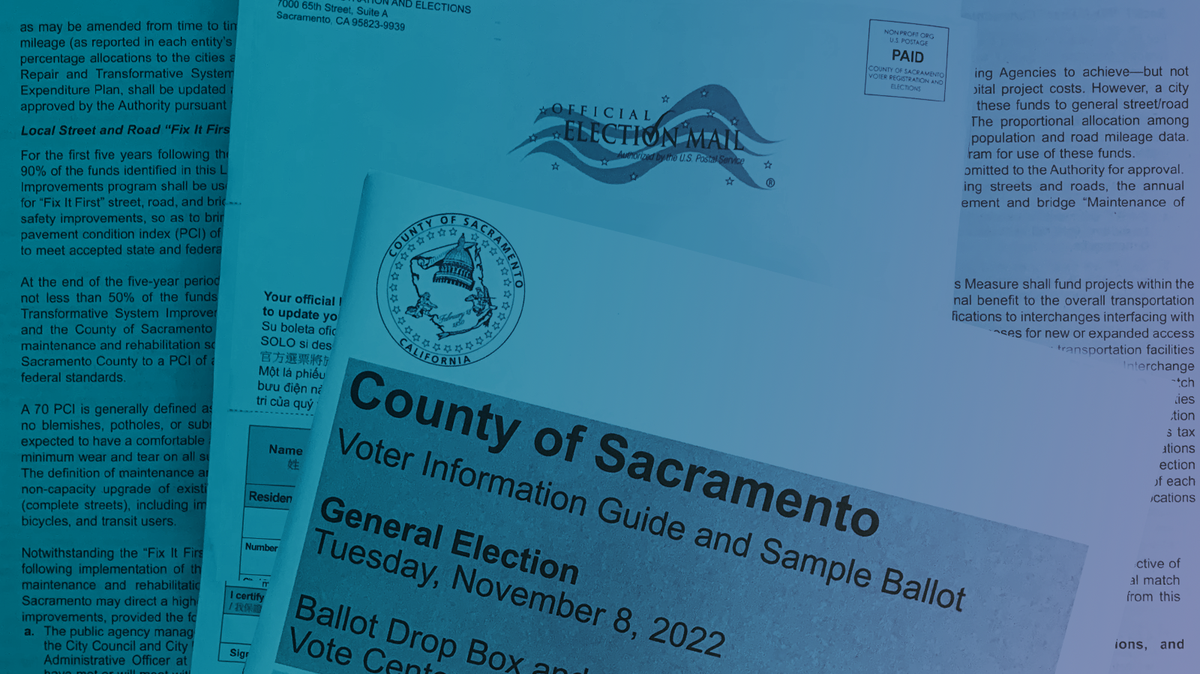
Election Day is fast approaching, and California voters have several decisions they need to make.
In addition to choosing who should serve in statewide offices and the Legislature, it will be up to voters to approve or reject a series of ballot measures, with topics ranging from abortion and contraception to legalized sports betting and dialysis.
The midterm election is Nov. 8. As you consider your ballot, here’s a rundown of what the various measures will do if approved.
Proposition 1
The subject of abortion has been top of mind for many voters ever since the U.S. Supreme Court voted to overturn Roe v. Wade earlier this year. With that decision, it now falls to individual states to decide whether abortion should remain legal and to what extent.
Though many states have passed laws tightening restrictions against abortion, or outright banning it, California lawmakers went the other direction, speedily passing a constitutional amendment that would enshrine both abortion and contraception as fundamental rights.
Now, it falls to voters to decide whether to ratify the Legislature’s decision. Abortion and contraception already are legal in California, but Proposition 1 would protect those rights in the California Constitution, making it much harder for hypothetical future lawmakers to repeal.
Supporters say that the ballot measure is necessary to send a message to the nation that California is an abortion sanctuary. Critics say that existing law already protects the right to abortion and the measure goes too far, overriding state limits on late-term abortions.
You can find more information about Proposition 1 here.
Proposition 26
California voters must choose whether to allow tribal casinos and a handful of private race tracks to conduct on-site sports betting.
One of the most well-funded measures on this year’s ballot, Proposition 26 also would allow tribal casinos to offer dice and roulette games.
As you might expect, the measure is supported largely by a conglomeration of California tribes, who argue that this will bring more revenue not just to the tribes, but also to the state.
Opposition to the ballot measure comes from a couple quarters. First, a coalition of card room companies from across the state are against the initiative, which would give tribes legal recourse to shut down card rooms that operate a Las Vegas-style “house” that serves as a private banker.
Animal activists also oppose the measure, arguing that it will prop up the horse-racing industry.
You can find more information about Proposition 26 by clicking here.
Proposition 27
You’re not mistaken. There are two legalized sports betting initiatives on this year’s ballot.
While Proposition 26 would give tribal casinos the right to conduct in-person sports betting, Proposition 27 would give that right to online companies, such as DraftKings and FanDuel. This would open up sports betting to anyone with a computer or mobile device.
Those two companies, DraftKings and FanDuel, are among the big spenders on Proposition 27, which is one of the most expensive ballot measures in the entire country.
Supporters of the initiative say that it will generate massive revenue for the state, which can be spent to address homelessness and mental health. And it’s true that it would produce a sizable chunk of revenue: as much as $500 million a year, according to the Legislative Analyst’s Office.
But critics of the measure say that not only will the measure enable problem and underage gambling, with few safeguards in place to keep kids from taking part, it won’t contribute any meaningful funding to tackling homelessness, as the state already spends billions on that issue.
Many tribes also argue that Proposition 27 would undermine their sovereign right to conduct tribal gaming, a key source of funding for Native tribes.
You can find more information about Proposition 27 by clicking here.
Proposition 28
This year’s sleeper initiative, Proposition 28 would provide a sizable boost in funding for K-12 arts and music education statewide.
The measure, which hasn’t gotten the attention that other ballot measures have received, would mandate that the state spend additional funds on arts and music education. However, it isn’t a tax; the ballot measure appropriates existing funds to pay for these programs.
Still, the Legislative Analyst’s Office estimates that it will cost the state between $800 million and $1 billion annually.
Alone among the ballot measures, there is no recorded opposition to Proposition 28.
You can find more information about Proposition 28 by clicking here.
Proposition 29
California voters may feel a sense of déjà vu this November as they look at Proposition 29, the ballot measure to require dialysis clinics to have licensed medical staff on-site during hours of operation.
That’s because this proposal has come to voters before, twice, and been rejected both times.
But supporters of Proposition 29 are hoping this time will be different, with Service Employees International Union-United Healthcare Workers West arguing that dialysis is a billion-dollar industry in California yet clinics have cut medical staff and placed patients in danger.
The dialysis industry is staunchly opposed to the measure, and it spending big to defeat it, much as it has twice before. They call this just a ploy to force management to the bargaining table for union talks.
They say that if approved, Proposition 29 would force some community clinics to shut down due to the increased cost of maintaining medical staff. However, Proposition 29 would prevent companies from closing down clinics without state approval.
You can find more information about Proposition 29 by clicking here.
Proposition 30
The California Democratic Party supports it. But California Gov. Gavin Newsom opposes it. Proposition 30 is the rare ballot measure that puts the state’s Democratic governor in alignment with the California Republican Party.
Simply put, Proposition 30 would impose a tax on the state’s wealthiest residents, those making more than $2 million a year, to pay for electric vehicle infrastructure and other programs, as well as wildfire prevention and response.
Supporters of the measure say that it is necessary as part of the state’s overall push to fight climate change and worsening wildfires. The ballot measure would generate up to $5 billion a year, which would go toward making zero-emission vehicles more affordable, installing more electric vehicle charging infrastructure, hiring more state firefighters and managing forests.
Critics, including Newsom, call the ballot measure a payday for Lyft, the ballot measure’s biggest financial backer, which would benefit from its passage in the form of subsidies to help pay for the company’s mandatory compliance with regulations requiring 90% of miles driven to be from zero-emission vehicles by 2030.
Opponents of the measure also contend that California’s electric power grid, which nearly buckled during a heat wave earlier this fall, would be over-loaded by the addition of up to 3 million new electric vehicles subsidized by Proposition 30.
You can find more information about Proposition 30 by clicking here.
Proposition 31
This November, California voters will decide whether to ban menthol cigarettes, vapes and other flavored tobacco products from being sold in the state.
Proposition 31 is the result of a tobacco industry-funded pushback to Senate Bill 793, which Newsom signed into law in 2020 and which bans the sale of most flavored tobacco products, with exemptions for high-dollar cigars, pipe and loose leaf tobacco and hookah.
R.J. Reynolds and Philip Morris USA spent millions circulating a referendum petition against the law, and succeeded in putting the measure up to voters.
As the law was suspended until voters could decide, this also bought the tobacco industry months of additional revenue from flavored tobacco product sales.
Tobacco use is the No. 1 preventable cause of death in California, and supporters of Proposition 31 say that banning flavored products, including fruity e-cigarette flavors, will keep many people from getting addicted to a toxic product. Supporters say that tobacco companies use sweet and fruity flavors to appeal to young people and get them hooked.
Critics of Proposition 31 argue that all banning will do will be to drive the flavored tobacco industry into the underground. They say prohibition didn’t work with alcohol or marijuana and it won’t work with tobacco.
They also argue that the measure will cost the state millions in lost revenue, though the state could see significant savings in the form of fewer people in the medical system.
You can find more information about Proposition 31 by clicking here.
This story was originally published October 24, 2022 at 5:30 AM.