Where the wild things are: Human-wildlife interactions common in the Sacramento region
READ MORE
Wild Animals in Sacramento
When you live in Sacramento, you live among the animals. Click on the arrow below for more stories in our series on wild animals in the area.
Expand All
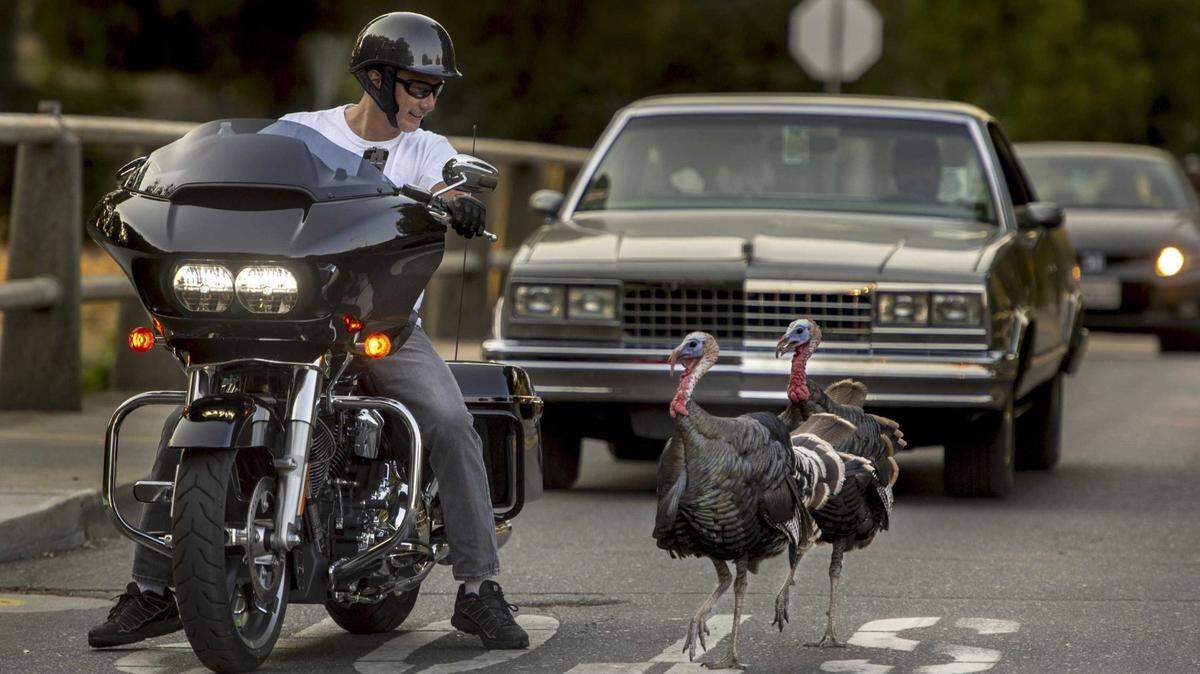
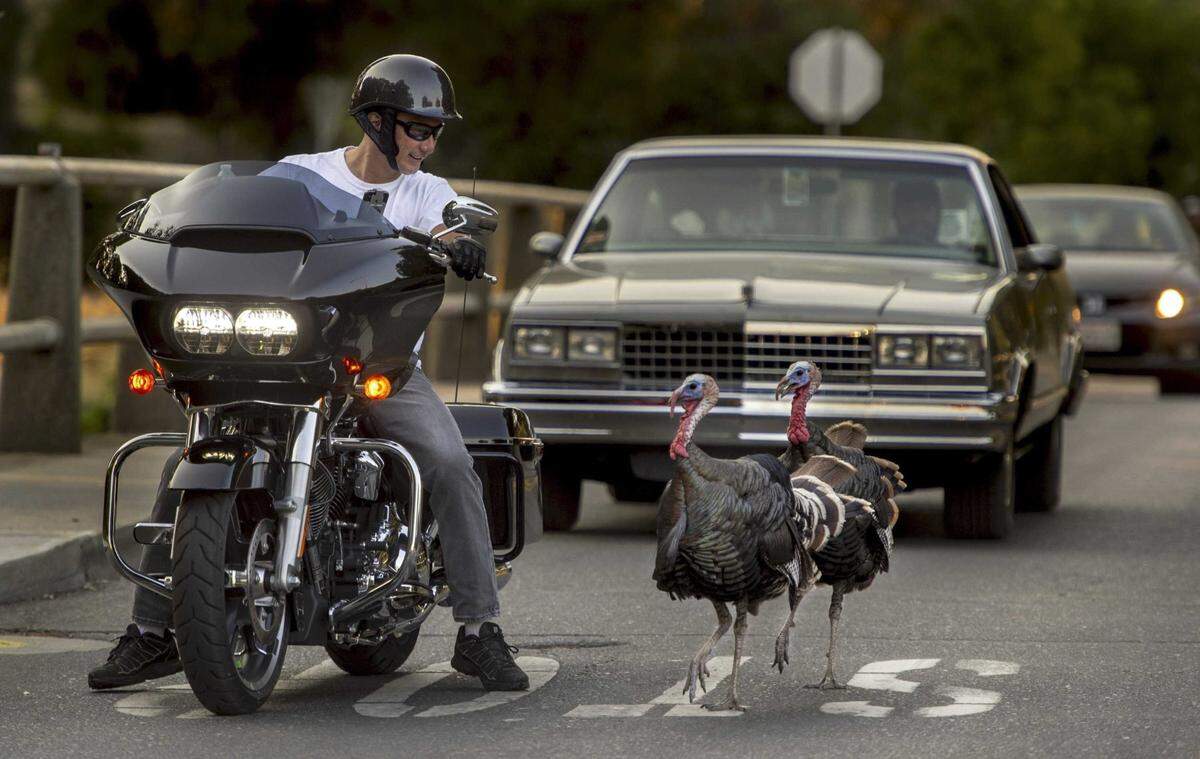
Donna McDonald first thought the turkey had been hit by a car. One late afternoon in March, it came crashing through the window of the Fair Oaks oral surgery office with such force, she thought, surely, the turkey had been struck in the busy traffic on Greenback Lane.
McDonald, the office manager there, heard the shattered glass in the exam room and soon realized the animal had burst through the dual-pane window of its own accord. The large, frightened fowl clawed up walls and damaged dental chairs.
She called Gold Country Wildlife Rescue in Auburn, and a worker arrived to wrangle the bird. The rescue worker later speculated the turkey may have seen its own reflection in the window and tried to attack it.
“I guess it’s mating season,” McDonald said then.
The bird-meets-dental-office moment was startling and unusual, but it didn’t come out of left field — McDonald said a dozen or so turkeys routinely roam the grass patches behind her office.
When you live in Sacramento, you live among the animals.
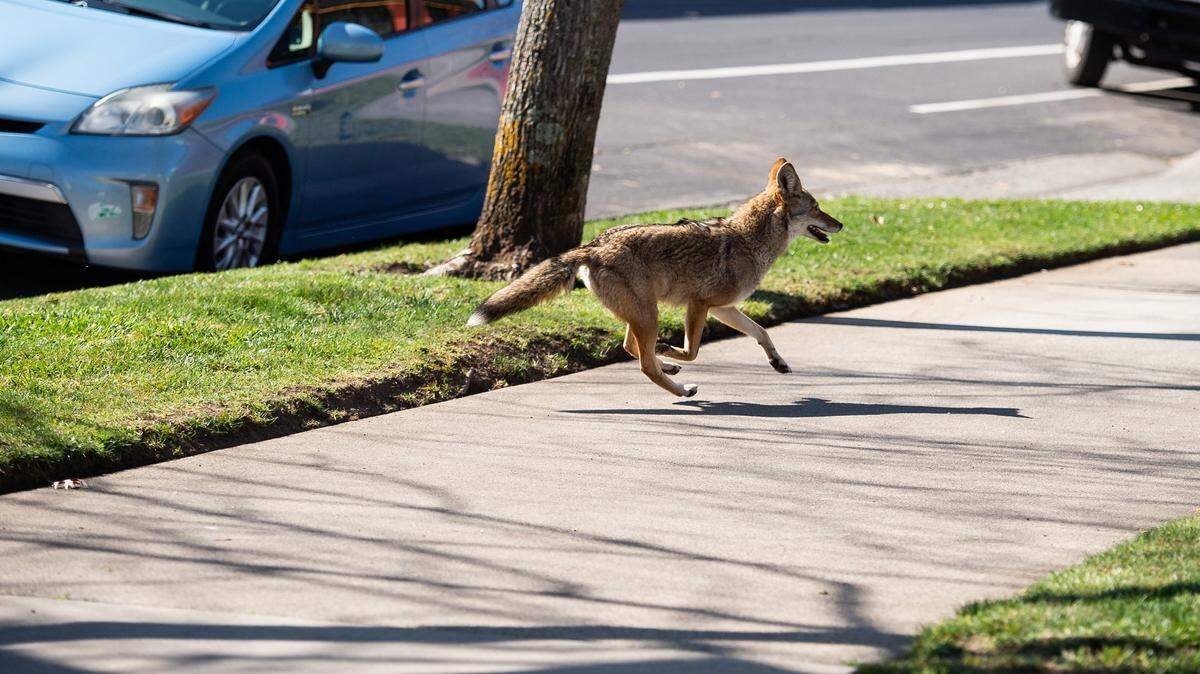
Turkeys. Mountain lions. Bears. Coyotes, skunks, snakes — they’re your neighbors, and sometimes, they’re uninvited guests.
Last year, a photographer documented a cat running up a tree in midtown, scurrying away from coyotes. Last week, a coyote sighting was reported in East Sacramento.
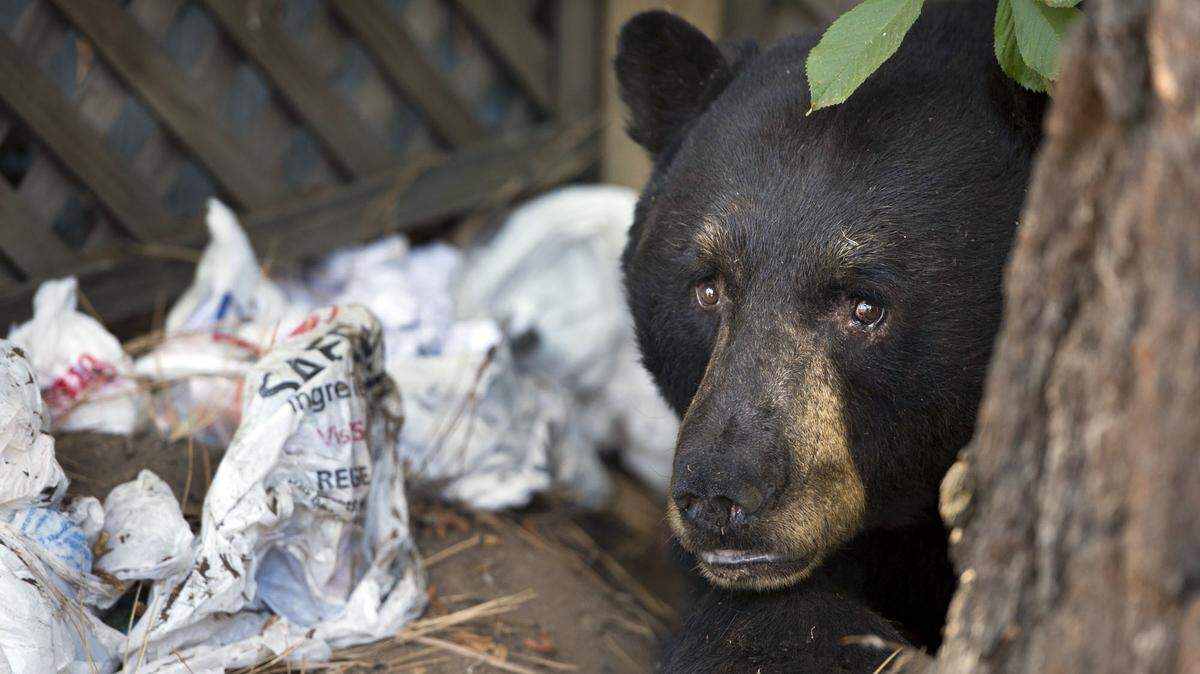
In 2019 and again this year, UC Davis authorities have alerted students and staff about a bear on campus.
And just this month, police watched a mountain lion flee from a Citrus Heights resident’s tree into a nearby cemetery.
Many of these run-ins are benign — or even entertaining. But as we expand our urban footprint, we can also expect a rise of encounters with grave consequences. Most often, it’s us killing them with our cars — but wildlife can also pose serious threats to livestock or even small pets.
It can be a self-perpetuating cycle. Animal advocates and fish and game experts warn that the more regularly we cross paths with wildlife, the more likely they are to lose their natural fear of humans. That makes those interactions even more likely and potentially more perilous in the future.
“There’s no way you’re going to be able to exclude them,” said Roger Baldwin, a human-wildlife conflict researcher at UC Davis. “They’re going to adapt, and they generally adapt pretty well to living in these urban environments ... the more comfortable wildlife feel around humans, over time and over generations, the more conflicts there are going to be.”
And last week one such conflict became deadly.
A bear was euthanized on Friday following an encounter the day before inside a South Lake Tahoe-area home. Officials had to put down the animal, who was “gravely wounded,” after being shot by a resident in Meyers defending his home. El Dorado County deputies said the resident did not commit a crime, but reminded the public “to familiarize themselves with safety tips for bear encounters.”
So who’s the host and who’s the guest?
And are these kinds of dramatic human-wildlife interactions growing more frequent around the region? Or, could it be, that those encounters are simply being documented more regularly now with social media, cellphone cameras and home surveillance systems?
Debra Chase, CEO of Mountain Lion Foundation, a Sacramento-based nonprofit, said it’s likely a mix of both.
“On a path where we would never notice them, we wouldn’t see them (in the past),” she said. Now people are now spotting mountain lions and other wildlife with “those little cameras in their doors.”
But, she added: “The more that humans move out into their territory, the more sightings and encounters we’re going to have.”
We’re the invasive species
So, we’re the guests. We’re on their turf.
Humans for the better part of two centuries have been building homes, roads, schools, hospitals, NBA arenas and more on top of Northern California’s rich and diverse ecosystems.
And by no means are we done.
Much of the development currently taking place near California’s capital is happening in the east and southeast parts of Sacramento County. Most is on grassland that lies beyond existing suburban borders.
Developers are making progress on a large Folsom subdivision south of Highway 50, and building in Elk Grove and Rancho Cordova continues to turn rural land into neighborhoods.
Crews are also beginning work in earnest on the $500 million Capital Southeast Connector, an expressway that will connect those three cities. That has prompted criticism from environmental groups saying we should start looking inward to build, not outward.
“Part of the problem we have down in Southern California is that the (mountain) lion’s territory is busted up like a puzzle piece,” Chase said. “That’s why down there, we have more lions killed by cars and trucks on the road. … Northern California is getting into a place where there’s a lot of roads and there’s more people building developments.
“So the more that we do that, it isn’t just lions that are gonna be in jeopardy.”
Ecologists formally call the “puzzle piece” problem “habitat fragmentation,” an issue that primarily disrupts the lives of carnivores.
A 2017 study published in the scientific journal Plos One examined how fragmentation affects black bears.
“Black bears are vagile habitat-generalists that are capable of long-range movements to overcome habitat fragmentation,” researchers said in the introduction.
“Black bears also have considerable dietary plasticity and often exploit human-sourced foods if habitat availability is reduced. … Therefore, the species not only exhibits some resiliency to habitat fragmentation, but can thrive in mildly developed exurban areas.”
Vacaville residents were surprised in June 2019 to see a black bear on their Ring doorbell camera. Less surprising was where it happened within Vacaville: a suburb on the northeast edge of city limits, with little development for miles to the north and the west.
As major land developments expand the Sacramento region with more suburbs and “exurbs,” we’re bound to see more of these types of encounters, experts say.
A ‘no-harm, no-foul’ bear
There could be other factors in addition to fragmentation.
Joshua Bush, an environmental scientist with the Department of Fish and Wildlife’s wildlife management program, took the lead on trapping the bear that made its way onto the UC Davis campus in 2019.
“I’ve got a dart gun, and drugs and the necessary experience to handle the situation,” he said.
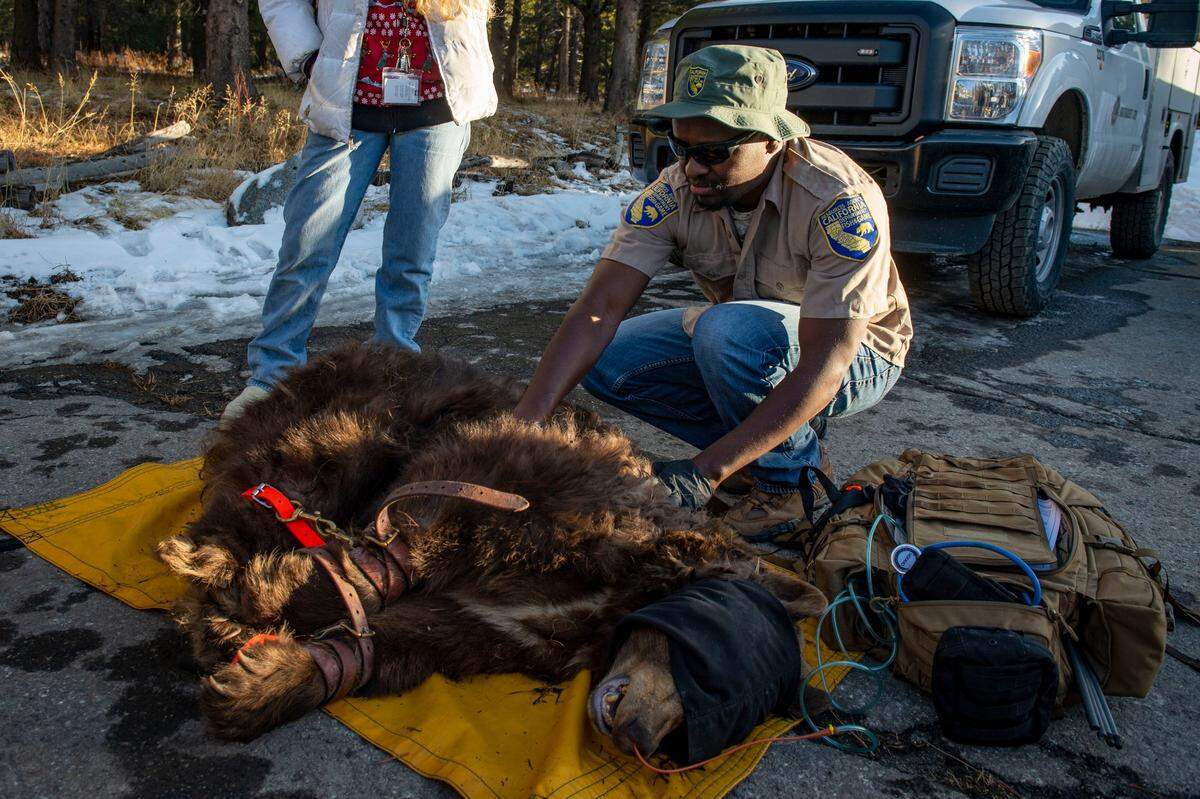
When he arrived at the scene that day, the bear was about 60 feet up in a tree near Hyatt Place, the hotel close to the university’s welcome center. Bush didn’t want to dart the animal at that height, so he and his colleagues kept a perimeter on the ground and waited for the bear to feel safe enough to come down, he said.
Eventually, the bear returned to the ground.
Bush darted the animal. The dart struck it.
The bear climbed the tree again, but only about 30 feet up this time. When the tranquilizer kicked in, the creature fell to the ground but wasn’t hurt.
“We felt confident that we could take this bear and release it back to the wild,” Bush said. “This was classified as a ‘no-harm, no-foul bear.’ It didn’t put anyone in harm’s way, so we put it in its closest available habitat.”
That was the wilderness of Colusa County. Bush, a UC Davis alum, has been the agency’s wildlife biologist for Colusa, Lake and Yolo counties since 2011. His unit has received three reports of bears in Davis — one a year from 2019 to 2021 — as well as one in Clearlake and another in Colusa County that Fish and Wildlife didn’t handle.
The bear reported in 2020 wasn’t on campus but was seen at a pond in west Davis. Bush said he didn’t want to tranquilize it due to thick vegetation and the water, so his unit set up a baited trap.
Unfortunately, the bear didn’t take the bait and was struck and killed by a vehicle along Highway 113. The bear seen on the university campus last month near the arboretum suffered the same fate.
Bears are “extremely rare in Davis,” said Bush.
“The fact that we’ve had (three) in subsequent years is very odd. I don’t know of a report of a bear in Davis prior to 2019.”
Bush speculated on some possible causes for the anomaly.
“All three were young males, and young males will engage in exploratory movements in search of their own territory for resources, mating — all the reasons a bear establishes a habitat of its own,” he said. “Those (Davis bears) were likely exploratory reasons … It could be related to increased drought, or increase in bear populations, which we have seen in California.”
Bears use river corridors to travel, according to Bush. The sighting on campus in 2019 followed reports of a bear being seen along the Putah Creek corridor, north of Vacaville, he said.
Spared or roadkill?
Under the California Environmental Quality Act, the applicant for any land development project must submit an environmental impact report before building can proceed.
Those reports, which are hundreds of pages long, must note all potential significant consequences for any species considered vulnerable by the state or federal government, including threats posed to their habitats and migratory paths.
The Folsom development south of Highway 50, for instance, was projected to “result in the loss of 2,219 acres of annual grassland habitat,” where raptors including Swainson’s hawk and burrowing owls forage and nest, according to one excerpt from the project’s 2008 impact report.
“This loss would contribute significantly to the cumulatively considerable regional loss of this biological resource,” the report continued.
To mitigate the development’s effect on raptors, the report said, project applicants were to “retain a qualified biologist” to survey all land on and within a half-mile radius of the project; locate all active nests and burrows; and establish “appropriate buffers around the nests” and mitigation measures such as “one-way doors on all burrows to allow owls to exit, but not reenter.”
The report said the project was not expected to cause a significant disruption to any migration patterns.
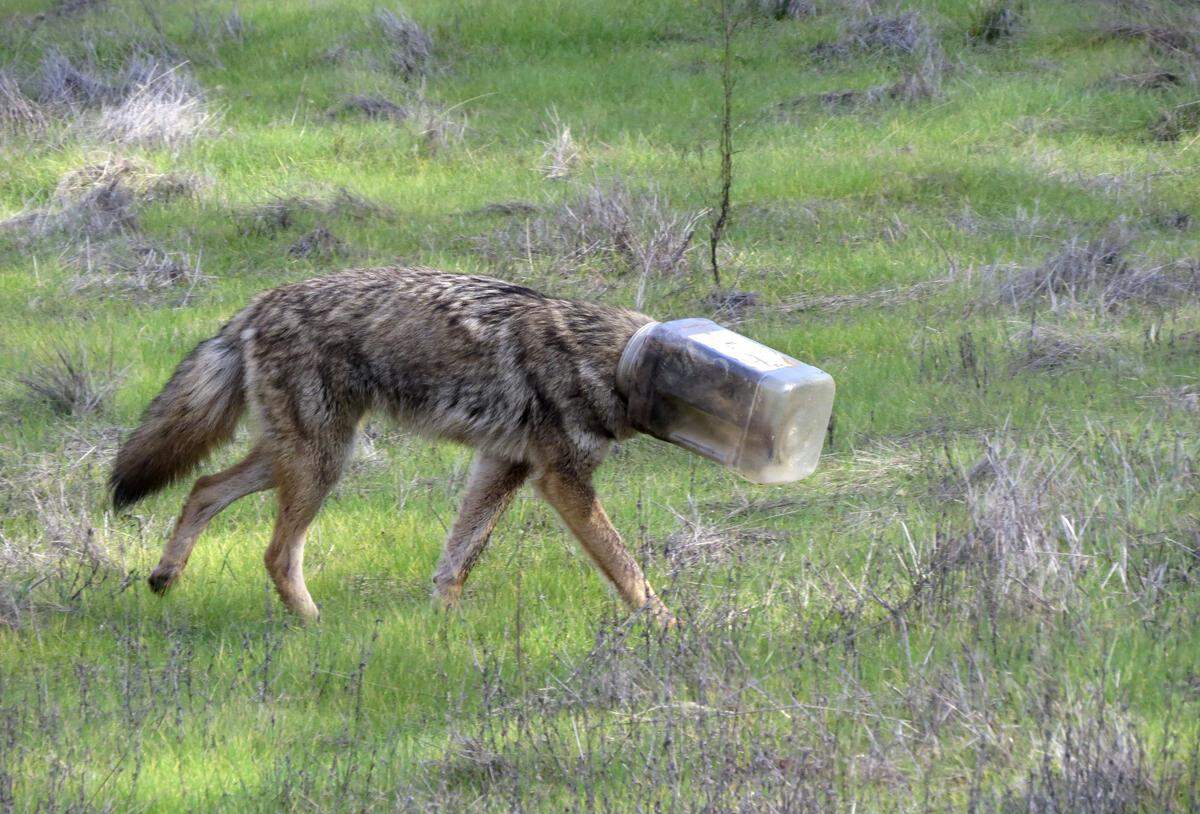
But an environmental assessment for the nearby Capital Southeast Connector project, the 34-mile expressway, noted that that project’s area “serves a variety of wildlife species as migration and movement corridors/areas,” most of them raptors. “Highly mobile mammal species” including deer, coyote, gray foxes, possums and raccoons are also “expected to occasionally move through the (project area) likely along the drainages.”
The project plan for the expressway said it would include “up to 15” wildlife crossings, most of them culverts, which it specifies “would be large enough to allow passage of native canids,” meaning foxes and coyotes.
Even then, 15 crossings on a stretch of 34 miles is still less than one every two miles.
Roadkill is still a virtual certainty.
Another local concern when building is vernal pools — wetlands scattered throughout the Sacramento area.
The Center for Biological Diversity, an endangered species protection nonprofit, in early 2020 filed a lawsuit against Placer County for approving the Placer Ranch development plan. The environmental group claimed the project, planned for unincorporated space between Lincoln, Roseville and Rocklin, would “bulldoze more than 5,000 acres of vernal pool and grassland habitat that supports rare and threatened species,” including the fairy shrimp.
A county spokesperson countered at the time that the plan and approval complied with the California Environmental Quality Act. The suit was dismissed at the diversity center’s request this April, court records show.
The Center for Biological Diversity has also filed more than a dozen lawsuits in Sacramento Superior Court since 2010, most of them pertaining to the Sacramento-San Joaquin Delta or Northern California water districts.
What can be done?
The urban wildlife problem is particularly challenging in California because any solution also must take into consideration an array of other threats wildlife face here: drought, wildfires, population growth and other ecological change.
Still, there are options, says Peter Alagona, an environmental studies professor at UC Santa Barbara.
Alagona wrote in a 2015 essay that there are four elements essential to “a 21st-century approach to urban wildlife”: research, public education, infrastructure upgrades and policy improvement.
Research and education are intertwined; biologists must continue to study the human-wildlife relationship, and then share that information clearly with both the general public and with government agencies and urban planners.
Infrastructure upgrades can be as rudimentary as “street signs, wildlife resistant trash bins, and nonreflective treatments that make glass windows more visible to birds,” Alagona wrote. (The Fair Oaks turkey would likely approve of that last item.)
And policy improvements include “better coordination among the various agencies responsible for urban wildlife,” which Alagona wrote will be “crucial for both long-range planning and responding to rare but genuine emergencies.”
Mountain lion run-in, revisited
The O’Shea family’s encounter with a mountain lion in early 2019 was well-documented.
The Ring surveillance system at their suburban North Natomas home captured the big cat prowling in broad daylight. The footage circulated online rapidly after they posted it to Nextdoor to warn neighbors.
“What I remember is my husband coming in the house very alarmed and telling me there was a mountain lion outside,” Bryn Potter O’Shea said. “And I didn’t believe him. I thought it was probably a bobcat.”
Then she checked the video.
This was no bobcat.
“That’s when we saw that it had actually walked right to our front door.”
O’Shea said the mountain lion ran right in front of her husband’s truck as he was driving home from the gym.
“He thought it might even be stalking,” she said. “He told neighbors down the street to go inside, and then he saw the cat go in a neighbor’s bush.”
They called the police, and both law enforcement and private security officers arrived. She said the authorities contacted Fish and Wildlife, but they needed time to get there.
A tense standoff followed. O’Shea said police camped in her neighbor’s yard “with their guns pointed at it.”
“It was scary ... but also we didn’t want to have it get hurt,” she recalled.
O’Shea has cats, but they’re indoor cats. She was more worried for her neighbor across the street, particularly their small children and dog. Luckily, they weren’t outside.
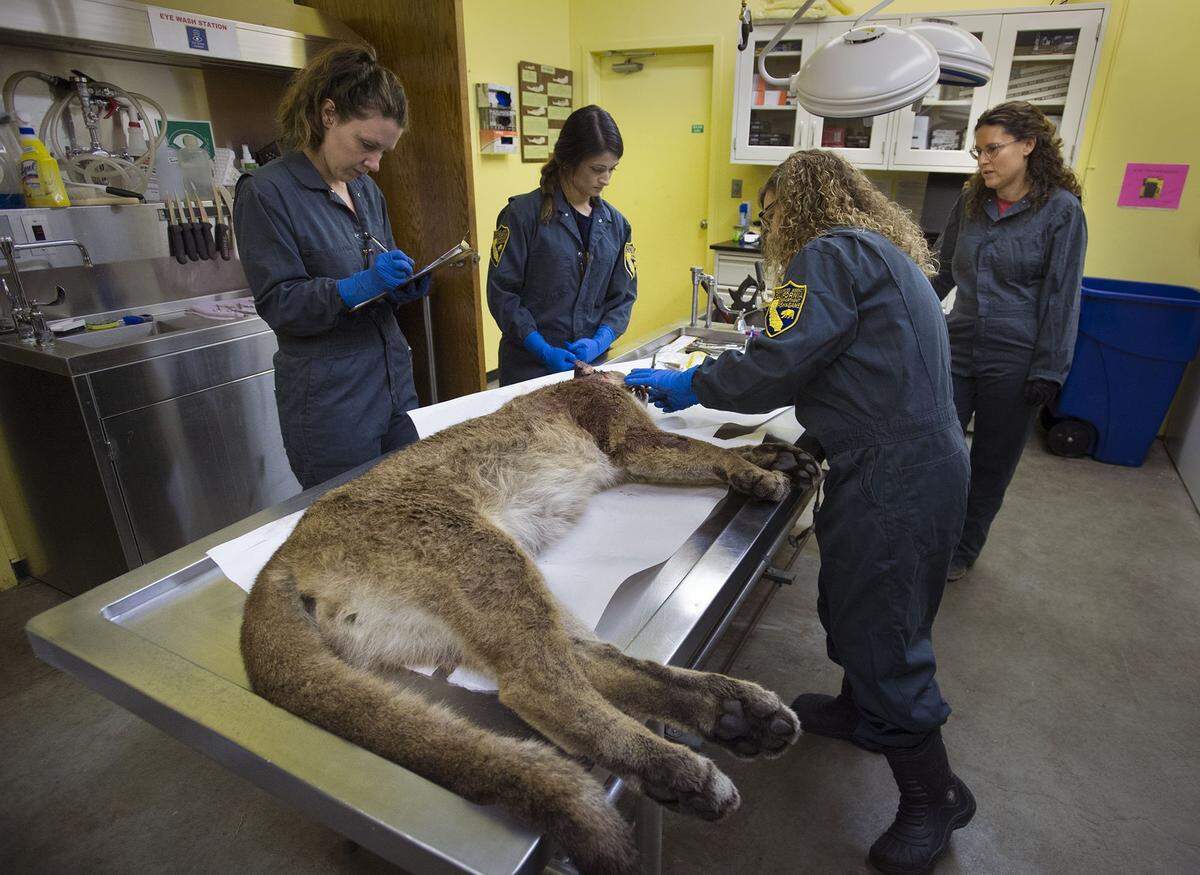
By the time Fish and Wildlife personnel arrived, the cougar had taken up in a nearby backyard, she said. She said officers’ first tranquilizer shot missed and spooked the cat, which fled into another backyard.
There, game officials tried again to tranquilize the lion. Success, this time. They carried it out of the residence and away safely into a trailer, as caught on camera by a California Highway Patrol helicopter tracking the big cat’s movements.
Wildlife personnel released the cougar into the Placer County wilderness.
Authorities estimated the mountain lion was a young male, about 1½ to 2 years old — matching the profile Chase from the Mountain Lion Foundation described for cougars most likely to show up on urban-edge areas.
Bessemer Court butts up against North Natomas Regional Park, so the O’Sheas are used to seeing a broad range of animals — turkeys, pheasants, hares and coyotes — but never a cougar or bobcat before that February 2019 day.
“Honestly, it never occurred to me that a mountain lion would come to this neighborhood ... Here in Natomas, we’re so far from where we think they would be.”
She said, though, that she and her husband haven’t set up any new cameras or changed any habits around their home in the 2½ years since the cougar came to town.
“The only thing that changed,” she said, “was my expectation that we might see them again.”
This story was originally published June 27, 2021 at 5:00 AM.