Traffic and deadly crashes: Top 5 Sacramento-area transportation stories of 2025
One word sums up the transportation stories that resonated most with Sacramento Bee readers in 2025: tension.
California’s capital city is at several transportation crossroads.
Safety goals remain out of reach as local Sacramento officials scramble to prevent traffic deaths. The City Council pledged nine years ago to eliminate all traffic fatalities by 2027. At least 31 people have died in collisions on city streets in 2025. At both the state and local levels, driver convenience often come as a priority over safety. That conflict over who belongs on a roadway leaves many families to deal with endless grief.
And while the state has formally deprioritized freeway expansion, California transportation agencies have plowed forward with new, pricey projects. That includes the seemingly endless construction to widen Highway 50 through Sacramento and the half-billion-dollar plan to widen a wine-country highway threatened by sea-level rise.
When it came to big local projects, readers were curious about the future: What would a new freeway interchange in Rancho Cordova or a new bridge over the American River in Sacramento look like? What policies would shape the way residents move through the region?
The Bee covered California’s roads with an eye toward accountability. Here are some of the most-read transportation stories of 2025.
1. Sacramento County pedestrian deaths
Although California has set big goals for shifting people out of cars and toward walking and biking, about 1,000 pedestrians die in the state each year. Sacramento County also has a goal to double the number of walking and biking trips by 2030, but dangerous roads remain a huge hurdle to achieving that goal. Countywide, the coroner investigated more than 150 traffic deaths in 2025. As of Dec. 30, the coroner’s data showed that 60 were pedestrians and eight were cyclists. Those deaths often receive little attention from the public or policymakers. The Bee has set out to change that.
Andrew Pringle was 21 when he was fatally struck in Sacramento County on Folsom Boulevard, just outside an RT light rail station. His story showed the stakes of local and state inaction on pedestrian safety. Although his death shattered his family in 2023, the crash had little effect on the outside world. The driver who ran a red light and struck him received a light sentence, and the treacherous intersection where he was killed remains perilous more than two years after the crash. Following the same pattern, Shawn Jordan, 18, was fatally struck by a driver while walking home from the bus stop in North Highlands in June 2024. The Bee reported on how, a year after his death, the county had not improved safety on the overpass where he died — even as the bridge lacks pedestrian facilities and has no complete sidewalk, the speed limit is 40 mph, and many children use the overpass to walk to nearby public schools.
In Fruitridge Pocket, Machelle Wilson died in March, months after a driver struck her while she was crossing a street near her home. Wilson, 64, was a UC Davis statistician and an adoring grandmother. Her children criticized the fact that car ownership was treated with so much reverence that it seemed “holy,” while their mother’s death seemed to be “acceptable collateral damage.”
In Fair Oaks, a mother and longtime resident begged for pedestrian safety improvements on her street. When Susannah Martin was growing up in the family home, the road they lived on was quiet, and the missing sidewalks didn’t seem like much of a problem. By 2025, she was terrified that her teenage daughters would be killed by a driver on their walk home from school.
Sacramento County is reckoning with how to prioritize safety projects with limited funding and dire problems.
2. A sinking California highway
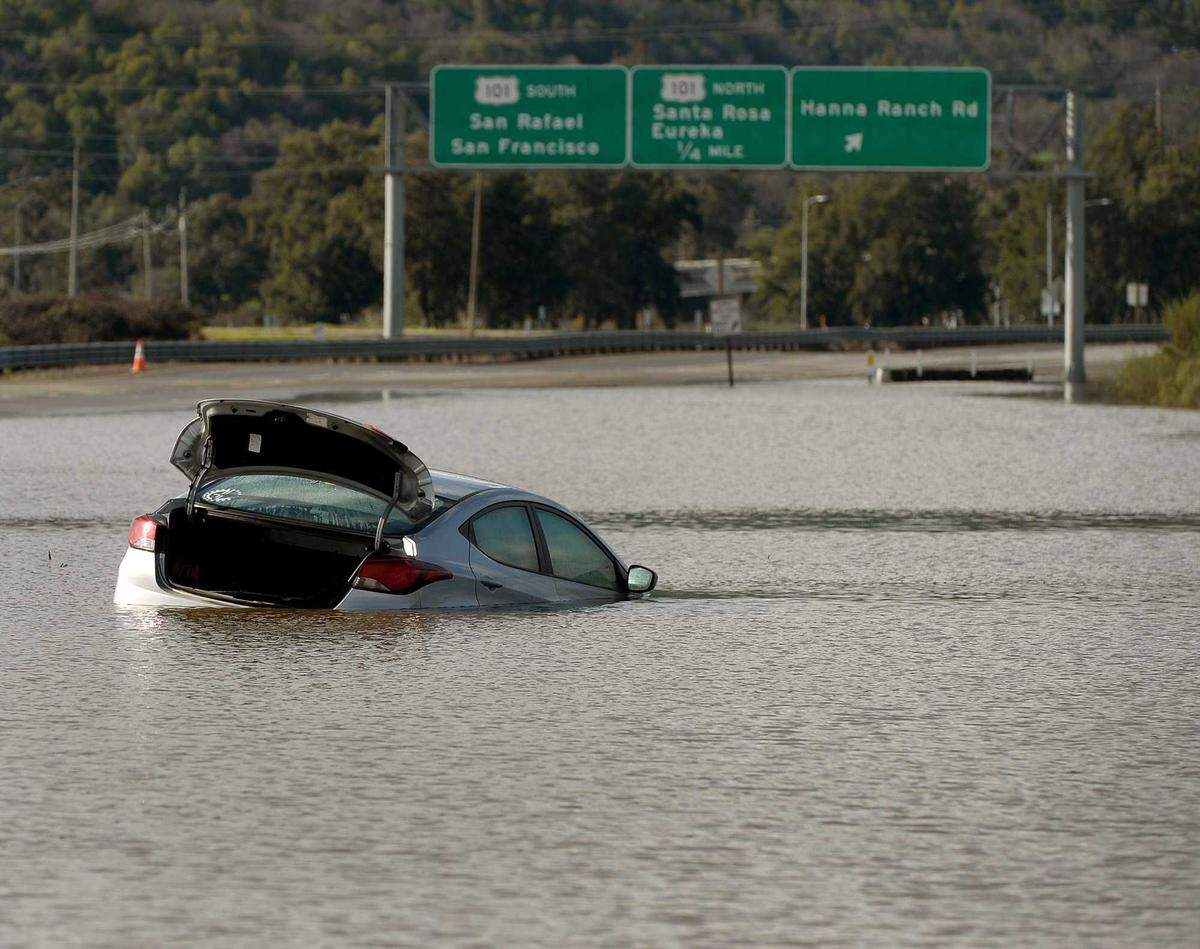
In 2025, the state pushed ahead with a projected $500 million investment in widening a two-lane segment of Highway 37. The roadway spans about 21 miles between Highway 101 in Marin County and Interstate 80 in Vallejo, and about half of it is one lane in each direction. A Bee investigation found that Caltrans officials said at meetings in 2015 that the highway was not only threatened by sea level rise, but also sinking into the bay. Decadeold meeting minutes showed that experts said the highway would need to be raised between 6 and 10 feet to accommodate sea level rise; the current $500 million project will only raise portions of the highway less than 1 foot. The back-and-forth between officials — who said the massive investment is a necessary measure to preserve the artery in the medium-term — and environmentalists — one of whom said the state was “dumping half a billion dollars into the ocean” — has not slowed the project down. Gov. Gavin Newsom signed legislation in October to streamline construction.
3. Highway traffic blues
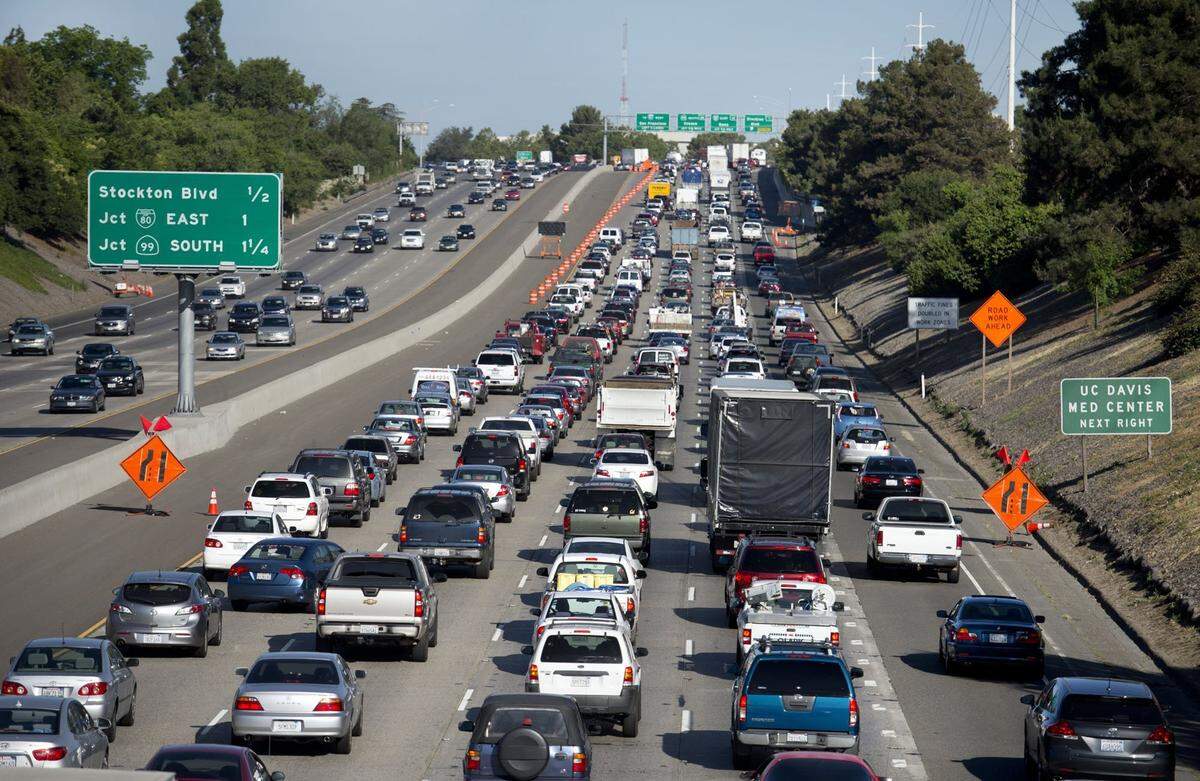
Drivers have lived with the headaches and frustrations of construction on both Highway 50 and Interstate 80 for years. On Highway 50, a trip through history showed the construction and traffic woes seemed endless, and in June, a yearlong delay for the “Fix 50” project rattled commuters. On I-80, environmentalists sued to try to stop a widening project. A judge ruled against them over the summer, even as he affirmed that one of their key arguments against it was right: The project probably won’t help traffic. And in Placer County, Congressman Kevin Kiley announced a $22 million federal grant to widen Highway 65 by Rocklin, citing the traffic.
4. New local roadways
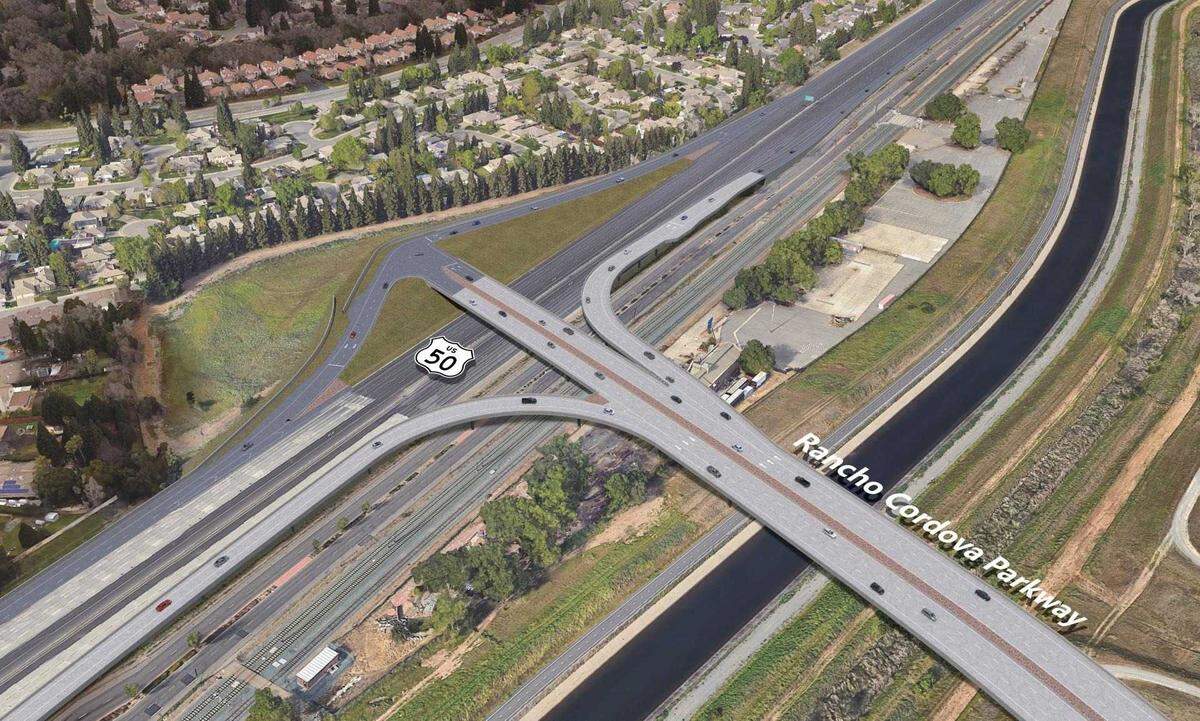
The capital region is building new roads. Rancho Cordova moved forward with plans for a new $182 million Highway 50 interchange, and Sacramento published possible designs for a new $300 million bridge over the American River that would connect downtown’s River District with South Natomas. But controversy erupted over who would have access to the Truxel Bridge. Some advocates pushed for the space to allow pedestrians, cyclists and light rail — and no drivers, who, they said, already use nearby roadways that exclude people outside cars.
5. Sacramento road safety
Sacramento is up against a deadline. In 2017, the City Council made a “Vision Zero” pledge to eliminate all traffic fatalities and severe injuries by 2027. With one year left on the clock — and a still-rising death toll — officials have rededicated themselves to keeping all road users safe through a focus on quicker improvements. The council has not moved forward with a state of emergency declaration over traffic deaths that was proposed in late 2024. But in March, the council unanimously approved a $4.6 million “quick-build” program to speed up the pace of new safety projects; a city official said critical reporting in The Bee had helped spur the change in tactics.
Safety policies are being reshaped. But what exactly should those policies entail?
Some neighborhoods have clashed with the city over what they saw as onerous hurdles to getting speed bumps installed on their streets. A California man called on the criminal justice system to show mercy to the Sacramento hit-and-run driver who killed his brother, special education teacher and Navy veteran Duane Ashby, 36. And Alena Wong, a college freshman who almost died at the age of 12 after a driver struck her in Land Park while she was riding her bike to California Middle School, felt conflicted. She urged the city to focus on the most marginalized neighborhoods, even as she and her family celebrated the quick-build safety project at the intersection where she was hit — installed this November, six years after the crash.
Although the Department of Public Works has pursued quick-build projects with the funding approved by the City Council, the department has still not established the dedicated six-person team or formalized the program itself. The formal launch of the program will likely happen early next year.